
Introduction
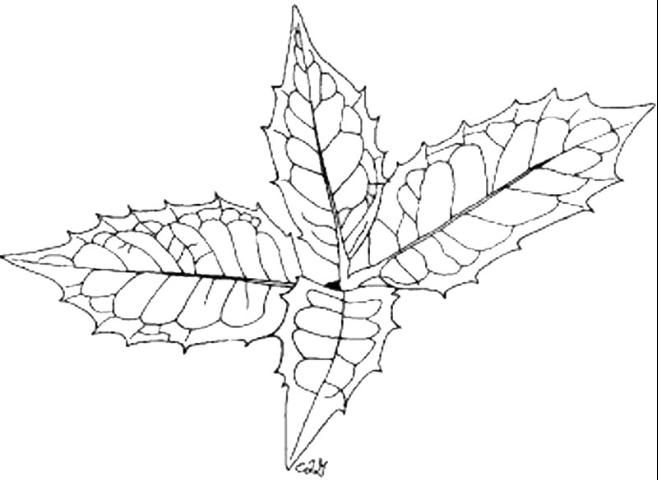
This large evergreen shrub or small tree is capable of reaching 15 to 20 feet in height and width but is most often seen at 10 to 12 feet high with an 8-foot spread (Figure 1). Older plants grow as wide as tall and develop a vase shape with several main trunks typically originating close to the ground. The lustrous, dark green leaves have paler undersides and are joined in the fall by a multitude of barely noticeable, but extremely fragrant, white blossoms. They perfume a large area of the landscape.
General Information
Scientific name: Osmanthus heterophyllus
Pronunciation: oz-MANTH-us het-ter-roe-FILL-luss
Common name(s): false holly, holly tea olive, holly osmanthus
Family: Oleaceae
Plant type: shrub
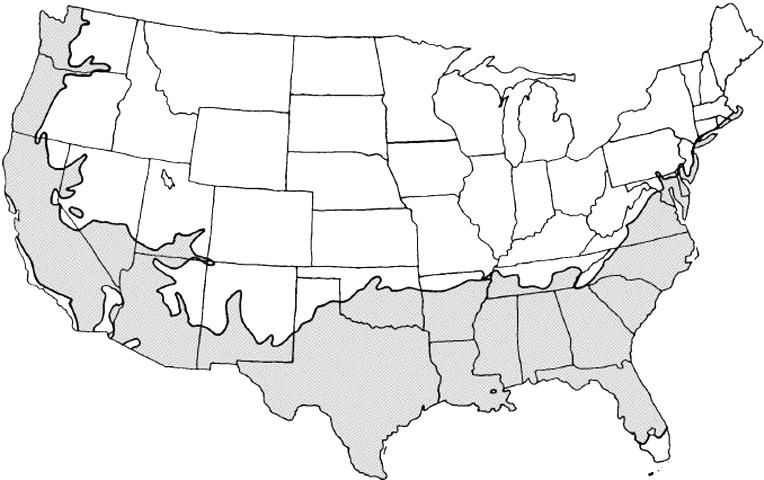
USDA hardiness zones: 7 through 9 (Figure 2)
Planting month for zone 7: year round
Planting month for zone 8: year round
Planting month for zone 9: year round
Origin: not native to North America
Uses: hedge; border; recommended for buffer strips around parking lots or for median strip plantings in the highway; small parking lot islands (< 100 square
feet in size); medium-sized parking lot islands (100–200 square feet in size); large parking lot islands (> 200 square feet in size)
Availability: generally available in many areas within its hardiness range
Description
Height: 8 to 15 feet
Spread: 10 to 18 feet
Plant habit: vase shape; round
Plant density: dense
Growth rate: slow
Texture: medium
Foliage
Leaf arrangement: opposite/subopposite
Leaf type: simple
Leaf margin: entire; terminal spine
Leaf shape: elliptic (oval)
Leaf venation: brachidodrome
Leaf type and persistence: evergreen
Leaf blade length: less than 2 inches
Leaf color: green
Fall color: no fall color change
Fall characteristic: not showy
Flower
Flower color: white
Flower characteristic: pleasant fragrance; fall flowering
Fruit
Fruit shape: oval
Fruit length: less than .5 inch
Fruit cover: fleshy
Fruit color: blue
Fruit characteristic: inconspicuous and not showy
Trunk and Branches
Trunk/bark/branches: not particularly showy; typically multi- trunked or clumping stems
Current year stem/twig color: brown
Current year stem/twig thickness: medium
Culture
Light requirement: plant grows in part shade/part sun
Soil tolerances: acidic; slightly alkaline; clay; sand; loam
Drought tolerance: high
Soil salt tolerances: unknown
Plant spacing: 36 to 60 inches
Other
Roots: usually not a problem
Winter interest: no special winter interest
Outstanding plant: not particularly outstanding
Invasive potential: not known to be invasive
Pest resistance: long-term health usually not affected by pests
Use and Management
With its upright oval to columnar growth habit in youth, osmanthus is ideal for use as an unclipped hedge or trained as a small tree. It should be placed where its fragrance can be enjoyed. It is often planted as a hedge or foundation plant, and makes a very effective screen. Its spiny foliage makes it well suited for planting as a barrier to help keep people from walking through an area. Since the flowers are not particularly showy, people will wonder where the delightful fragrance is coming from. This is a subtle plant which should be used more often in southern landscapes.
Plants thin somewhat in full shade, but form a dense crown in a sunny or partially shaded location. Planted on 4- to 6-foot centers, osmanthus can form a wall of fragrance during the fall and should be planted more often. They will not grow as fast as leyland cypress, but think of this osmanthus as a substitute for use in a sunny or partially shaded spot. Plants can be clipped to form a denser canopy, but flowers form on old growth and removing branches will reduce the flower display. With time, older plants can be trained into a small, multi-trunked tree.
Osmanthus should be grown in sun or shade in well drained soil. Plants are drought-tolerant once established. This is one of the most cold tolerant osmanthus varieties.
Propagation is by cuttings.
Pests and Diseases
No pests or diseases are of major concern.
Scales and nematodes may present a problem, and mushroom root rot is troublesome when the soil is kept too wet.