
Introduction
Heart leaf philodendron is probably most often seen as a houseplant, its 2 to 3 inch wide, solid green, heart shaped leaves and long, thin stems trailing out of a hanging basket. Although well-suited to indoor use due to its ease of growth and very high tolerance of low light conditions, when allowed to grow outside heart leaf philodendron takes on a whole new appearance. Grown as a ground cover, it quickly covers a shady area with its lush, dark green growth. As the strong stems climb up a tree trunk or other vertical support, the leaves become larger, eventually reaching 12 inches or more in length. If desired, it may also be grown in a container or on a totem pole or other moisture-retentive support column.
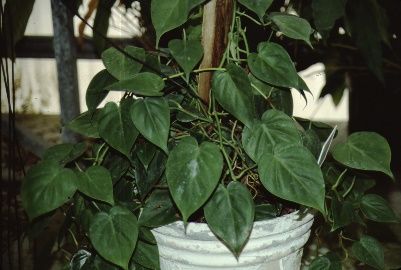
Credit: Edward F. Gilman, UF/IFAS
General Information
Scientific name: Philodendron scandens
Pronunciation: fill-loe-DEN-drun SCAN-denz
Common name(s): heart leaf philodendron
Family: Araceae
Plant type: herbaceous
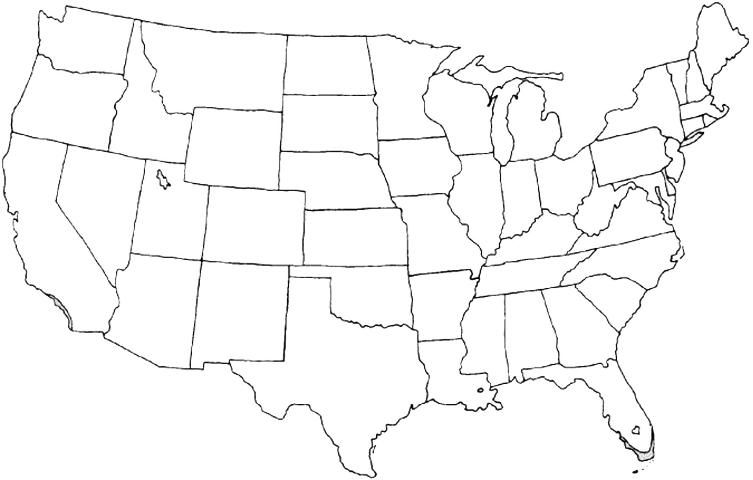
USDA hardiness zones: 10B through 11 (Figure 2)
Planting month for zone 10 and 11: year-round
Origin: not native to North America
Invasive potential: not known to be invasive
Uses: suitable for growing indoors; hanging basket; cascading down a wall
Availability: generally available in many areas within its hardiness range
Credit:
Description
Height: depends upon supporting structure
Spread: depends upon supporting structure
Plant habit: spreading
Plant density: moderate
Growth rate: moderate
Texture: medium
Foliage
Leaf arrangement: alternate
Leaf type: simple
Leaf margin: entire
Leaf shape: cordate
Leaf venation: pinnate
Leaf type and persistence: evergreen
Leaf blade length: 4 to 8 inches; 8 to 12 inches
Leaf color: green
Fall color: no fall color change
Fall characteristic: not showy
Flower
Flower color: green
Flower characteristic: flowers periodically throughout the year
Fruit
Fruit shape: unknown
Fruit length: unknown
Fruit cover: fleshy
Fruit color: unknown
Fruit characteristic: inconspicuous and not showy
Trunk and Branches
Trunk/bark/branches: not applicable
Current year stem/twig color: green
Current year stem/twig thickness: medium
Culture
Light requirement: plant grows in the shade
Soil tolerances: slightly alkaline; clay; sand; acidic; loam
Drought tolerance: moderate
Soil salt tolerances: poor
Plant spacing: 18 to 24 inches
Other
Roots: not applicable
Winter interest: no special winter interest
Outstanding plant: not particularly outstanding
Pest resistance: long-term health usually not affected by pests
Use and Management
Heart leaf philodendron should be located in partial to deep shade on fertile, moist soils. It should be planted outside only in frost-free areas. Direct sun often discolors the foliage.
Propagation is by cuttings.
Pests and Diseases
No pests are of major concern, but occasionally bothered by scales.
No diseases are of major concern, but occasionally bothered by leaf spots.