
Introduction
Pink pinxter azalea is well-noted for its vivid display of pink or white, fragrant, clustered blooms appearing in spring, before the new leaves emerge. Well-suited to mass plantings in natural woodland settings, pink pinxter azalea makes a traffic-stopping show whenever it is in full bloom.
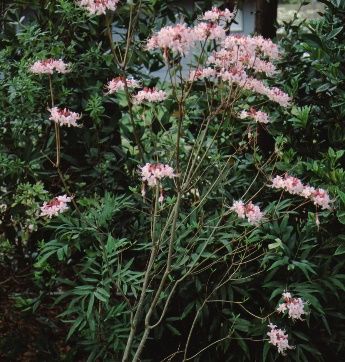
Credit: Edward F. Gilman, UF/IFAS
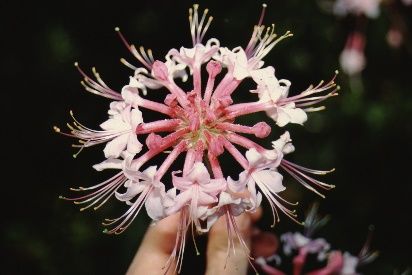
Credit: Edward F. Gilman, UF/IFAS
General Information
Scientific name: Rhododendron canescens
Pronunciation: roe-duh-DEN-drun kuh-NESS-senz
Common name(s): pink pinxter azalea, Florida honeysuckle, sweet mountain azalea
Family: Ericaceae
Plant type: shrub
USDA hardiness zones: 6B through 10A (Figure 3)
Planting month for zone 7: year-round
Planting month for zone 8: year-round
Planting month for zone 9: year-round
Planting month for zone 10: year-round
Origin: native to Florida
Invasive potential: not known to be invasive
Uses: mass planting; specimen; container or above-ground planter; trained as a standard; attracts hummingbirds; attracts butterflies
Availability: somewhat available, may have to go out of the region to find the plant
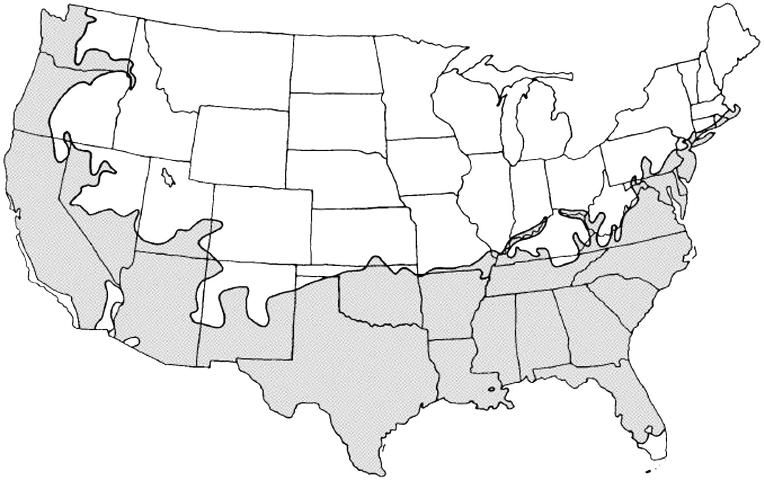
Credit:
Description
Height: 8 to 12 feet
Spread: 6 to 10 feet
Plant habit: oval; upright
Plant density: open
Growth rate: slow
Texture: fine
Foliage
Leaf arrangement: alternate
Leaf type: simple
Leaf margin: entire
Leaf shape: obovate
Leaf venation: pinnate
Leaf type and persistence: deciduous
Leaf blade length: 2 to 4 inches
Leaf color: green
Fall color: no fall color change
Fall characteristic: not showy
Flower
Flower color: pink; white
Flower characteristic: spring flowering
Fruit
Fruit shape: elongated
Fruit length: 0.5 to 1 inch
Fruit cover: dry or hard
Fruit color: brown
Fruit characteristic: inconspicuous and not showy
Trunk and Branches
Trunk/bark/branches: not particularly showy; typically multi-trunked or clumping stems; can be trained to grow with a short, single trunk
Current year stem/twig color: brown
Current year stem/twig thickness: medium
Culture
Light requirement: plant grows in part shade/part sun
Soil tolerances: acidic; clay; loam; sand
Drought tolerance: moderate
Soil salt tolerances: poor
Plant spacing: 36 to 60 inches
Other
Roots: usually not a problem
Winter interest: no special winter interest
Outstanding plant: plant has outstanding ornamental features and could be planted more
Pest resistance: long-term health usually not affected by pests
Use and Management
These azaleas are rather straggly and upright when very young but will spread out, the large, dark green leaves causing the branches to gently cascade down to the ground. A single specimen should be allowed at least 4 to 5 feet of spread to develop into its natural form.
Rich, moist, acidic soil in light shade, receiving some direct sun, protected from harsh winds, is an ideal location for pink pinxter azaleas. Azaleas grow best in filtered shade from tall trees. Plants are very sensitive to dry soil, and the soil should drain freely. A thick mulch (3 inches deep) is recommended to help ensure adequate root growth. Roots are located in the top several inches, even in sandy, well-drained soil.
Pruning is seldom necessary except to control shoots that extend above the normally mounded shape. Since plants bloom on the previous year's growth, any desired pruning should be done in spring after flowering. Pinching new shoots when they are several inches long increases branching and flower display.
Propagation is by seed sown in late fall on moist peat moss or by softwood cuttings taken in late spring.
Pests and Diseases
No pests are of major concern other than mites.
Problems include iron deficiencies from too high a soil pH and mushroom root rot in poorly drained soil.