
Introduction
Oyster plant is a short-stemmed, tender foliage plant that makes attractive, small, dense, spreading clumps. It forms a solid groundcover of upright leaves. The 6 to 8 inch long, sword-shaped leaves are green above and purplish below. The unusual flowers, borne down among the leaves, appear as clusters of tiny white flowers nestled within two boat-shaped, purplish bracts. They are not noticeable unless you look closely.
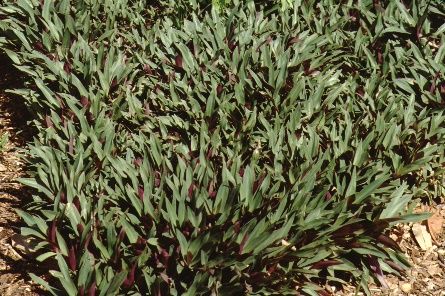
Credit: Edward F. Gilman, UF/IFAS
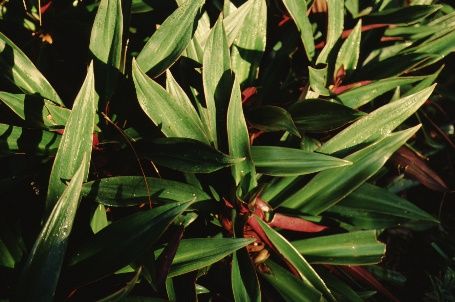
Credit: Edward F. Gilman, UF/IFAS
General Information
Scientific name: Tradescantia spathacea
Pronunciation: tra-des-KANT-i-a spath-AY-see-uh
Common name(s): oyster plant, Moses in the Cradle, boatlily
Family: Commelinaceae
Plant type: perennial; herbaceous
USDA hardiness zones: 9B through 11 (Figure 3)
Planting month for zone 9: year-round
Planting month for zone 10 and 11: year-round
Origin: native to Central America, North America and Mexico
Invasive potential: Invasive and not recommended by UF/IFAS faculty (reassess in 10 years)
Uses: mass planting; container or above-ground planter; naturalizing; suitable for growing indoors; cut foliage/twigs; edging
Availability: generally available in many areas within its hardiness range
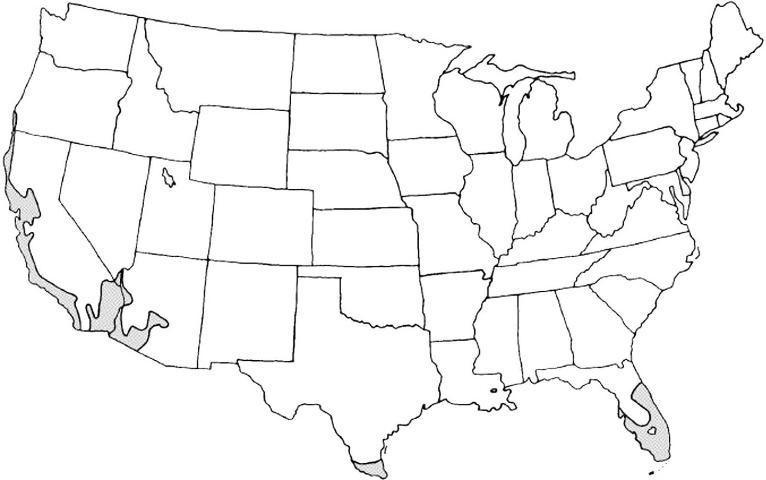
Credit:
Description
Height: 1 to 1.5 feet
Spread: depends upon supporting structure
Plant habit: upright
Plant density: dense
Growth rate: slow
Texture: medium
Foliage
Leaf arrangement: alternate
Leaf type: simple
Leaf margin: entire
Leaf shape: linear
Leaf venation: parallel
Leaf type and persistence: evergreen
Leaf blade length: 8 to 12 inches
Leaf color: green
Fall color: no fall color change
Fall characteristic: not showy
Flower
Flower color: white
Flower characteristic: flowers periodically throughout the year
Fruit
Fruit shape: elongated
Fruit length: less than 0.5 inch
Fruit cover: dry or hard
Fruit color: unknown
Fruit characteristic: inconspicuous and not showy
Trunk and Branches
Trunk/bark/branches: not applicable
Current year stem/twig color: reddish
Current year stem/twig thickness: very thick
Culture
Light requirement: plant grows in part shade/part sun; plant grows in the shade
Soil tolerances: alkaline; clay; sand; acidic; loam; occasionally wet
Drought tolerance: high
Soil salt tolerances: unknown
Plant spacing: 18 to 24 inches
Other
Roots: not applicable
Winter interest: no special winter interest
Outstanding plant: plant has outstanding ornamental features and could be planted more
Pest resistance: long-term health usually not affected by pests
Use and Management
Oyster plant is ideal for use as a quick-growing groundcover, thriving in full sun to deep shade. Well-drained soils are a necessity since oyster plant is susceptible to a variety of leaf and especially root problems if over-watered. It is extremely drought tolerant, even growing in cracks in a concrete wall.
The variety 'Variegata' has leaves striped red and yellowish green. There is at least one compact cultivar available.
Propagation is by seeds, cuttings, or division of the clumps.
Pests and Diseases
Caterpillars and mites can be a problem for oyster plant.
Fungus, root rot, and leaf spot can all be problems for oyster plant, especially if plants receive irrigation.