
Introduction
Dusty miller is grown for its spectacular foliage: silvery-white, delicately divided leaves covered with a very soft, dense fuzz. Reaching 12 to 18 inches in height, dusty miller is ideal for neat edgings or for breaking up large masses of flower color. It can be planted in containers where the foliage can be viewed up close. Dusty miller is especially dramatic when viewed at night, the silvery leaves catching and reflecting the faintest moonlight. While the small blooms are somewhat attractive, they are usually removed to encourage leaf growth.
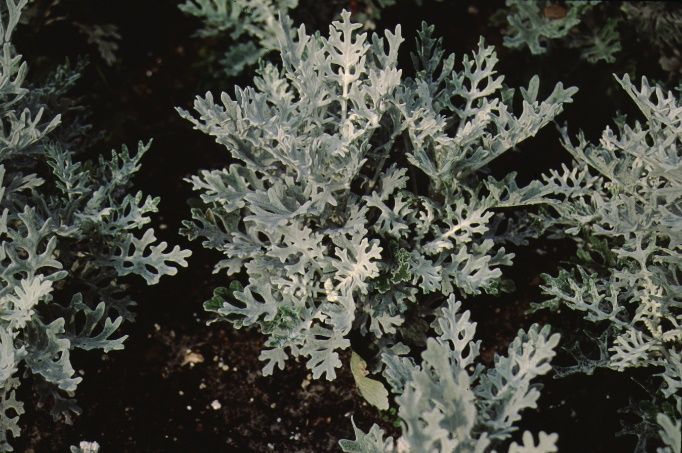
Credit: Edward F. Gilman, UF/IFAS
General Information
Scientific name: Senecio cineraria
Pronunciation: sen-NEESH-shee-oh sin-ner-RAIR-ee-uh
Common name(s): dusty miller
Family: Asteraceae
Plant type: annual
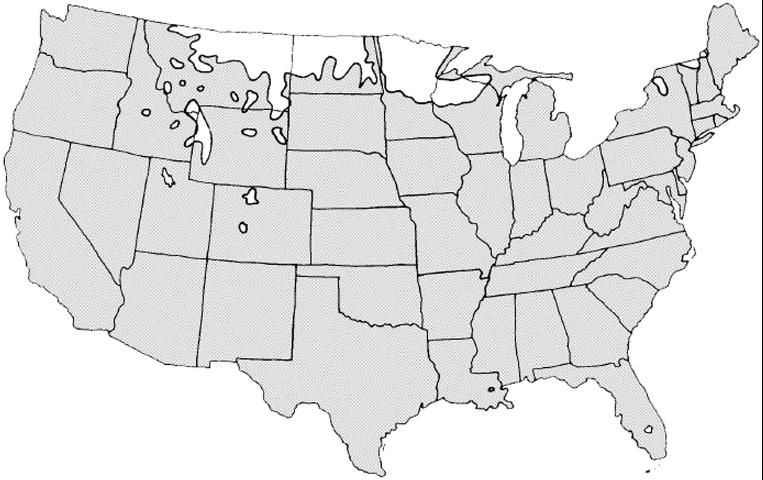
USDA hardiness zones: all zones (Figure 2)
Planting month for zone 7: Jun
Planting month for zone 8: May
Planting month for zone 9: Mar; Apr; May
Planting month for zone 10 and 11: Feb; Mar; Oct; Nov; Dec
Origin: not native to North America
Invasive potential: not known to be invasive
Uses: mass planting; container or above-ground planter; border
Availability: generally available in many areas within its hardiness range
Credit:
Description
Height: 0.5 to 1 feet
Spread: 0.5 to 1 feet
Plant habit: round; upright
Plant density: moderate
Growth rate: slow
Texture: fine
Foliage
Leaf arrangement: alternate
Leaf type: simple
Leaf margin: lobed
Leaf shape: oblong
Leaf venation: pinnate
Leaf type and persistence: not applicable
Leaf blade length: 4 to 8 inches
Leaf color: silver/gray
Fall color: not applicable
Fall characteristic: not applicable
Flower
Flower color: yellow
Flower characteristic: inconspicuous and not showy
Fruit
Fruit shape: no fruit
Fruit length: no fruit
Fruit cover: no fruit
Fruit color: not applicable
Fruit characteristic: inconspicuous and not showy
Trunk and Branches
Trunk/bark/branches: not applicable
Current year stem/twig color: gray/silver
Current year stem/twig thickness: thick
Culture
Light requirement: plant grows in part shade/part sun
Soil tolerances: clay; sand; acidic; loam
Drought tolerance: moderate
Soil salt tolerances: unknown
Plant spacing: 6 to 12 inches
Other
Roots: not applicable
Winter interest: not applicable
Outstanding plant: not particularly outstanding
Pest resistance: long-term health usually not affected by pests
Use and Management
Dusty miller should be grown in full sun or very light shade in well-drained soil and occasionally trimmed if plants become leggy. Plants are fairly drought tolerant and should not be over-watered.
The cultivar 'Silver Queen' has silver-white, lacy leaves on compact, eight-inch-tall plants.
Propagation is by seed.
Pests and Diseases
No pests or diseases of major concern, as long as plants do not remain too wet.