Wendy J. Dahl2
Many frail older adults are at risk for dehydration. Providing enough water to the frail older adult is a challenge, as decreased thirst may limit beverage intake. Water comes in many forms, in beverages, but also in foods. When food intake decreases, so does water intake. Encouraging food and beverage intake is important in preventing dehydration in the frail older adult.
Which of the following foods is higher in water? (Circle the Correct Answers) |
||
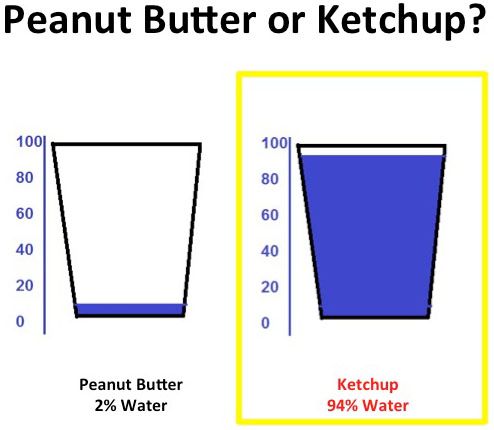
Peanut butter |
or |
Ketchup |
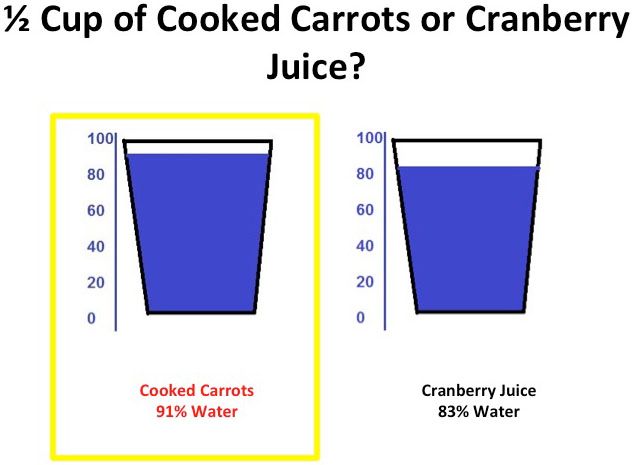
Cooked Carrots |
or |
Cranberry Juice |
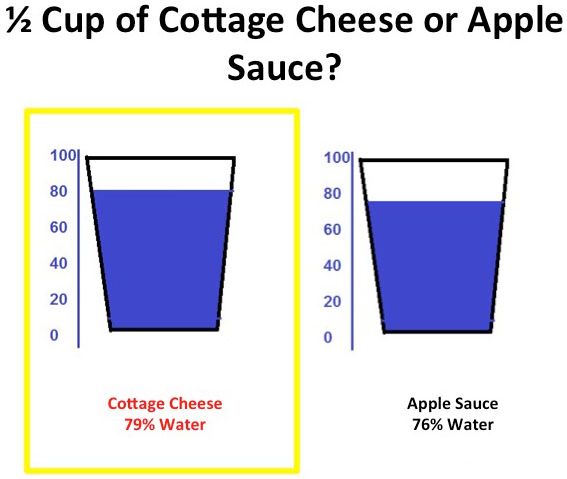
Cottage Cheese |
or |
Apple Sauce |
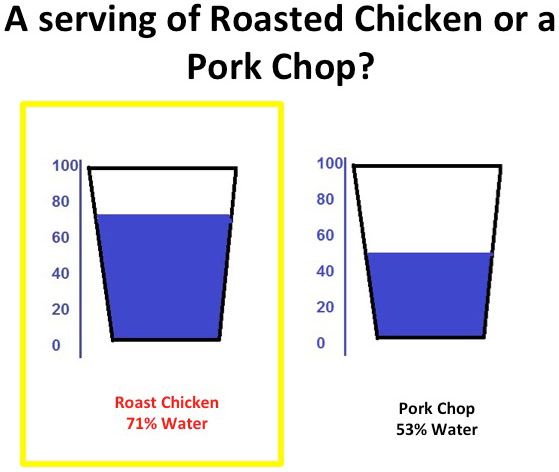
Roasted Chicken |
or |
Pork Chops |
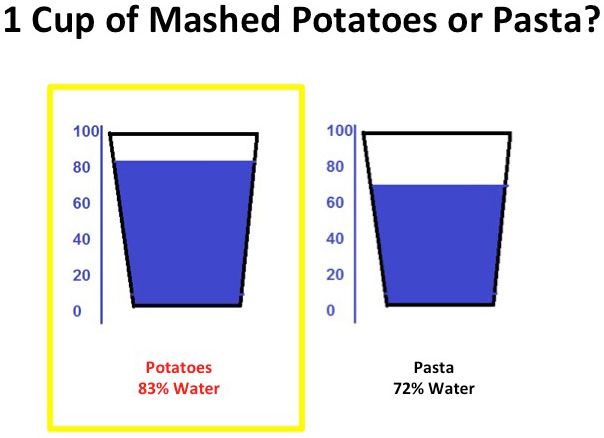
Mashed Potatoes |
or |
Pasta |
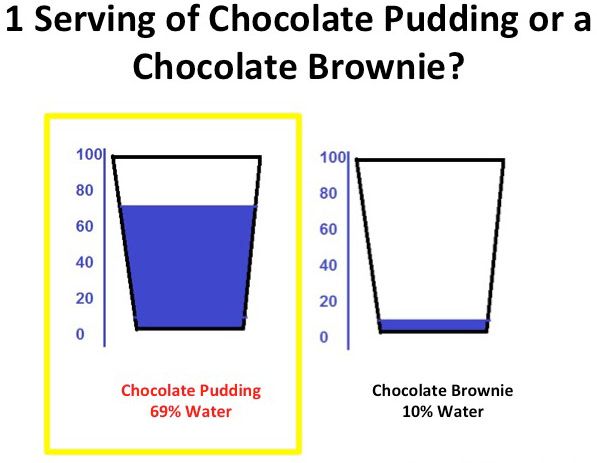
Chocolate Pudding |
or |
Chocolate Brownie |
Foods vary widely in water content. You may be surprised to find out that many common foods that are not liquids are quite high in water! Continue to Table 2 to learn more.
Which of the following is higher in percent water content? (Answer Key: percent water content per single serving) |
|||
Peanut butter |
2 |
94 |
Ketchup |
Cooked Carrots |
91 |
83 |
Cranberry Juice |
Cottage Cheese |
79 |
76 |
Apple Sauce |
Roasted Chicken |
71 |
53 |
Pork Chop |
Mashed Potatoes |
83 |
72 |
Pasta |
Chocolate Pudding |
69 |
10 |
Chocolate Brownie |
Tips for readers:
Frail elderly are encouraged to drink milk and other nutrient-rich beverages between meals.
Encourage three servings of fruit and fruit juice each day.
This document is FSHN11-13, one of a series of the Food Science and Human Nutrition Department, Florida Cooperative Extension Service, Institute of Food and Agricultural Sciences, University of Florida. Published May 2011. Visit the EDIS website at http://edis.ifas.ufl.edu/.
Wendy J. Dahl, PhD, assistant professor, Food Science and Human Nutrition Department, Institute of Food and Agricultural Sciences, University of Florida, Gainesville, FL 32611.
The Institute of Food and Agricultural Sciences (IFAS) is an Equal
Opportunity Institution authorized to provide research, educational
information and other services only to individuals and institutions
that function with non-discrimination with respect to race, creed,
color, religion, age, disability, sex, sexual orientation, marital
status, national origin, political opinions or affiliations.
For more information on obtaining other extension publications,
contact your county Cooperative Extension service.
U.S. Department of Agriculture, Cooperative Extension Service,
University of Florida, IFAS, Florida A. & M. University Cooperative
Extension Program, and Boards of County Commissioners Cooperating. Nick T. Place,
Dean.