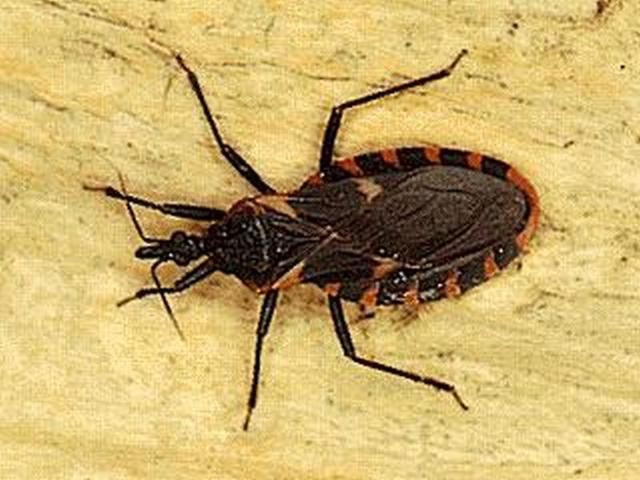
Bloodsucking insects can torment humans and animals and can transmit disease. They are all parasites of humans or other host animals and are abundant at certain times of the year. Bloodsucking insects can be grouped as mosquitoes, flies, lice, and true bugs.
Asian Tiger Mosquito, Aedes albopictus
The Asian tiger mosquito is recognized by a straight white stripe in the center of the thorax. It is a daytime biter and frequents shady areas. It breeds in artificial containers and tree holes that retain water. It prefers to rest in low shrubs near the ground.
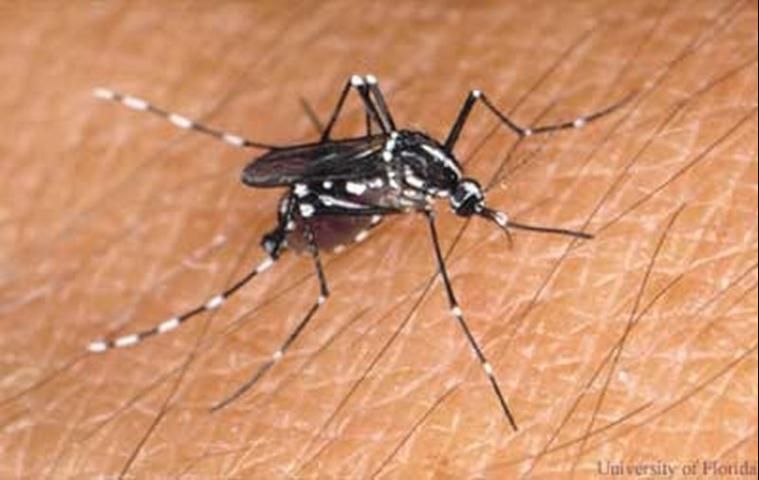
Black Salt Marsh Mosquito, Aedes taeniorhynchus
The salt marsh mosquito is very common in coastal areas and is responsible for most mosquito spraying in Florida. It is not an important disease vector but emerges in large numbers after rains and flooding.
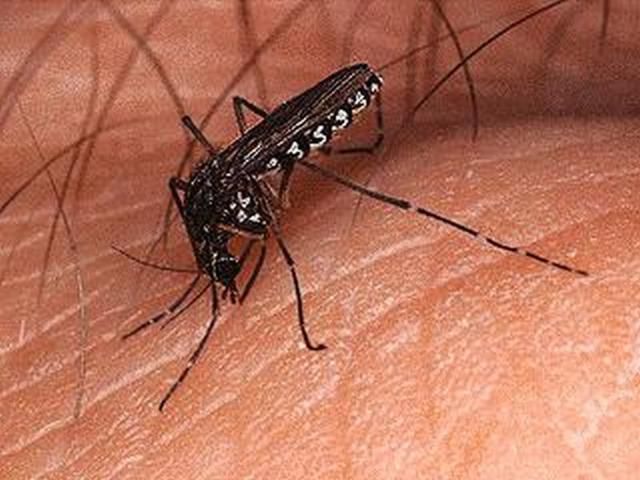
Stable Fly, Stomoxys calcitrans
The stable fly looks like the house fly but sucks the blood of humans and animals. It has a bayonet-like proboscis that projects forward from the head. The thorax has a light-colored area between the longitudinal bands. The upper abdomen has a number of round dark spots. It usually bites about 12 inches to 18 inches (30 to 45 cm) from the ground.
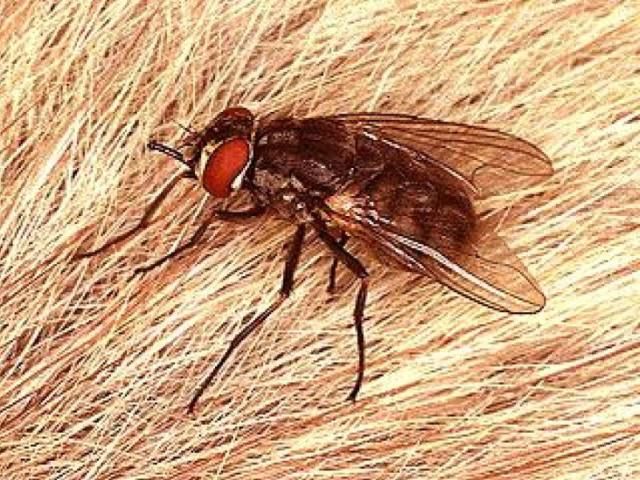
Horse Fly, Tabanus spp.
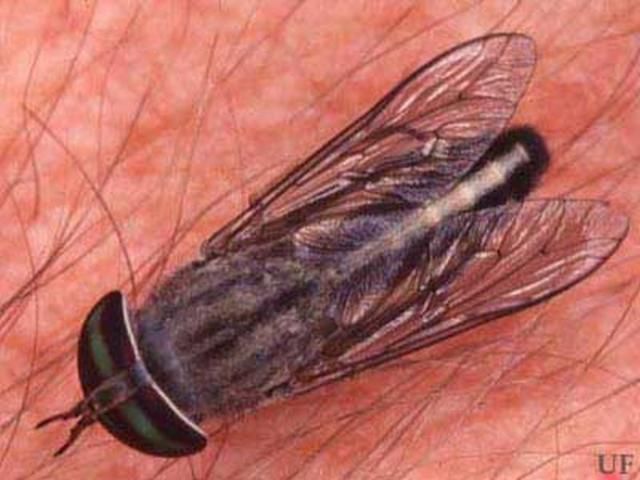
Horse flies are large, heavy-bodied flies with large eyes. The wings are swept back at rest and the abdomen is pointed. The females suck blood and are strong, fast fliers. Larvae live in the mud on the bottom of ditches or in moist soil, feeding on other organisms. They are very prevalent at certain times of the year.
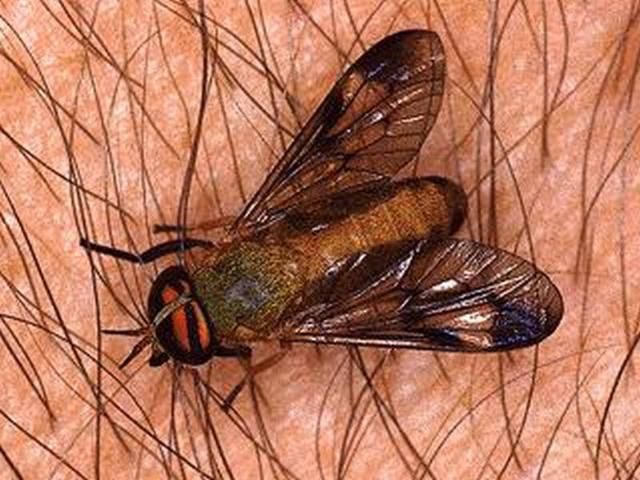
Deer Fly, Chrysops spp.
Deer flies are often called green-headed flies or yellow flies. Many species are light-brown or yellow. They suck the blood of humans and animals. The larvae live in marshy areas.
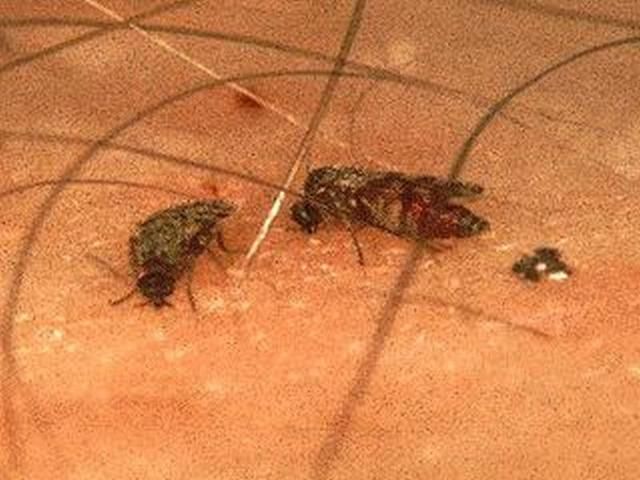
Sand Fly, Culicoides spp.
Sand flies are small bloodsucking gnats that are often called "noseeums" or "punkies." Many breed in salt marshes or other moist areas. They are small enough to enter houses through normal window screening. Most species are active at sunrise and sunset.
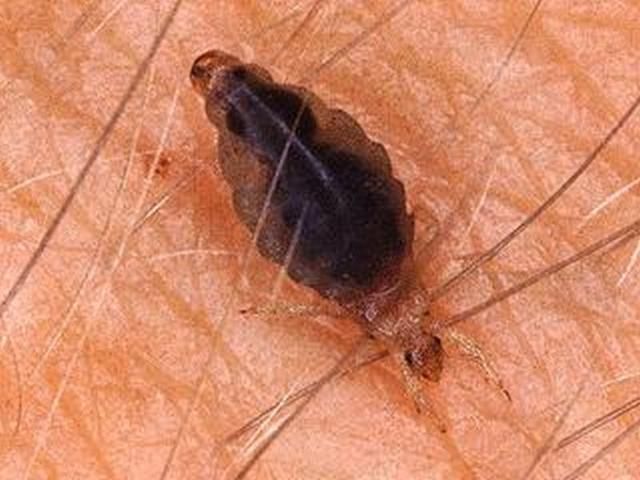
Head Louse, Pediculus humanus capitis
Head lice are wingless insects with sucking mouthparts that are 1-mm to 2-mm long. The legs are about the same length, and have claws to grasp hairs. This louse is found only on the hairs of the head. It glues its eggs to the hairs. Preferred sites are on hairs behind the ears and on the back of the head.
Pubic Louse, Pthirus pubis
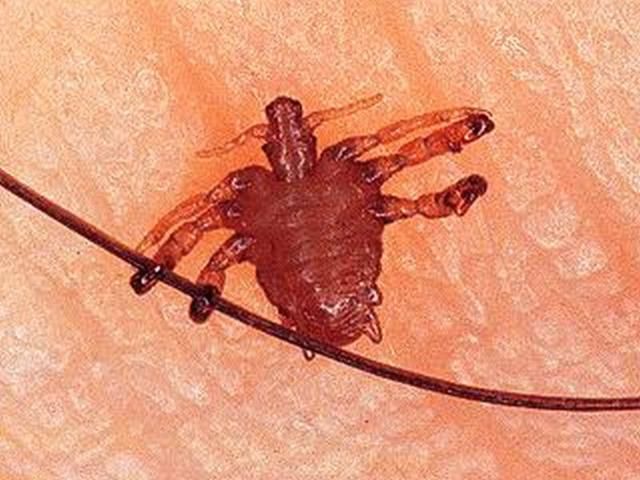
The pubic louse, or crab louse, lives in the pubic region of the body but can spread to the hair of chest, armpits or eyebrows. The crab louse has a wide oval body and large grasping claws on the second and third pair of legs. The abdomen is relatively short, with hair processes laterally.
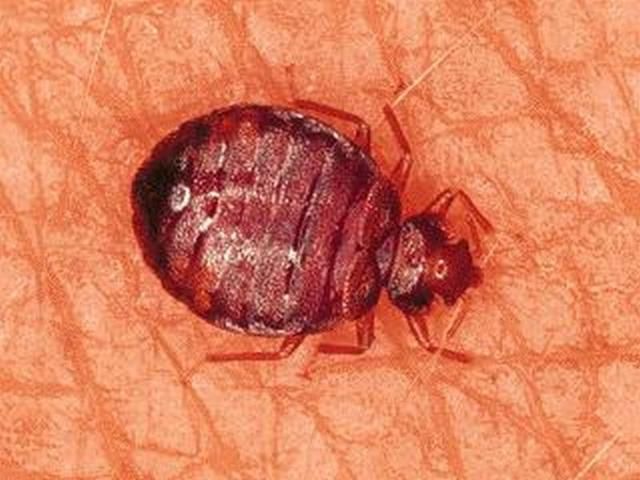
Bed Bug, Cimex lectularius
It is an oval, flattened insect about 4-mm to 5-mm long. It hides in cracks and crevices. It has a four-segmented beak hidden under the head. Bed bugs are brownish-red, but may be bright-red immediately after feeding. They usually feed at night while the host is sleeping.
Bloodsucking Conenose, Triatoma sanguisuga
It is a large insect, about 25 mm long, with a three-segmented beak. It has a cone-shaped head and a ridge along the edge of the abdomen that has alternating yellow and dark-brown areas. The conenose sucks blood at night while the host sleeps. It is often associated with nests of wild animals.