
Several invasive species of thrips have established in Florida and become pests of vegetable, ornamental, and agronomic crops. Damage to crops results from thrips feeding and egg-laying injury, thrips vectoring plant diseases, the cost of using control tactics, and the loss of pesticides due to resistance.
The key pest thrips in pepper and eggplant is the western flower thrips, Frankliniella occidentalis. It was introduced and became established in north Florida in the mid-1980s. The western flower thrips emerged as the key pest problem in central and southern Florida in 2005 (Frantz and Mellinger 2009). Another invasive species is the melon thrips, Thrips palmi. It is adapted to tropical climates and became established in south Florida in the early 1990s, where it has become a pest of pepper and eggplant. The chilli thrips, Scirtothrips dorsalis, is a recent invader in central and south Florida where it has the potential to become a pepper and eggplant pest.
Growers in all regions of Florida initially responded to these invasive thrips with calendar applications of broad-spectrum insecticides. This has resulted in a classic "3" R situation: resistance to insecticides (including new reduced-risk insecticides); resurgence of thrips populations due to the killing of natural enemies and competing native species of thrips; and replacement with various other pests that are induced by the application of the broad-spectrum insecticides.
The western flower thrips is the most efficient vector of tomato spotted wilt virus (TSWV). This virus is one of about twenty known species of tospoviruses (Pappu et al. 2009). Epidemics of TSWV occur frequently in numerous crops in north Florida.
Thrips Biology and Ecology
Native species of thrips are common in Florida pepper and eggplant (Funderburk et al. 2000; Frantz and Mellinger 2009). In north Florida, the most common species is the eastern flower thrips (Frankliniella tritici) followed by the Florida flower thrips (Frankliniella bispinosa). In central and south Florida, the Florida flower thrips is the only common native species. Adults of eastern flower thrips, Florida flower thrips, western flower thrips, and melon thrips aggregate in flowers, while larvae of these species are found in flowers and on fruits (Hansen et al. 2003). Thrips are cryptic and hide under fruit calyxes or where fruit contact stems or leaves. Flower thrips are characterized by a wide feeding range of plant hosts, an ability to disperse rapidly, a short generation time (approximatively 14 days), and production of male offspring without mating. All of the species mentioned have a high reproductive potential. The adults of all species feed on flower tissues and pollen. Pollen feeding greatly increases the number of eggs produced.
Population numbers decline greatly in summer and fall as natural enemies become important factors affecting their abundance. In central and south Florida, natural enemies are present year-round.
Plant species that serve as reproductive hosts vary with each individual species of thrips (Northfield et al. 2008; Paini et al. 2007). Adults also commonly feed in the flowers of plants that are not reproductive hosts. Western flower thrips and melon thrips are suppressed, but not completely eliminated, by interspecific competition with the native thrips. Since they share most of the same non-crop hosts, the invasive species are much less common as a result of interspecific competition (Paini et al. 2008).
Many kinds of predaceous arthropod groups help to suppress thrips populations. Minute pirate bugs (Family Anthocoridae) are the most important predators of thrips (Funderburk et al. 2000). Species of anthocorids occur nearly worldwide. The species Orius insidiosus occurs throughout eastern North America, Central America and the Caribbean, and South America. Orius pumilio also occurs with O. insidiosus in central and south Florida (Shapiro et al. 2009). Other thrips predators include big-eyed bugs (Family Lygaeidae), damsel bugs (Family Nabidae), lacewings (Family Chrysopidae), predatory thrips (primarily in the family Aeolothripidae), and predatory mites (Family Phytoseiidae).
Tomato Spotted Wilt
TSWV is replicative and persistent, which means that the virus replicates in the insect's internal tissues and that thrips retain the virus throughout their lifespan. The cycle of virus acquisition and transmission begins with larval feeding on infected plant tissue (de Assis Filho et al. 2005). The virus passes through the midgut of the insect and spreads to various cells and organs, including the salivary glands. The virus is transmitted to an uninfected plant when the saliva is injected into the plant tissue during feeding (Figure 1).
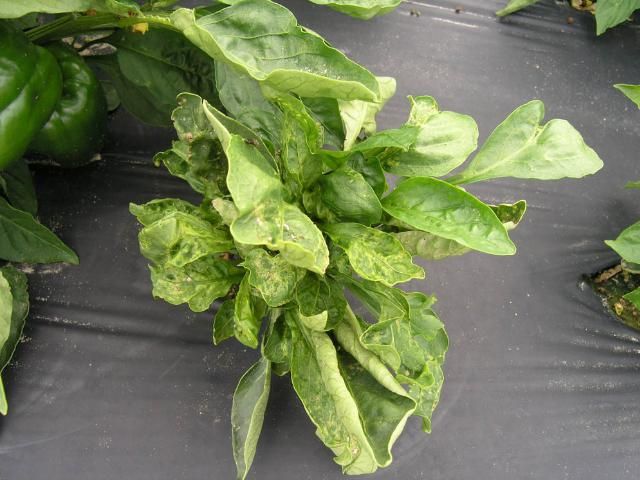
Credit: Joe Funderbruk, UF/IFAS
In crop systems, the virus is transmitted by the adult thrips. Importantly, adult thrips that have not acquired the virus as larvae are not able to transmit the virus.
Only certain species of thrips are able to transmit TSWV (Pappu et al. 2009). Aphids and whiteflies are not vectors. At least eight species of thrips are vectors of tomato spotted wilt virus. Six of these species are known to occur in Florida. TSWV has a worldwide distribution, with a known plant host range of over 926 species.
Epidemics of TSWV occur in many geographic regions worldwide. TSWV infects plant species of natural vegetation that are found growing close to susceptible crops, and in some situations natural vegetation is an important source of viruliferous adult thrips that transmit to susceptible crops. In other situations, susceptible crops are the source of viruliferous adults invading new fields.
Primary spread of the disease (initial entry into a crop) is due to infections caused by incoming viruliferous adults to a crop from outside sources that include uncultivated and cultivated plant hosts, and this is the most significant source of infection in crop fields. Adults persistently transmit, meaning that they are infected for life, and their control with insecticides does not prevent transmission because a short time of feeding results in infection (Momol et al. 2004).
Secondary spread (within a crop) is caused by viruliferous adults that acquired the virus as larvae feeding on an already infected plant in that field. For secondary spread to occur, thrips must colonize and reproduce on infected plants within a crop. Control of the larvae before they develop into adults is effective in preventing secondary spread. Most viral infections in north Florida are the result of primary spread, although some secondary viral infections occur late in the spring season (Momol et al. 2004). The lack of epidemics of TSWV in central and south Florida suggests that the Florida flower thrips is not an efficient vector capable of acquiring TSWV from uncultivated plant species. It is capable of acquiring and transmitting TSWV from pepper under laboratory conditions, although less efficiently than the western flower thrips (Avila et al. 2006). The eastern flower thrips, melon thrips, and chilli thrips are not competent vectors of TSWV.
Groundnut ringspot virus and tomato chlorotic spot virus are two emerging tospoviruses in Florida. Groundnut ringspot virus and tomato chlorotic spot virus were frequently detected in solanaceous crops and weeds with tospovirus-like symptoms in south Florida and occurred together with TSWV in tomato and pepper in south Florida (Webster et al. 2015). Tomato spotted wilt virus was the only tospovirus detected in tomato in other survey locations in north Florida and the rest of the continental US, with the exceptions of tomato chlorotic spot virus from tomato in Ohio and groundnut ringspot virus from tomato in South Carolina and New York, all of which were first reports. Currently, tomato chlorotic spot virus is the predominant tospovirus in south Florida and it has also become widespread in the Caribbean. Although predominantly solanaceous hosts are known for TCSV and GRSV, increasing numbers of non-solanaceous hosts have recently been reported for TCSV in Florida and the Caribbean. These hosts include lettuce (Lactuca sativa), sweet basil (Ocimum basilicum), purslane (Portulaca oleracea) and several other common weeds, and annual vinca (Catharanthus roseus) and several other ornamental crops (Estévez and Adkins, 2014; Raid et al. 2017; Warfield et al. 2015). Because different tospoviruses induce similar symptoms in all of these hosts, serological or molecular tests are needed to accurately determine which virus is present.
Like TSWV, groundnut ringspot virus and tomato chlorotic spot virus are transmitted by thrips. Western flower thrips and common blossom thrips (F. schltzei) are confirmed vectors of these new tospoviruses (Webster et al. 2014). The fact that the disease is beginning to show up more widely and with greater frequency across south Florida is cause for concern. The close relationship between these new tospoviruses indicates that integrated management strategies directed against TSWV, including the use of metalized (UV-reflective) mulch, and biologically based thrips management may also be effective for these new tospoviruses.
Management Programs for Western Flower Thrips and Tomato Spotted Wilt Virus
Economic Thresholds. Adults of the eastern flower thrips and the Florida flower thrips cause little if any damage to pepper and eggplant, and they beneficially out-compete the western flower thrips and the melon thrips. No damage has been observed even when densities of 20–25 of these native species per flower were present (Funderburk 2009).
The adults of the invasive western flower thrips and melon thrips that inhabit pepper and eggplant flowers also cause little if any damage. At least 6 western flower thrips and melon thrips adults per flower can be tolerated without damage.
The adults of all species of thrips feed on petals and other flower structures, but this injury does not result in economic damage. Egg-laying on the small fruit of the flower by the western flower thrips (typical in tomato and some other crops) is not typical in pepper and eggplant.
Thrips feed by sucking the contents of the epidermal cells of the plant. When feeding occurs on fruit, it results in a damage symptom called "flecking" (Figure 2). Adults of the western flower thrips and the melon thrips and the larvae of all species cause flecking. An average of two thrips per fruit is tolerable.
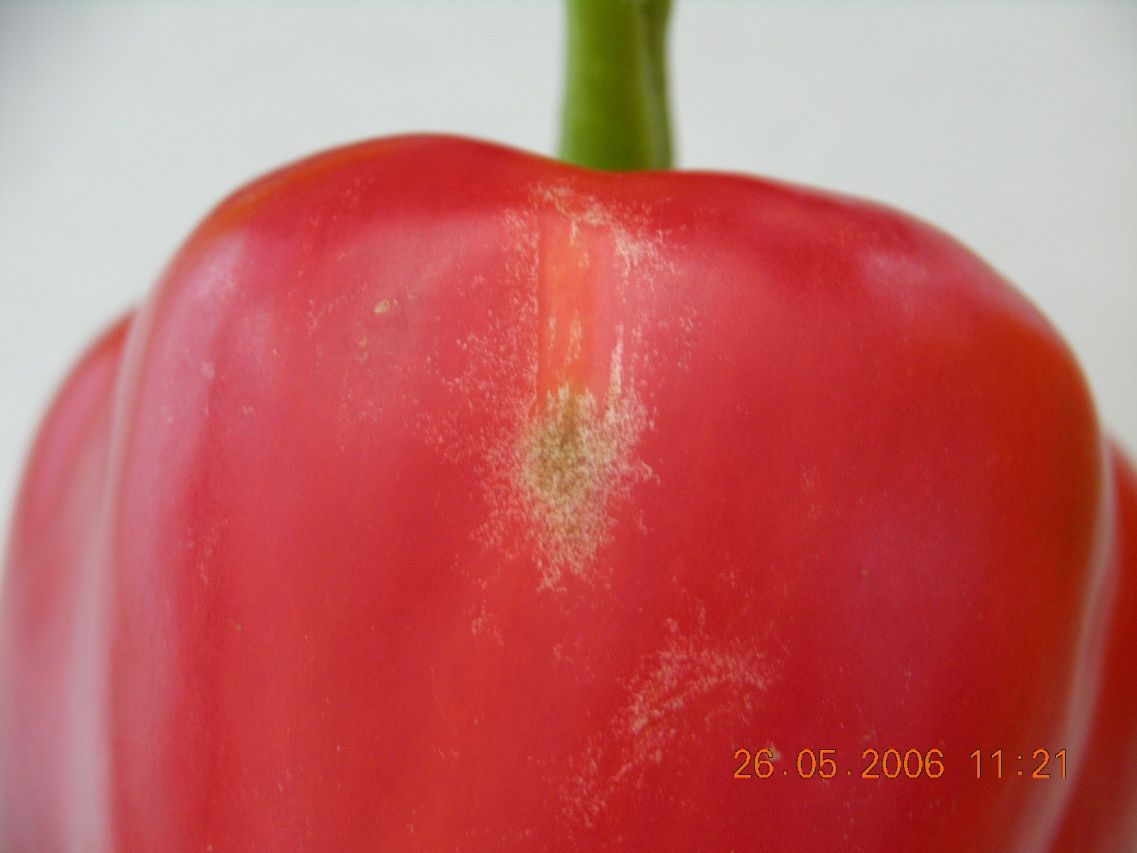
Credit: Joe Funderburk, UF/IFAS
In north Florida, adult western flower thrips is the key vector of TSWV; however, therapeutic control of the adults in the flowers with insecticides does not prevent virus transmission to the plant (Reitz et al. 2003). Preventative tactics, such as ultraviolet-reflective mulches, must be used to prevent primary spread of tomato spotted wilt virus by adults of the western flower thrips.
Scouting. Because the native flower thrips occur in large numbers in the flowers of fruiting vegetables where they out-compete the damaging invasive species, it is important to know the species present in order to make management decisions. A few flowers should be collected periodically and placed in a small container with 70% alcohol (Figure 3, Funderburk et al. 2019). The container can be shaken to dislodge the thrips, which can then be examined under a microscope with at least 40X magnification to identify the species. Shifts in the presence and abundance of thrips species through the growing season can be evaluated in this way. It is best for growers to have a competent scout who can provide this service. Contact your local UF/IFAS Extension agent for advice and help.
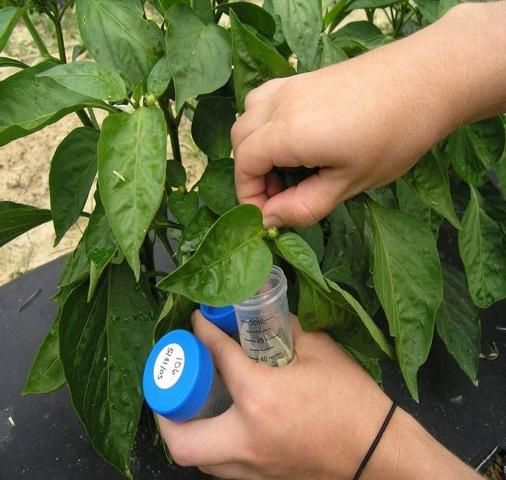
Credit: Joe Funderburk, UF/IFAS
The number of thrips and minute pirate bugs in the flowers can be determined by picking the flower and placing it on a white board. Gently tear open the flower so that the thrips and minute pirate bugs will emerge onto the board where the adults and immature stages can be readily distinguished and counted. Flowers also can be placed in containers with 70% alcohol and shaken vigorously. The thrips and minute pirate bugs will fall to the bottom where they can be distinguished and counted. Counting the thrips from ten flowers collected from each of several random locations in a field is usually sufficient to estimate density for scouting purposes. Examine small, medium, and large fruit directly for thrips, taking care to look under the calyxes. Examine and count the thrips on at least several fruit from each of several locations in the field. Take special care to examine the small fruits frequently, as the eggs generally are deposited during the flower stage, and the larvae on the small fruit are the first indication of a developing problem. It is not necessary to identify the larvae to species. Larvae most likely are either the western flower thrips, Florida flower thrips, or melon thrips, and the amount of injury caused by either species is similar.
Biological Control. Thrips in peppers and eggplant are controlled naturally by minute pirate bugs. The scout can calculate the predator-to-prey ratio to predict the effectiveness of the minute pirate bugs in controlling thrips (Funderburk et al. 2000; Reitz et al. 2003). Under field conditions, about one predator to 180 thrips is sufficient for suppression of the populations of thrips. When the ratio reaches about one predator to 40 thrips, thrips populations are controlled.
In north Florida, minute pirate bugs are not active during the winter and early spring. There usually is a lag time in spring pepper and eggplant during which populations of thrips build up before natural populations of the minute pirate bugs invade in sufficient numbers to suppress and control the pests (Funderburk et al. 2000; Reitz et al. 2003). The number of thrips can exceed 10 per flower in untreated spring pepper and eggplant during this lag period, but there usually is no damage to the fruit. Minute pirate bugs are active year-round in central and south Florida. They rapidly invade fields in sufficient numbers to prevent population buildup of thrips.
Conservation Biological Control and Reduced-Risk Insecticides. Establishing a biologically based integrated pest management program is the most effective way to manage thrips in pepper and eggplant (Funderburk et al. 2000; Reitz et al. 2003; Srivistava et al. 2008). Integrated pest management programs adapted to local conditions throughout Florida include spinosyn insecticides that have a unique mode of action (Group V insecticides). The spinosyns (spinosad and spinetoram) have traditionally been the most effective insecticides presently available to suppress western flower thrips. They are classified as reduced-risk insecticides that only minimally suppress populations of minute pirate bugs at labeled rates. Other insecticides that have efficacy against thrips and conserve populations of minute pirate bugs are listed in Table 2. Reduced-risk insecticides that are not efficacious against the western flower thrips, but conserve minute pirate bugs are useful for controlling other pests. These are also listed in Table 2.
Insecticides. Resistance in western flower thrips populations has been documented for pyrethroid, carbamate, and organophosphate classes of insecticides. Populations of invasive western flower thrips that initially became established in Florida probably arrived already resistant to most of these broad-spectrum insecticides. Flaring of western flower thrips and the non-target pests is possible when these broad-spectrum insecticides are used. For this reason, their use in fruiting vegetables is being phased out as new, safer, more selective insecticides in different chemical classes are becoming available (Table 2). Certain organophosphate, neonicotinoid, and carbamate insecticides have some level of efficacy against western flower thrips, but these should be used sparingly and only in particular instances when nontarget effects would be minimal. For example, they could be used near the end of the production season, as re-entry and pre-harvest intervals on the label allow.
The most efficacious insecticides for western flower thrips in fruiting vegetables and other crops are in the spinosyn class. No other insecticide class presently available provides this level of control. However, resistance to spinosyns has been documented in pockets in Florida (Weiss et al. 2009). For this reason, we recommend that the use of group V spinosyn insecticides be limited. Avoid sequential sprays during the cropping season on the same and sequential crops. Consult with your local county agent for information on the status of resistance in local thrips populations in your area.
A number of other insecticides that provide suppression of western flower thrips adults and larvae are registered. However, none provide the level of efficacy of the spinosyns (Srivistava et al. 2014). Cyazypyr® and acetamiprid have performed best after the spinosyns in the trials. Other insecticides that have shown significant suppression the adults and larvae of western flower thrips include flonicamid, spirotetramat, kaolin clay, and Requiem® (terpenes). Azadirachtin, microbes, various essential oils of plants, and potassium salts of fatty acids are available commercially, and these provide some suppression of western flower thrips.
The focus of management is not in killing the maximum number of thrips; rather, it is in preventing damage. Flecking is only damaging when severe, and it can be reduced to tolerable levels by limited suppression of western flower thrips adults and larvae. It is important to use different insecticides from different chemical classes when multiple applications of insecticide are justified during the production season.
Ultraviolet-Reflective Mulch. An effective integrated pest management program employs reduced-risk insecticides, natural infestations of minute pirate bugs, and cultural tactics including ultraviolet-reflective mulch (Reitz et al. 2003). The ultraviolet-reflective mulch repels the migrating adults of the western flower thrips, and this reduces spread of the tomato spotted wilt virus. Such mulches result in a delay in the buildup of populations of thrips of all species and of minute pirate bugs. Overall, the benefits of the ultraviolet-reflective mulch outweigh the initial reduction in biological control.
Do not spray insecticides that enhance western flower thrips. Most broad-spectrum insecticides, including pyrethroids, organochlorine, organophosphate, neonicotinoid, and carbamate insecticides, kill minute pirate bugs and the competing native species of thrips (Funderburk et al. 2000; Reitz et al. 2003; Srivistava et al. 2008). A number of insecticides also have been shown to greatly enhance western flower thrips reproduction and subsequent populations.
Plant Nutrition. Over-fertilization above recommended rates of nitrogen in an attempt to optimize production results in an increase in the numbers of all species of thrips and an increased incidence of tomato spotted wilt virus (Baez et al. 2011). This is due to an increased level of aromatic amino acids in over-fertilized plants that attract western flower thrips and increase their rate of reproduction.
Refugia Plantings. Many wild and cultivated species of plants serve as hosts for minute pirate bugs and other natural enemies. Minute pirate bugs usually occur in large numbers in all regions of Florida, and they will naturally invade pepper and eggplant fields. However, it is desirable, especially on large farms with multiple plantings of susceptible crops, to maintain certain plant hosts as refugia for native and pest thrips and their natural enemies. Plantings of native species of sunflowers next to pepper fields can increase the number of minute pirate bugs in pepper fields (Frantz and Mellinger 2009). Mexican or Bolivian sunflower (Tithonia diversifolia) is a perennial plant that flowers over much of the year in south Florida. Maintaining refugia where thrips are not exposed to insecticides also helps to reduce the risk of pest thrips developing insecticide resistance. Usually, plants that are not sprayed with insecticides serve as hosts for the native species of thrips. The invasive pest species are outcompeted by the native species.
Predaceous Mites. Augmentative release of the predaceous mite Amblyseius swirskii can control western flower thrips in pepper and eggplant. Other pests controlled by this predatory mite include whiteflies and broadmites. As few as 12 mites per plant released early in the plant cycle may be sufficient to provide control for more than a month. The mite is available commercially from several suppliers.
Vertical Integration of the Management Program. Outbreaks of the western flower thrips are known to be induced by the application of many insecticides (Funderburk et al. 2000; Reitz et al. 2003). Prevention of pest outbreaks requires that management efforts against all pests be vertically integrated. This is accomplished by careful planning to use preventive tactics when necessary for other key pests.
For pepper weevil, the following practices are recommended:
- Provide at least 3 months pepper-free fallow
- Control nightshade
- Plant in isolated locations if possible
- Avoid sequential planting and rotate crops
- Use short crop cycles
- Remove and destroy infested fruit
- Plow down and destroy old crops
Spider mites, broad mites, and whiteflies can be controlled biologically or with compatible insecticides (Table 2).
Lepidoptera are occasional pests in pepper and eggplant that can be controlled with insecticides that do not kill minute pirate bugs and that do not induce western flower thrips in other ways (Tables 2). The number of insecticides included in these tables will increase following the release of this publication, so contact your county extension agent for updated information. Proper scouting to identify the pest and beneficial species and to spray only when populations reach the economic threshold is recommended.
The conservation biological control program has been used by growers in north Florida since the late 90s, and their experience is that problems from whiteflies, aphids, and other pests were fewer and less severe than when they were following a calendar spray program or frequently using broad-spectrum insecticides to control their pests. Ladybugs are conserved as a consequence and this normally prevents problems from aphids.
References Cited
Avila, Y., J. Stavisky, S. Hague, J. Funderburk, S. Reitz, and T. Momol. 2006. Evaluation of Frankliniella bispinosa (Thysanoptera: Thripidae) as a vector of tomato spotted wilt virus in pepper. Florida Entomologist 89: 204–207.
Baez, I., S. R. Reitz, and J. E. Funderburk. 2004. Predation of Orius insidiosus (Heteroptera: Anthocoridae) on life stages and species of Frankliniella flower thrips (Thysanoptera: Thripidae) in pepper flowers. Environmental Entomology 33: 662–670.
Baez, I., S. R. Reitz, J. E. Funderburk, and S. M. Olson. 2011. Variation within and between Frankliniella thrips species in host plant utilization. Journal of Insect Science 11:41 available online: insectscience.org/11.41.
Batuman, O., T. A. Turini, P. V. Oliveira, M. R. Rojas, M. Macedo, H. C. Mellinger, S. Adkins,and R. L. Gilbertson. 2017. First report of a resistance-breaking strain of Tomato spotted wilt virus infecting tomatoes with the Sw-5 tospovirus-resistance gene in California. Plant Disease 101:637.
De Assis Filho, F. M, J. Stavisky, S. R. Reitz, S. M. Deom, and J. L. Sherwood. 2005. Midgut infection by tomato spotted wilt virus and vector incompetence of Frankliniella tritici. Journal of Applied Entomology 129: 548–550.
Demirozer, O., K. Tyler-Julian, J. Funderburk, N. Leppla, and S. Reitz. 2012. Frankliniella occidentalis (Pergande) integrated pest management programs for fruiting vegetables in Florida. Pest Management Science 68: 1537-1545.
Estévez de Jensen, C., and S. Adkins. 2014. First report of Tomato chlorotic spot virus in lettuce in Puerto Rico. Plant Disease 98:1015.
Frantz, G., and H. C. Mellinger. 2009. Shifts in western flower thrips, Frankliniella occidentalis (Thysanoptera: Thripidae), population abundance and crop damage. Florida Entomologist 92: 29–34.
Funderburk, J. E. 2009. Management of the western flower thrips (Thysanoptera: Thripidae) in fruiting vegetables. Florida Entomologist 92: 1–6.
Funderburk, J., J. Stavisky, and S. M. Olson. 2000. Predation of Frankliniella occidentalis (Thysanoptera: Thripidae) in field peppers by Orius insidiosus (Hemiptera: Anthocoridae). Environmental Entomology 29: 376–382.
Funderburk, J., X. Martini, J. Freeman, I. Strzyzewski, E. Traczyk, T. Skarlinsky, and S. Adkins, 2019. Sampling for estimating Frankliniella species Flower Thrips and Orius species predators in field experiments. JoVE (Journal of Visualized Experiments), (149), e59869.
Hansen, E. A., J. E. Funderburk, S. R. Reitz, S. Ramachandran, J. E. Eger, and H. McAuslane. 2003. Within-plant distribution of Frankliniella species (Thysanoptera: Thripidae) and Orius insidiosus (Hemiptera: Anthocoridae) in field pepper. Environmental Entomology 32: 1035–1044.
Momol, T., S. M. Olson, J. E. Funderburk, J. Stavisky, and J. J. Marois. 2004. Integrated management of tomato spotted wilt in field-grown tomato. Plant Disease 88: 882–890.
Northfield, T. D., D. R. Paini, J. E. Funderburk, and S. R. Reitz. 2008. Annual cycles of Frankliniella spp. thrips (Thysanoptera: Thripidae) abundance on North Florida uncultivated reproductive hosts: predicting possible pest outbreaks. Annals of the Entomological Society of America 101: 769–778.
Paini, D. R., J. E. Funderburk, C. T. Jackson, and S. R. Reitz. 2007. Reproduction of four thrips species (Thysanoptera: Thripidae) on uncultivated hosts. Journal of Entomological Science 42: 610–615.
Paini, D. R., J. E. Funderburk, and S. R. Reitz. 2008. Competitive exclusion of a worldwide invasive pest by a native. Quantifying competition between two phytophagous insects on two host plant species. Journal of Animal Ecology 77: 184–190.
Pappu, H. R., R. A. C. Jones, and R. K. Jain. 2009. Global status of tospovirus epidemics in diverse cropping systems: Successes achieved and challenges ahead. Virus Research 141: 219–236.
Raid, R. N., J. R. Allingham, J. E. Funderburk, T. Skarlinsky, S. F. Hutton, W. W. Turechek, and S. Adkins. 2017. First report of Tomato chlorotic spot virus in sweet basil (Ocimum basilicum) and purslane (Portulaca oleracea) in Florida. Plant Health Progress 18: 126-128.
Ramachandran, S., J. Funderburk, J. Stavisky, and S. Olson. 2001. Population abundance and movement of Frankliniella thrips (Thysanoptera: Thripidae) in northern Florida. Agricultural and Forest Entomology 3: 1–10.
Reitz, S. R. 2008. Comparative bionomics of Frankliniella occidentalis and Frankliniella tritici. Florida Entomologist 91: 474–476.
Reitz, S. R. 2009. Biology and ecology of the western flower thrips (Thysanoptera: Thripidae): The making of a pest. Florida Entomologist 92: 7–13.
Reitz, S. R., E. L. Yearby, J. E. Funderburk, J. Stavisky, M. T. Momol, and S. M. Olson. 2003. Integrated management tactics for Frankliniella thrips (Thysanoptera: Thripidae) in field-grown pepper. Journal of Economic Entomology 96: 1201–1214.
Reitz, S. R., J. E. Funderburk, and S. M. Waring. 2006. Differential predation by the generalist predator Orius insidiosus on congeneric species of thrips that vary in size and behavior. Entomologia Experimentalis et Applicata 119: 179–188.
Shapiro, J. P., P. D. Shirk, S. R. Reitz, and R. Koenig. 2009 Sympatry of Orius insidiosus and O. pumilio (Hemiptera: Anthocoridae) in north central Florida. Florida Entomologist 92: 362–366.
Srivistava, M., L. Bosco, J. Funderburk, S. Olson, and A. Weiss. 2008. Spinetoram is compatible with the key natural enemy of Frankliniella species thrips in pepper. Plant Health Progress doi:10.1094/PHP-2008-0118-02-RS.
Srivistava, M., J. Funderburk, O. Demirozer, S. Olson, and S. Reitz. 2014. Impacts on natural enemies and competitor thrips of insecticides against Frankliniella occidentalis (Pergande) (Thysanoptera: Thripidae) in fruiting vegetables. Florida Entomologist 97: 337-348.
Toapanta, M., J. E. Funderburk, R. J. Beshear, S. M. Olson, and T. P. Mack. 1996. Abundance of Frankliniella spp. (Thysanoptera: Thripidae) on winter and spring host plants. Environmental Entomology 25: 793–800.
Toapanta, M., J. E. Funderburk, and D. Chellemi. 2001. Development of Frankliniella species (Thysanoptera: Thripidae) in relation to microclimate temperatures in vetch. Journal of Entomological Science 36: 426–437.
Tsai, J. H., B. S. Yue, J. E. Funderburk, and S. E. Webb. 1996. Effect of plant pollen on growth and reproduction of Frankliniella bispinosa. Acta Horticulturae 431: 535–541.
Warfield, C Y., K. Clemens, and S. Adkins. 2015. First report of Tomato chlorotic spot virus on annual vinca (Catharanthus roseus) in the United States. Plant Disease 99: 895.
Webster, C., G. Frantz, S. Reitz, J. Funderburk, H. C. Mellinger, E. McAvoy, W. W. Turechek, S. H. Marshall, Y. Tantiwanich, M. McGrath, M. Daughtrey, and S. Adkins. 2015. Emergence of Groundnut ringspot virus and Tomato chlorotic spot virus in vegetables in Florida and the southeastern United States Phytopathology 105: 388-398.
Table 1. Recommendations for management of western flower thrips in pepper and eggplant.
Table 2. Insecticides labeled for fruiting vegetables that are compatible with the conservation biological program using O. insidiosus.
Table 3. Main insecticides for fruiting vegetables that control or suppress the adults and larvae of western flower thrips. Most are selective insecticides generally with low toxicity to important natural enemies unless otherwise indicated. Detailed name and rates are provided in the EDIS Vegetable Production Guide https://edis.ifas.ufl.edu/publication/CV137.