
Irrigation is one of the most important cultural practices that we do for our lawns. Since water is a limited resource and is vital to the health of your lawn, it is very important that watering be done correctly. There are some critical components to understanding how to irrigate correctly, including:
- How frequently to water.
- How much to water.
- What time of day to water.
- How to apply water uniformly.
- How your turf irrigation affects your landscape plants.
- What microenvironmental effects in the landscape may affect irrigation requirements.
- Municipal or Water Management District restrictions on irrigation.
How Frequently to Water
Irrigation frequency will vary based on grass species, rainfall amounts, soil type and amount of compaction, shade presence, geographical location in the state, and, most importantly, by season. Irrigation systems should be reset seasonally to reflect the differing water requirements of grasses based on time of year. Table 1 lists some average seasonal irrigation frequencies for maintenance of St. Augustinegrass in north, central, and south Florida. These frequencies assume that no rainfall occurs, so if rainfall amounts total at least ½ to ¾ ", the frequency can usually be reduced. Often, homeowners are unaware that an irrigation system should be adjusted seasonally, and failure to adjust for seasonal changes will usually lead to overwatering. Overwatering will harm long-term turf health because it greatly increases disease susceptibility and thatch buildup and leads to a shorter root system, which reduces the turf's overall stress tolerance and ability to survive with less water. Additionally, overwatering promotes the growth of certain weed species such as dollarweed and sedges.
Remember that, on average, we receive 50 or more inches of annual rainfall in most parts of Florida. When rainfall is adequate to meet plant needs, supplemental irrigation systems should be turned off. Ideally, University of Florida guidelines call for watering lawns on an "as-needed" basis. This can be determined by observing the grass for signs of water stress, which indicate that water lost in transpiration is not being replaced and the plant's needs for water are not being met. The signs that you need to look for are:
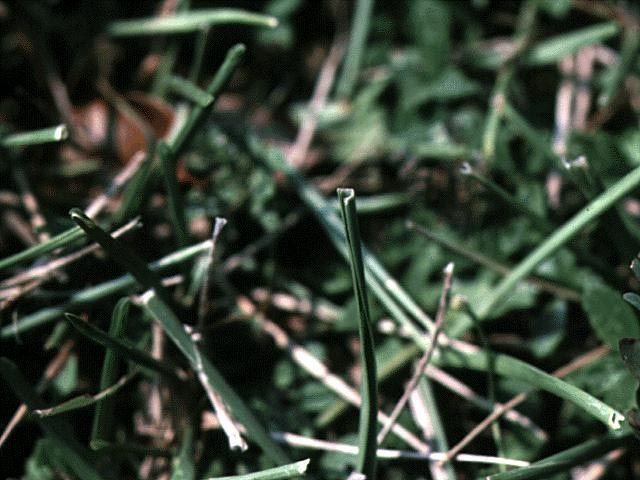
- Leaf blades are folded in half lengthwise in an attempt to conserve water (Figure 1).
- The grass takes on a blue-gray tint rather than maintaining a green color.
- Footprints or tire tracks remain visible on the grass long after they are made.
In reality, many people leave their irrigation timer set to the same schedule without changing it seasonally. It is important to remember that plant water needs change throughout the year and that not resetting the timer can result in wasted water and poor plant health. It is also important to be aware of any watering restrictions, which might be set by the Water Management District or local government.
Credit: Laurie Trenholm, UF/IFAS
How Much to Water
The amount of water applied each time you irrigate your lawn should not vary seasonally, though the frequency with which you water will change by season. An efficient watering wets only the turfgrass root zone, does not saturate the soil, and does not allow water to run off.
Florida soils are typically sandy and hold 1 inch of water in the top 12 inches of soil. If the roots are in the top 12 inches of soil and the soil is dry, then ½ to ¾ inch of water is required to wet the area thoroughly. Light, frequent watering is inefficient and encourages shallow root systems. Excessive irrigation, which keeps the root system saturated with water, is also harmful to the lawn.
A simple watering schedule would apply ½ to ¾ inch of water when the turfgrass begins to show the drought stress symptoms discussed in the previous section. Once this amount of water is applied, do not apply again until drought is noticeable. If it rains, suspend irrigation until visible drought stress symptoms appear.
When to Water
The best time for lawn irrigation is in the early morning hours. Watering during the day wastes water to excessive evaporation. Watering in late afternoon or late morning may be detrimental if it extends the time the lawn is naturally wet from dew. This extended "dew period" can accelerate disease occurrence.
How to Uniformly Apply Water
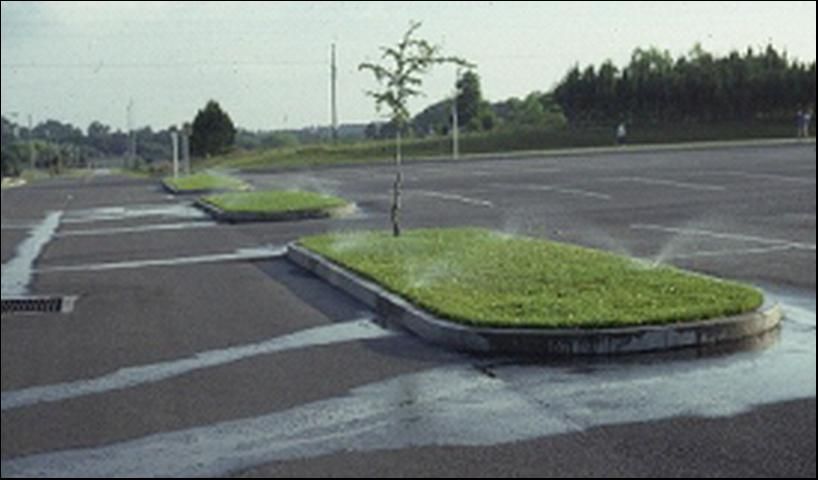
Irrigation system installers are licensed in some Florida counties, while in other counties there is no regulation of installation at all. This may lead to inefficient or sloppy installation, resulting in water waste and non-uniform coverage of turf areas. Even with a professionally installed system, it is important to check coverage regularly because heads may become clogged, damaged, or off-center, and leaks in the line may occur. An easy way to check the uniformity of your irrigation system is to place small, straight-sided cans in a straight line from your sprinkler to the edge of the watering pattern. Run the system for 15 minutes and check to see if you have about equal amounts of water in each can. If an area is not receiving water from one or more heads, or if a head is not providing complete coverage, dry spots can develop. This can lead to any of the problems associated with drought-stressed turf. While checking uniformity with the catch can method, you can also easily determine how long it takes your system to apply ½ to ¾ inch of water. Measure the amount of water in the cans after running the system for 15 minutes. If, after 15 minutes, you have ¼" of water, it would take 30 to 45 minutes to apply the correct amount of water through your irrigation system.
While checking for damaged sprinkler heads, replace any that are leaking or not providing uniform coverage. Also, check to ensure that valves open and close properly.
Credit: Michael Dukes, UF/IFAS
How Your Turfgrass Affects Your Landscape Plants
It's important to remember that a sprinkler zone may be irrigating not only turf but landscape plants as well. These plants may have different irrigation requirements and may be over- or under-watered if your irrigation strategy is based solely on the needs of your turfgrass. A properly designed irrigation system would zone turf and landscape plants separately.
Micro-Environmental Effects in the Landscape that Affect Irrigation Requirements
Not every part of your lawn will have the same irrigation requirements. Grass planted close to trees or large shrubbery will be in shade for some part of the day. Some mature tree canopies may actually shade a portion of the lawn for an entire day. In these cases, it may be very difficult to grow an acceptable stand of turf, and a different groundcover will be a better choice. If you choose to grow grass in the shade, you must reduce irrigation to this part of your lawn. For more information on growing grass in the shade, refer to ENH 151 Growing Turfgrass in the Shade.
Soil conditions will also influence water requirements. Sandy soils do not hold water for long and dry out faster than soils with more clay content. These lawns will generally require more frequent irrigations than those growing on less sandy soils. Many urban soils are compacted, which does not allow water to penetrate and may result in waterlogged conditions or standing water.
Climatic conditions also influence water use. These conditions include amount of sunlight, wind, temperature, and humidity.
Municipal or Water Management District Restrictions on Irrigation
Be sure to know what limitations are in place in your community for outdoor irrigation. These may vary by season and are designed to save water, so be sure to follow the restrictions. You may also irrigate less frequently than allowed. If, for example, rainfall of at least ½ –¾" occurs the day before you are scheduled to irrigate, you do not need to irrigate on your designated day. You may also find that you can irrigate less frequently than allowed in the winter months.