

Mange is an unsightly and painful condition caused by burrowing mange mites. There are specific families of mites that cause mange such as Democididae, Sarcoptidae, and Psoroptidaae. Mange is contagious and is spread by contact from infested to noninfested animals. Mange can occur in humans, dogs, cats, horses, sheep, cattle, and other animals.
Canine Mange (Sarcoptidae)
Sarcoptic mange of dogs is related to the human skin disease called scabies. Dog mange is caused by the canine mange mite (Figure 1), which frequently also attacks humans. A closely related mite attacks cats and produces severe mange in felines.
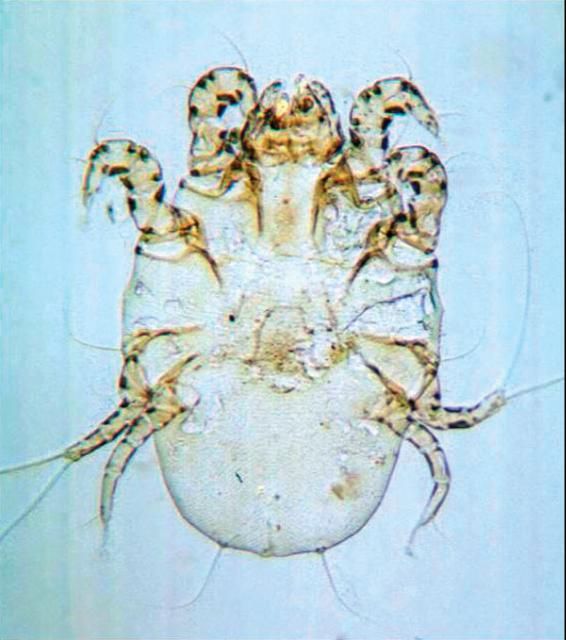
The female canine mange mite lives in the upper layers of skin and lays 20 to 40 eggs singularly, which hatch in three to five days. The larvae molt to the nymphal stage, which matures into the adult stage.The larvae, nymphs, and adult male mites live under scales on the skin surface and do not burrow. The entire life cycle is completed in eight to 17 days.
Canine mange first appears on dogs as reddish, inflamed papules on the edges of the ears, or in the groin or armpits. Usually, symptoms first appear on the head. Red spots appear and burrowing female mites cause the skin to exude serum, which dries to form scabs and crusts. The scratching of the animals causes the infected area to spread rapidly. Infested areas become dry, the hair falls out, and the skin thickens and wrinkles. Irritation from the scratching often leads to secondary infection, causing an unpleasant odor. If untreated, the animal may die of exhaustion, dehydration, or secondary infection.
Canine mange in humans is characterized by a rash developing after contact with an infected dog. The eruption usually appears as pimples but also may appear as blisters and inflammation. Mange symptoms generally appear on the forearms, thighs, and abdomen, but may occur in areas not infested by mites. This is an immune response disease with some individuals reacting more severely than others.
Feline mange usually starts on the heads of cats, forming crusts and causing the skin to thicken and crease.
Dogs and cats exhibiting mange symptoms should be taken to a veterinarian for treatment. Mange symptoms are often confused with flea-bite reactions. Humans with canine mange should consult a physician.
Red Mange (Demodicidae)
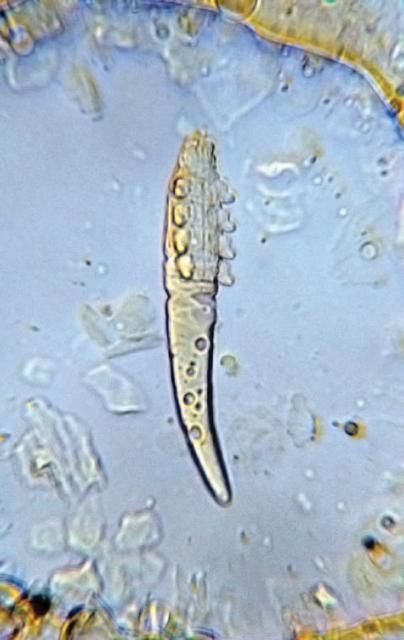
Red mange, or demodectic mange, of dogs is caused by a mite (Figure 2) that lives in the hair follicles and sebaceous glands of dogs throughout the world. The first evidence of red mange is the appearance of bald areas where hair has fallen out. The areas are mostly found around the eyes and corners of the mouth. As the bald area spreads, itching and irritation increase. Bacterial infections are usually associated with red mange and produce a foul odor. Red mange usually weakens the animal, exposing it to other diseases that may kill the animal. Many animals will self-cure. The disease is most common in dogs from three months to one and one-half years old. Stressed animals often exhibit mange symptoms. The most effective control is applied by veterinarians.
Ear Mange (Psoroptidae)
Ear mange is common among dogs, cats, and rabbits. The mites do not burrow in the skin but live deep in the ear canal and feed on skin. The resulting irritation is called otodectic manage and causes the ear canal to become congested. The affected animal rubs its ears and shakes its head to relieve the itching.
Ear mange may be treated by applying mineral oil to the ear canal with a medicine dropper or cotton swab and by cleaning accumulations of foreign matter every other day for about three weeks.
Mange Prevention
Proper care, good hygiene, and the maintenance of good health will increase a pet's resistance to skin disease. Canine mange mainly occurs on young animals that are undernourished, suffering from internal parasites, and kept with infested animals, usually their mothers. Pets should not be permitted to mingle with mangy animals or contact premises occupied by them since individual contact is the most important method of transmission. In almost all cases of mange on pets, a veterinarian should be consulted.