
Introduction
This native North American deciduous tree grows 40- to 50-feet in height and has an open canopy. Because there appear to be many forms of the plant in nature, from shrubby to tree form, nursery operators could make superior selections. The bark varies considerably from tree to tree, making this a potential selection criterion for cultivar development. The leathery, shiny green leaves are smooth on their upperside and a fuzzy, red/brown to gray beneath. They drop in late fall without a show. Small, fragrant white flowers appear from June to July and are followed in fall by large, shiny, blue/black, fleshy fruits that are extremely popular with birds and other wildlife. While the fruits are edible to man, they have been known to produce unpleasant side-effects if eaten in quantity.
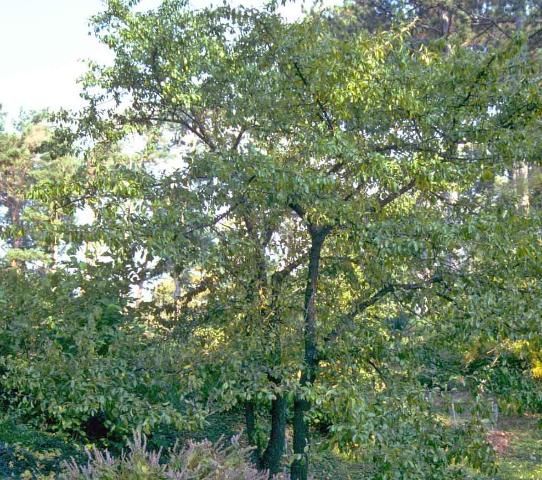
Credit: Ed Gilman, UF/IFAS
General Information
Scientific name: Sideroxylon lanuginosum
Pronunciation: sid-der-oh-ZEE-lon lan-oo-gih-NOH-sum
Common name(s): gum bully, chittamwood, gum bumelia, gum elastic buckthorn
Family: Sapotaceae
USDA hardiness zones: 5A through 9B (Figure 2)
Origin: native to North America
Invasive potential: native
Uses: reclamation; specimen; shade; highway median; street without sidewalk
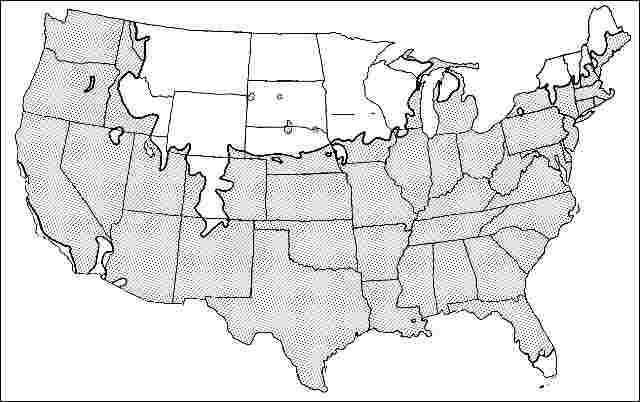
Credit:
Description
Height: 40 to 50 feet
Spread: 25 to 35 feet
Crown uniformity: irregular
Crown shape: spreading
Crown density: moderate
Growth rate: moderate
Texture: medium
Foliage
Leaf arrangement: alternate (Figure 3)
Leaf type: simple
Leaf margin: entire
Leaf shape: oblanceolate, oblong, obovate
Leaf venation: pinnate
Leaf type and persistence: deciduous
Leaf blade length: less than 2 inches, 2 to 4 inches
Leaf color: green
Fall color: no color change
Fall characteristic: not showy
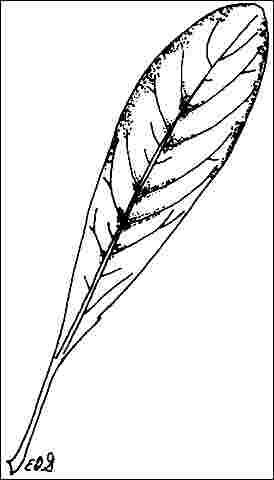
Credit:
Flower
Flower color: white/cream/gray
Flower characteristics: not showy
Fruit
Fruit shape: round
Fruit length: less than 0.5 inch, 0.5 to 1 inch
Fruit covering: fleshy
Fruit color: blue, black
Fruit characteristics: attracts squirrels/mammals; not showy; fruit/leaves not a litter problem
Trunk and Branches
Trunk/bark/branches: branches droop; not showy; typically multi-trunked; no thorns
Pruning requirement: needed for strong structure
Breakage: resistant
Current year twig color: gray, brown
Current year twig thickness: thin
Wood specific gravity: unknown
Culture
Light requirement: full sun
Soil tolerances: clay; sand; loam; acidic; alkaline; occasionally wet; well-drained
Drought tolerance: high
Aerosol salt tolerance: unknown
Other
Roots: not a problem
Winter interest: no
Outstanding tree: no
Ozone sensitivity: unknown
Verticillium wilt susceptibility: unknown
Pest resistance: free of serious pests and diseases
Use and Management
Young trees require training to display a tree-like form since a shrubby, rounded ball of foliage often develops without pruning. It is well suited for a reclamation site due to the adaptability to a wide range of soil types. It could be planted in urban and suburban landscapes, especially in areas that receive minimum maintenance.
The common names of gum bumelia and gum elastic are derived from the sap that quickly oozes from cuts or cracks to the bark. Youngsters in pioneer days were known to chew this sap as a gum.
Chittamwood should be grown in full sun or partial shade on well drained soils. Trees found on poor soils in the wild grow slowly and are stunted, but with normal care they will grow well in a variety of landscapes.
Propagation is by seed or cuttings.
Pests and Diseases
It is pest-free.