
Introduction
This graceful, clump-growing palm reaches 20 to 30 feet in height with a spread of 8 to 10 feet. The gently arching, 4- to 6-inch-wide, ringed, bamboo-like, green, multiple trunks are topped with curved, feathery, yellow-green fronds. Known under a variety of names, this beautiful soft palm is quite valued throughout the tropics and is widely planted in frost-free areas. The small, white, inconspicuous flowers are produced all year long on 3-foot stalks among the leaves, and the small, oblong, black fruits ripen all year. Yellow butterfly palm makes an attractive specimen, screening, or poolside planting, but it is overused.
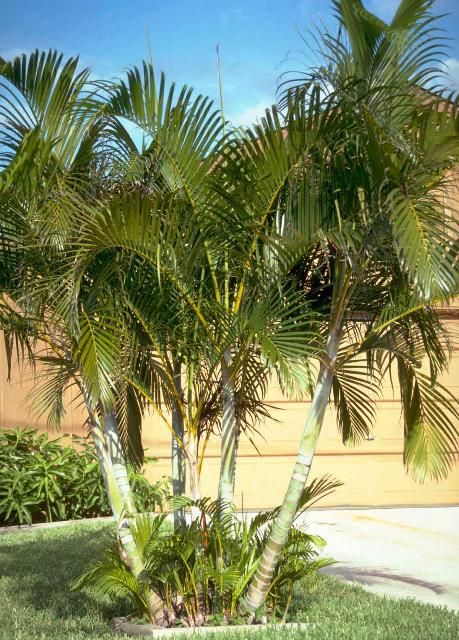
Credit: Ed Gilman, UF/IFAS
General Information
Scientific name: Dysis lutescens
Pronunciation: dip-sis loo-TESS-enz
Common name(s): Yellow butterfly palm, bamboo palm, areca palm
Family: Arecaceae
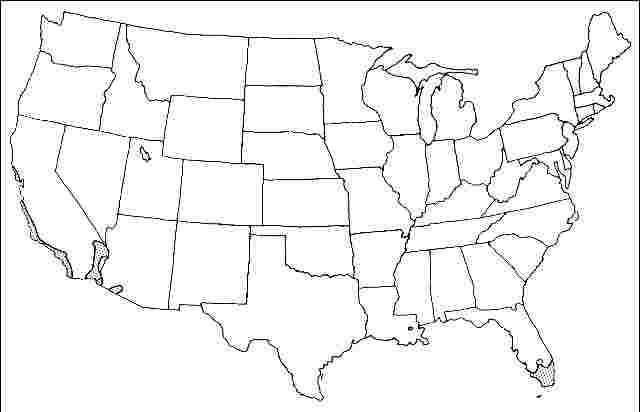
USDA hardiness zones: 10A through 11 (Figure 2)
Origin: not native to North America
Invasive potential: caution, may be recommended but manage to prevent escape (South); not considered a problem species at this time, may be recommended (North, Central)
Uses: indoors; deck or patio; screen; specimen; container or planter
Description
Height: 20 to 30 feet
Spread: 8 to 10 feet
Crown uniformity: irregular
Crown shape: palm, upright/erect, vase
Crown density: open
Growth rate: fast
Texture: fine
Foliage
Leaf arrangement: spiral
Leaf type: odd-pinnately compound
Leaf margin: entire
Leaf shape: linear
Leaf venation: parallel
Leaf type and persistence: evergreen
Leaf blade length: 12 to 18 inches, 18 to 36 inches
Leaf color: green
Fall color: no color change
Fall characteristic: not showy
Flower
Flower color: white/cream/gray
Flower characteristics: not showy
Fruit
Fruit shape: oval, round
Fruit length: .5 to 1 inch
Fruit covering: fleshy
Fruit color: black, brown, red
Fruit characteristics: does not attract wildlife; not showy; fruit/leaves not a litter problem
Trunk and Branches
Trunk/bark/branches: branches don't droop; showy; typically multi-trunked; thorns
Pruning requirement: little required
Breakage: resistant
Current year twig color: not applicable
Current year twig thickness:
Wood specific gravity: unknown
Culture
Light requirement: full sun, partial sun, or partial shade; shade tolerant
Soil tolerances: clay; sand; loam; slightly alkaline; acidic; well-drained; occasionally wet
Drought tolerance: moderate
Aerosol salt tolerance: moderate
Other
Roots: not a problem
Winter interest: no
Outstanding tree: no
Ozone sensitivity: unknown
Verticillium wilt susceptibility: resistant
Pest resistance: resistant to pests/diseases
Use and Management
Yellow butterfly palm prefers fertile, well-drained, acid soil. If growth in full sun, it makes an excellent specimen or screen (on 4-foot centers), but can be grown in the dense shade of patios and porches (or as house plants). Small palms benefit from some shade until they are several feet tall, and palms should be watered during periods of drought. They require regular fertilizer applications to maintain a good appearance. Young palms in full sun and those in high pH soils develop yellow leaves. Older leaves on plants of any age become chlorotic, frequently from a deficiency of potassium. Affected leaves are often speckled with bronze or yellow. Yellow butterfly palm is moderately salt-tolerant.
Propagation is by seeds or division.
Pests
Scales followed by sooty-mold can be a problem for yellow butterfly palm.
Diseases
Ganoderma root rot, potassium deficiency on older leaves.