
The kentia palm, also known as the sentry palm, is native to Lord Howe Island off the east coast of Australia. It is a slow growing palm that can reach 40 feet in height with a spread of 6–10 feet (Figure 1). It has single slender trunk, 5–6 inches in diameter, that is dark green when young but turns brown as it ages and is exposed to sun. The trunk is attractively ringed with the scars of shed fronds. Leaves are pinnate, or feather-shaped, about 7 ft long, with unarmed petioles 3–4 feet in length. The kentia palm is considered one of the best interior palms for its durability and elegant appearance (Figure 2). The dark green graceful crown of up to three dozen leaves gives it a tropical appearance. Containerized palms can be used on a deck or patio in a shady location, or the palm can be planted into the landscape. It has not been assessed for invasiveness by UF/IFAS.
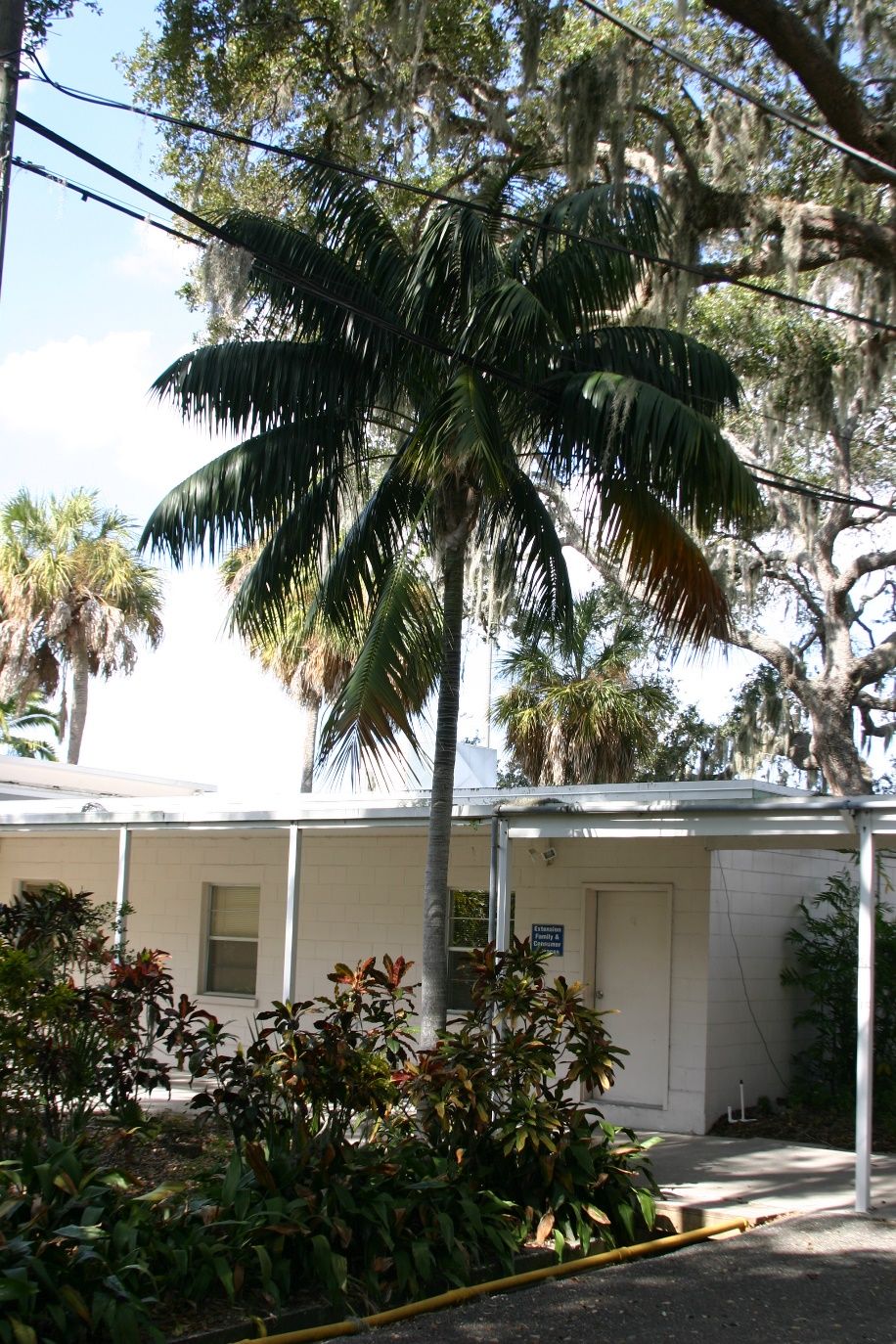
Credit: Stephen Brown, UF/IFAS
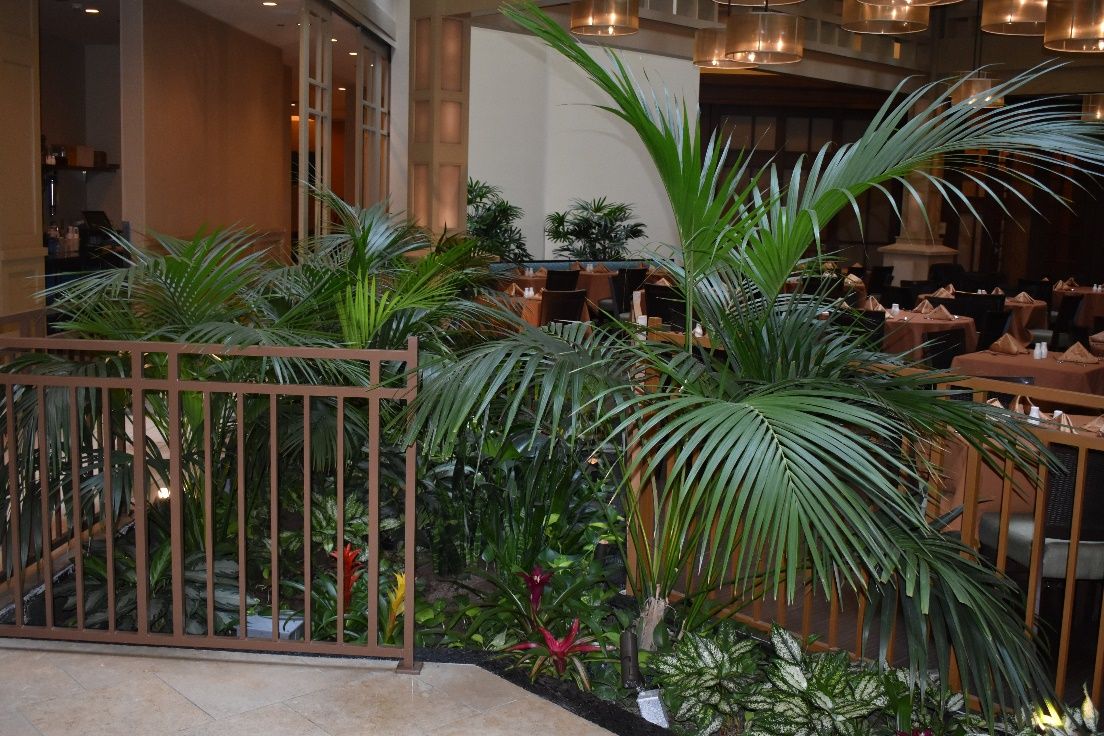
Credit: Stephen Brown, UF/IFAS
Kentia palms prefer shade to partial shade but still can adapt to full sun if planted outside. This species can tolerate temperatures of 100°F if not in direct sun. Kentia palms prefer coastal southern California rather than areas like southern Florida or Hawaii because high temperatures, humidity, and rainfall are poorly tolerated. Kentia palms are considered to be moderately tolerant of salt spray and can tolerate cold down to 25°F, making them suitable for growing in USDA plant hardiness zones 9b (25°F–30°F) to 11 (above 40°F). They are adaptable to a wide range of soils (clay, sand, loam, slightly alkaline, acidic, well-drained) and are considered to be moderately drought tolerant. However, they do not tolerate severe dryness or continual over-watering, especially during the winter.
Kentia palm requires some sun exposure to produce its creamy flowers. Flowers are produced below the leaves on 3.5-foot-long inflorescences during November and December. Male and female flowers are produced on the same inflorescence. Kentia palms will fruit at about fifteen years of age. The fruits are oval, 1–3 inches long, and red brown in color when ripe.
Potassium (K) deficiency (http://www.edis.ifas.ufl.edu/ep269) is a serious problem on most species of palms, including kentia palms. Symptoms appear on leaflets of the oldest leaves as marginal or tip necrosis with little or no yellowish spotting present (Figure 3). Symptoms are most severe toward the tips of those leaves. Applications of controlled-release K sources are much more effective than the easily leached water-soluble K sources.
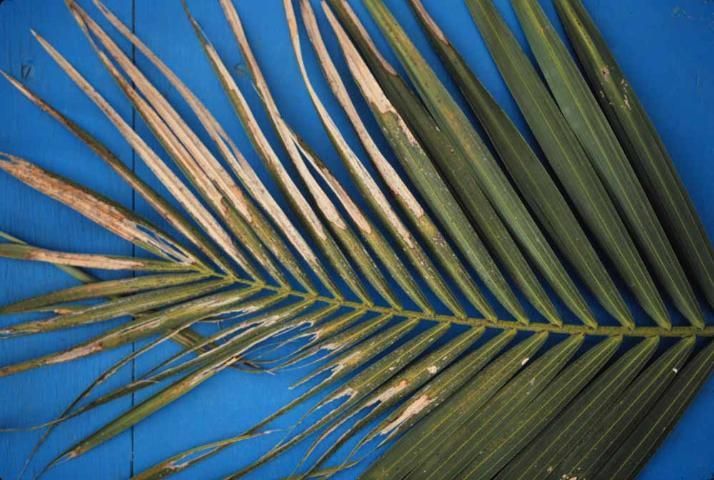
Credit: T. K. Broschat, UF/IFAS
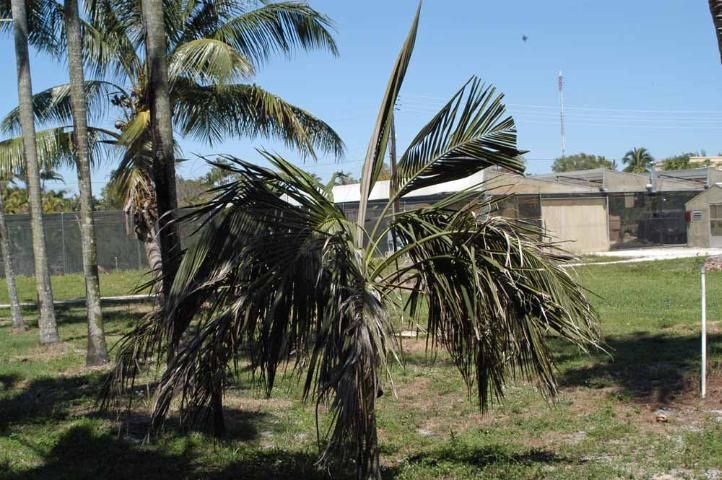
Kentia palms also are known to exhibit symptoms of manganese (Mn) deficiency (http://www.edis.ifas.ufl.edu/ep297) under alkaline soil conditions in southern Florida. Manganese-deficient palms have leaflet tip necrosis on the basal leaflets of the youngest leaves (Figure 4). Boron (B) deficiency (http://www.edis.ifas.ufl.edu/ep264), which can cause stunting and distortion of newly emerging leaves, incomplete opening of new leaves, or even horizontal shoot growth, also can be a problem on this species (Figure 5).
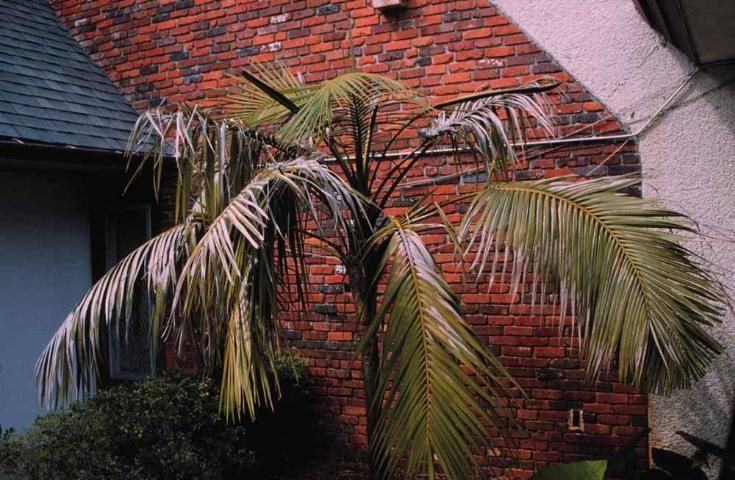
Credit: T. K. Broschat, UF/IFAS
Credit: T. K. Broschat, UF/IFAS
Controlled-release fertilizer having an N:P2O5:K2O ratio of approximately 3:1:2 results in the greatest growth in container-grown plants. However, in Florida landscapes fertilizers having an analysis of 8-2-12-4Mg plus micronutrients are recommended for this species. See "Nutrition and Fertilization of Palms in Containers" (http://www.edis.ifas.ufl.edu/ep262) and "Fertilization of Field-Grown and Landscape Palms in Florida" (http://www.edis.ifas.ufl.edu/ep261) for more information about fertilizing palms.
Diseases are very rarely a problem with indoor grown palms. However, in kentia palms Cylindrocladium leaf spot, stigmina leaf spot, and other fungal leaf spots (http://www.edis.ifas.ufl.edu/pp142) can occur during nursery production. Spider mites, mealybugs, and scale insects are the most common insect pests on this species, especially on indoor specimens.
Old leaf bases can be removed from kentia palm trunks by gentle pulling. Avoid forcing them or tearing them from the trunk as this can permanently scar the trunk and create a potential entry site for Thielaviopsis trunk rot disease (http://www.edis.ifas.ufl.edu/pp143). Removal of old leaf bases will expose the yellowish-colored trunk tissue which will change to green if the plant is in the shade or tan if in sun.
Propagation
Propagation of kentia palms is normally by seeds. Kentia palm fruits mature very slowly, sometimes taking 3–4 years. The fruits change color slowly from dull orange to deep dull red as they mature. It is best to obtain older red seeds for optimum germination. Seeds seem to have maximum viability for 8–16 weeks after maturing. To propagate kentia palm from seeds, remove fruits from the palm and soak them in warm water. After several days, remove the seeds from the fruits and place them either in a sealable plastic bag with peat or a potting soil mix or sow them shallowly in planting trays. Water the soil to keep it hydrated but not saturated. Place the bag or planting trays in indirect sunlight. For direct soil sowing, place the seeds in a well-drained soil in partial shade at a temperature between 85 and 104°F and keep the seeds moist but not too wet or the seeds will rot. Bottom heat and fungicide treatment have been shown to improve germination rates and seedling survival. The seeds typically germinate within three months to several years. For more information about palm seed germination see "Palm Seed Germination" (http://www.edis.ifas.ufl.edu/ep238).
References
Brian, S. n.d. "Kentia palm tree—Howea forsteriana." Florida Palm Trees. http://www.florida-palm-trees.com/kentia-palm-tree/. (Accessed March 2024).
Broschat, T. K. 1984. "Nutrient Deficiency Symptoms in Five Species of Palms Grown as Foliage Plants. Principes 28:6–14.
Downer, A. J., J. Y. Uchida., D. R. Hodel, and M. L. Elliott. 2009. "Lethal Palm Diseases Common in the United States." HortTechnology 19:710–716.
Elliott, M. L., T. K. Broschat, J. Y. Uchida, and G. W. Simone. 2004. Compendium of Ornamental Palm Diseases and Disorders. St. Paul, MN: Amer. Phytopathological Soc. Press.
Lamont, G. P., G. C. Cresswell, and L. J. Spohr. 1988. "Response of Kentia Palm (Howea forsterana) to Controlled-Release Fertilizer." Scientia Horticulturae 36:293–302.
Meerow, A. W. 2006. Betrock's Landscape Palms. Hollywood, FL: Betrock Info. Syst.
Nelson, S., and E. Patnude. 2012. "Potassium Deficiency of Palms in Hawai'i." Univ. Hawaii- CTAHR Plant Disease. PD-89.
Silver, T. n. d. "Germination of kentia palm seeds." SFGate. http://homeguides.sfgate.com/germination-kentia-palm-seeds-37713.html. (March 2024)