
Introduction
‘Hally Jolivette' Cherry forms a dense-branching, 15-foot-tall, fast-growing, small tree. The main delight of growing this tree is the two-week-long display of blooms in spring. Starting out as pink buds, the flowers unfold to pale pink or pure white double blooms, about an inch in diameter, helping the tree to create a striking specimen in the landscape. The foliage lends a fine texture to the landscape, and it maintains a dark green color through moderate drought. In severe drought, foliage burns a little brown at the margins, but there appears to be no long-term harm to the tree. This tree will live longer than many of the cherries.
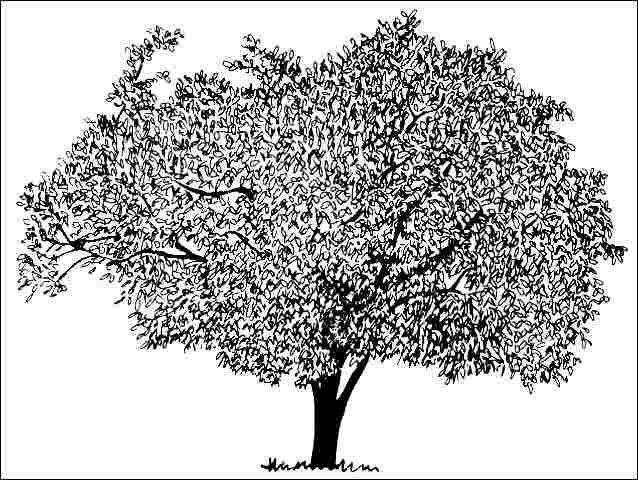
Credit: UF/IFAS
General Information
Scientific name: Prunus x
Pronunciation: PROO-nus
Common name(s): Hally jolivette cherry
Family: Rosaceae
USDA hardiness zones: 5B through 7B (Figure 2)
Origin: not native to North America
Invasive potential: not assessed/incomplete assessment
Uses: specimen; deck or patio; container or planter; sidewalk cutout (tree pit); highway median; bonsai
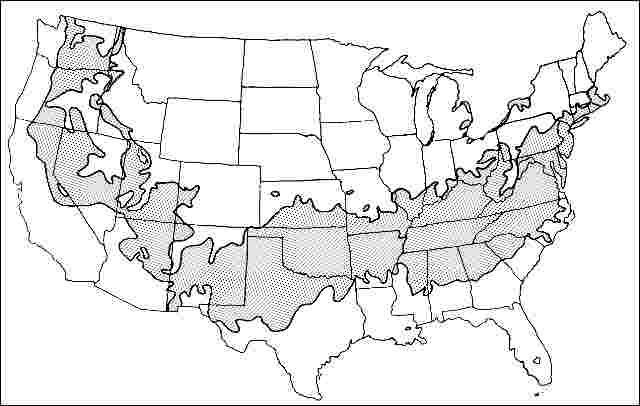
Credit: UF/IFAS
Description
Height: 12 to 15 feet
Spread: 10 to 15 feet
Crown uniformity: symmetrical
Crown shape: round
Crown density: dense
Growth rate: moderate
Texture: fine
Foliage
Leaf arrangement: alternate (Figure 3)
Leaf type: simple
Leaf margin: serrate
Leaf shape: ovate, elliptic (oval)
Leaf venation: brachidodrome, pinnate
Leaf type and persistence: deciduous
Leaf blade length: less than 2 inches, 2 to 4 inches
Leaf color: green
Fall color: no color change
Fall characteristic: not showy
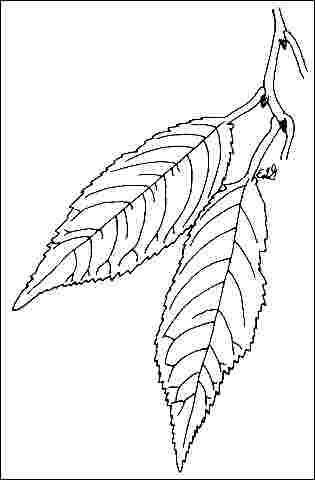
Credit: UF/IFAS
Flower
Flower color: white/cream/gray, pink
Flower characteristics: showy
Fruit
Fruit shape: round
Fruit length: less than 0.5 inch
Fruit covering: fleshy
Fruit color: red
Fruit characteristics: unknown; not showy; fruit/leaves not a litter problem
Trunk and Branches
Trunk/bark/branches: branches droop; not showy; typically multi-trunked; thorns
Pruning requirement: little required
Breakage: resistant
Current year twig color: brown
Current year twig thickness: thin
Wood specific gravity: unknown
Culture
Light requirement: full sun
Soil tolerances: clay; sand; loam; acidic; alkaline; well-drained
Drought tolerance: high
Aerosol salt tolerance: low
Other
Roots: not a problem
Winter interest: no
Outstanding tree: yes
Ozone sensitivity: unknown
Verticillium wilt susceptibility: unknown
Pest resistance: resistant to pests/diseases
Use and Management
Prune to open up the canopy to develop more of a tree-form, otherwise it looks more like a large shrub. Remove interior branches and space main branches along the trunk. A more upright shape can be created by removing lateral branches, a more spreading shape can be promoted by removing upright branches.
Use the tree along an entrance road to a commercial development planted on 20-foot centers or alongside the patio or deck in the back yard. It also makes a nice small-scale courtyard tree. Probably too shrubby for planting in the tree lawn strip between the street curb and the sidewalk although properly trained trees could be tried for this use. Set the trees back about eight feet from the edge of a street on 15-foot centers along a residential or commercial landscape for a nice, uniform ornamental planting.
‘Hally Jolivette' cherry should be grown in full sun on well-drained soil. Grows fine in clay soil which is not too compacted.
Propagation is by cuttings, which root readily.
Pests and Diseases
No pests or diseases are of major concern. Occasionally the tree is bothered by aphids and mites.