
Background
Snakes are members of the vertebrate order Squamata (suborder Serpentes) and are most closely related to lizards (suborder Sauria). All snakes are legless and have elongated trunks. They can be found in a variety of habitats and are able to climb trees; swim through streams, lakes, or oceans; and move across sand or through leaf litter in a forest. Often secretive, they rely on scent rather than vision for social and predatory behaviors. A snake's skull is highly modified and has a great degree of flexibility, called cranial kinesis, that allows it to swallow prey much larger than its head.
Of the 45 snake species (70 subspecies) that occur throughout Florida, 23 may be found in the Everglades Agricultural Area (EAA). Of the 23, only four are venomous. The venomous species that may occur in the EAA are the coral snake (Micrurus fulvius fulvius), Florida cottonmouth (Agkistrodon piscivorus conanti), dusky pigmy rattlesnake (Sistrurus miliarius barbouri) and the eastern diamondback rattlesnake (Crotalus adamanteus).
There is one non-native snake that reproduces in the EAA. The Brahminy blind snake (Ramphotyphlops braminus) was introduced from Asia in the soil of potted plants. It has established populations from Miami to Lake Okeechobee. This snake, barely reaching more than 6.5 inches in length, does not seem to have any adverse impact on native species Tennant 1997). Other non-native species may be found, such as the Burmese python (Python molurus). Non-native snakes are often escapees or are released deliberately and illegally by owners who can no longer care for them. However, there has been no documentation of these snakes breeding in the EAA (Tennant 1997).
Benefits of Snakes
Snakes are an important part of the environment and play a role in keeping the balance of nature. They aid in the control of rodents and invertebrates. Also, some snakes prey on other snakes. The Florida kingsnake (Lampropeltis getula floridana), for example, prefers snakes as prey and will even eat venomous species. Snakes also provide a food source for other animals such as birds and alligators.
Snake Conservation
Loss of habitat is the most significant problem facing many wildlife species in Florida, snakes included. Some snakes are able to adapt to yards in urban areas and may seem to thrive, but they are at risk from roads, feral cats, and other trappings of civilization. However, snakes such as the indigo snake (Drymarchon corais couperi), a federally protected and threatened species, have not adapted to the loss of large areas of intact habitat and their populations have declined. Loss of habitat has affected a few Everglades sub-species such as the Everglades racer (Coluber constrictor paludicola). Collecting for the pet trade has also impacted some of the more popular snakes such as the Florida kingsnake (Krysko 2002).
Tips on How to Distinguish Venomous Snakes
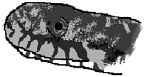
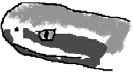
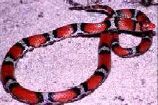
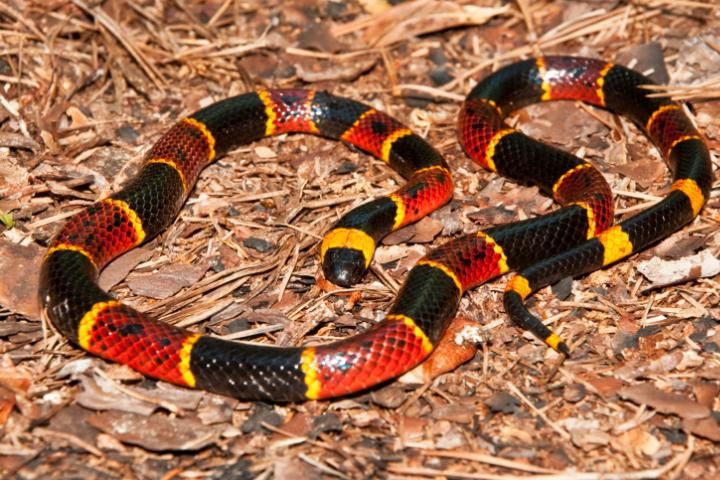
Snakes with triangular heads are generally considered to be venomous, but this can be misleading. Coral snakes (Micrurus fulvius fulvius) do not have triangular heads, and color pattern is the best way to identify this species. The scarlet kingsnake (Lampropeltis triangulum elapsoides) and the Florida scarlet snake (Cemophora coccinea coccinea) have very similar color patterns; however the red and yellow bands never touch in these nonvenomous species as they do in the venomous coral snake. Water snakes (Nerodia spp.), while nonvenomous, will flatten their heads when agitated and may strike repeatedly.
- Snakes with longitudinal stripes on the body are non-venomous.
- For coral snakes vs. scarlet kingsnake or scarlet snake, the rhyme "Red touch yellow, kill a fellow; red touch black, friend of Jack" works for many. Or you can think of red and yellow as warning colors and if they touch, be warned! Never handle a snake if in doubt.
- Rattlesnakes don't always rattle their tail before striking. If walking through an area known for rattlesnakes take precautionary measures. Common ways to prevent contact with rattlesnakes include making noise while walking to alert rattlesnakes, staying on hiking trails, and avoiding putting hands under rocks or logs. All snakes would rather avoid confrontation if possible.
References and Further Reading Material
Carmichael, P. and W. Williams. 1992. Florida's Fabulous Reptiles. Tampa, FL: World Publications.
Conant, R. and J. T. Collins. 1991. A Field Guide to Reptiles and Amphibians of Eastern and Central North America (3rd Edition). Boston, MA: Houghton Mifflin Co.
King, F. Wayne and Kenneth L. Krysko. 2000. Online Guide to the Snakes of Florida. Florida Museum of Natural History, University of Florida, Gainesville, FL, USA. 266 p. Available at: https://www.floridamuseum.ufl.edu/florida-snake-id/
Krysko, Kenneth. 2002. "Seasonal Activity of the Florida Kingsnake Lampropeltis getula foridana (Serpentes: Colubridae) in Southern Florida". The American Midland Naturalist 148:102–114.
Pough, F.H., R.M. Andrews, J.E. Cadle, M.L. Crump, A.H. Savitzky and K.D. Wells. 2001. Herpetology (2nd Edition). Upper Saddle River, NJ: Prentice Hall.
Tennant, A. 1997. A Field Guide to the Snakes of Florida. Houston, TX: Gulf Publishing Company.
Guide to Snakes of the EAA
Non-Venomous Snakes
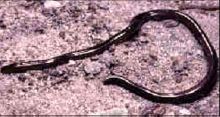
Brahminy Blind Snake Ramphotyphlops braminus
The Brahminy blind snake is an introduced species to southern Florida. It is nonvenomous and does not bite. Commonly found in flower beds and gardens, it eats ant and termite eggs, larvae, and pupae. This species is slender, wormlike, and shiny black with very small eyes and jaw. It is a unisexual species, consisting of only females.
Florida Green Water Snake Nerodia floridana
A nonvenomous species, the Florida green water snake may bite if cornered. It is commonly found near semi aquatic areas and open wetlands with vegetation and marshes. Its diet consists of mainly frogs and fish. This water snake is generally dark olive green or brownish in color.
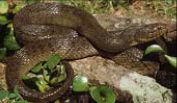
Brown Water Snake Nerodia taxispilota
A nonvenomous species, the brown water snake may bite if cornered. Commonly found near wooded aquatic areas, swamps, cypress domes, and other quiet waters, it is largely diurnal. Brown water snakes eat frogs and fish but will also eat carrion such as scavenged fish. This snake has large brown colored blotches that are not connected over its back.
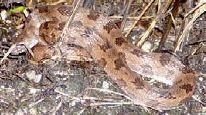
Florida Water Snake Nerodia fasciata pictiventris
A nonvenomous species, the Florida water snake may bite if cornered. It is commonly found near semiaquatic areas but may move through terrestrial habitats. Its diet includes aquatic animals such as crayfish, salamanders, frogs, and fish. The Florida water snake is tan to dark gray with reddish-brown to black bands. There is a brown stripe from each eye to the corner of its jaw. Note that the black phase may resemble a cottonmouth (Agkistrodon pisivorus).
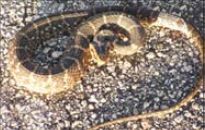
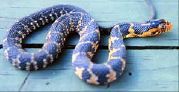
South Florida Swamp Snake Seminatrix pygaea cyclas
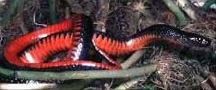
The South Florida swamp snake is timid and does not bite. It is commonly found in freshwater ponds and ditches, especially those with an abundance of water hyacinths. It feeds mainly on frogs, tadpoles, small salamanders, and invertebrates. Swamp snakes (Seminatrix pygaea) are shiny black with a red belly and have smooth scales. The South Florida swamp snake is distinguished from other swamp snake subspecies by the presence of a short, triangular black mark at the front edge of each ventral scale.
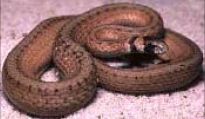
Florida Brown Snake Storeria dekayi victa
The Florida brown snake is nonvenomous and does not bite. A common snake, it can be found in moist areas, and along water, often hiding among water hyacinths. Its diet consists of slugs, earthworms, and insects. This species is generally speckled brown to blue-gray (can be highly variable), with a pale band behind the head and a brown spot below the eye.
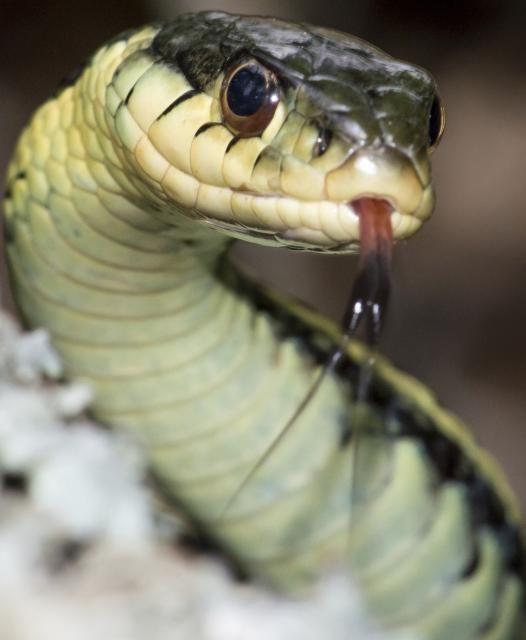
Eastern Garter Snake Thamnophis sirtalis sirtalis
The eastern garter snake is nonvenomous and rarely bites. A common snake, its habitat includes lowland and wet areas. Its diet consists of aquatic or semiaquatic animals including fish, frogs, salamanders, and snakes. It is generally turquoise or blue green with a stripe along its back and another on each side.
Credit: 80s_girl/iStock/Thinkstock.com
Peninsula Ribbon Snake Thamnophis sauritus sackenii
The peninsula ribbon snake is nonvenomous and does not bite. Commonly found in uplands, usually near water, this species prefers small prey taken from or near water, such as frogs, tadpoles, lizards, and earthworms. It has a slender body and tail, usually brownish in color with a pale stripe down the back and on each side.
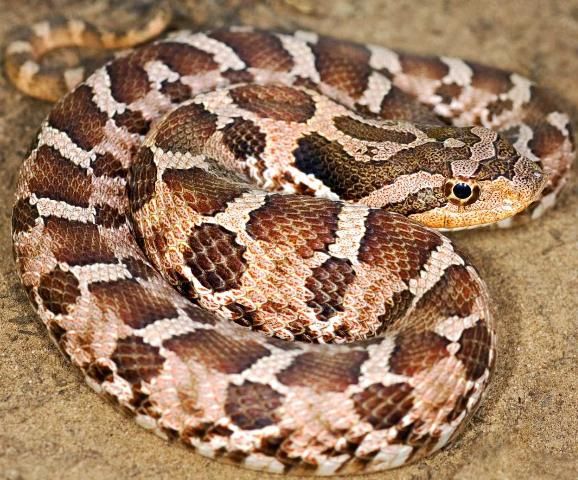
Eastern Hognose Snake Heterodon platirhinos
An uncommon species, the eastern hognose snake is nonvenomous and frequently displays a death-feigning act if threatened. Preferring habitat with sandy soil, its diet consists primarily of toads and occasionally frogs. Young eastern hognose snakes may also eat crickets and other insects. Its snout is upturned and is used to dig up toads. The color of this species is variable, ranging from black to dark green or light brown.
Credit: Design Pics/Thinkstock.com
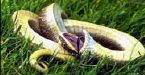
Southern Ringneck Snake Diadophis punctatus punctatus
This small, common snake is nonvenomous and does not bite. The southern ringneck snake is generally found in damp meadows, woodlands, and residential areas. Its diet consists of earthworms, slugs, and small vertebrates. It is gray black with a yellow or orange ring behind the head and a yellow belly, changing to red posteriorly and under its tail.
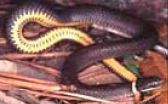
Eastern Mud Snake Farancia abacura abacura
The eastern mud snake is a common, nonvenomous species and does not bite. Inhabiting most freshwater environments, especially swampy areas with vegetation, its prey consists of eel-like salamanders such as Amphiumas. It will sometimes eat sirens, frogs, or fish. This snake is bluish-black with numerous red bars extending from the belly up the side. When first caught, the eastern mud snake may poke the handler with its tail.
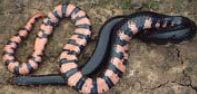
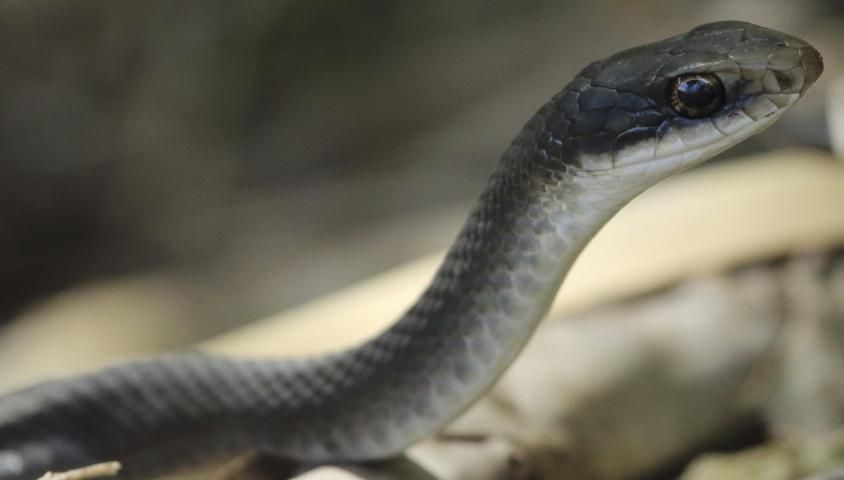
Southern Black Racer Coluber constrictor priapus
Everglades Racer Coluber c. paludicola
The black racer is very fast, nonvenomous, and may bite. It is abundant in upland habitats as well as in agricultural habitats. Its diet consists primarily of insects and vertebrates, including snakes. Black racers are uniform black or gray in color and have a white chin. Juveniles are gray with maroon blotches. The Everglades subspecies is grayish brown and may have a bluish cast. Its iris is orange or yellow while the iris of the Southern Black Racer is red.
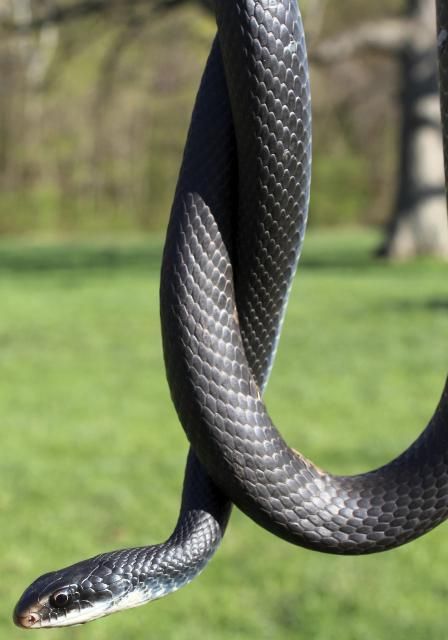
Credit: Adam Long/iStock/Thinkstock.com
Credit: ArendTrent/iStock/Thinkstock.com
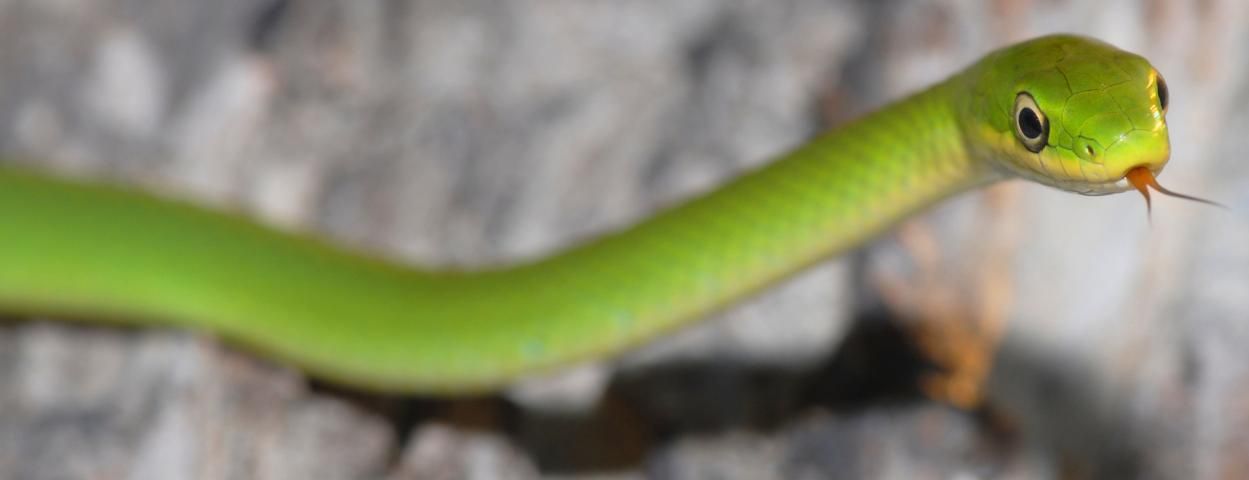
Rough Green Snake Opheodrys aestivus
The rough green snake is nonvenomous and does not bite. It is commonly found in trees and shrubs on the edges of fields, roads, and ponds. Its diet consists of insects and spiders. The rough green snake is green overall, while its lips, chin and belly are a pale yellow color.
Credit: Rusty Dodson/Hemera/Thinkstock.com
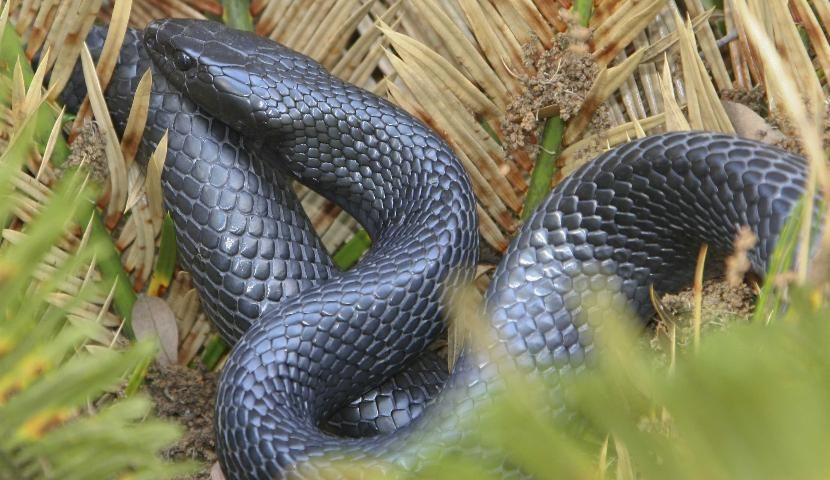
Eastern Indigo Snake Drymarchon corais couperi
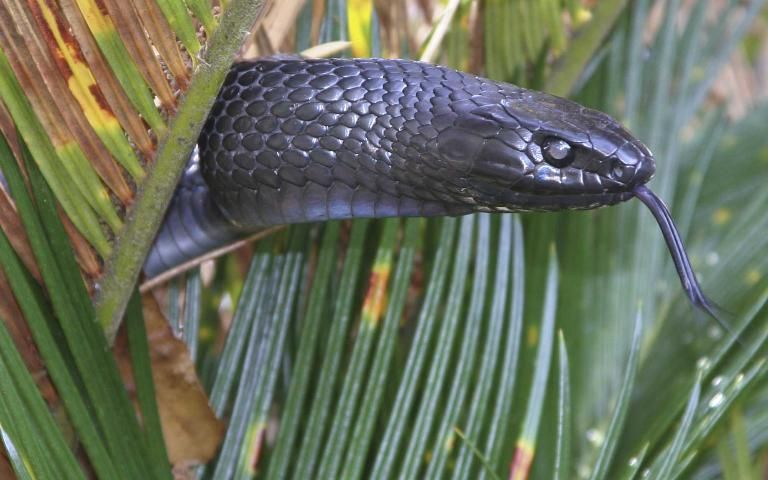
This rare species is nonvenomous, and bites infrequently. The eastern indigo snake is a federally protected, threatened species. Preferring upland areas and riparian corridors, its diet consists of small mammals, birds, frogs, and snakes. The eastern indigo snake is Florida's largest nonvenomous snake and has glossy blue/black scales and a reddish chin and throat.
Credit: sstaton/iStock/Thinkstock.com
Credit: sstaton/iStock/Thinkstock.com
Corn Snake Elaphe guttata guttata
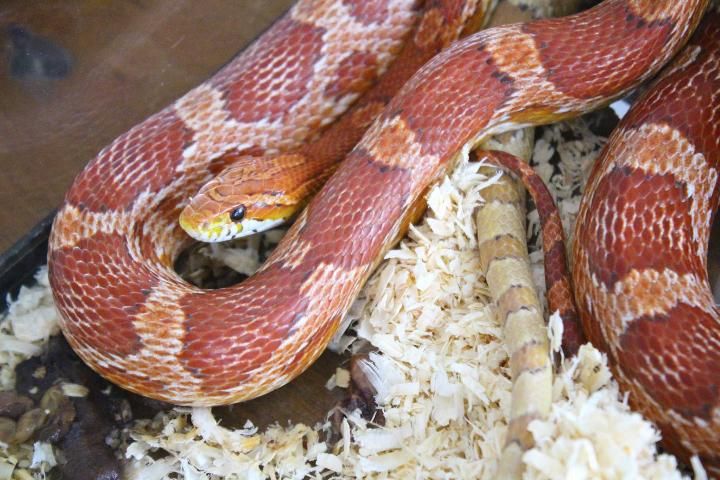
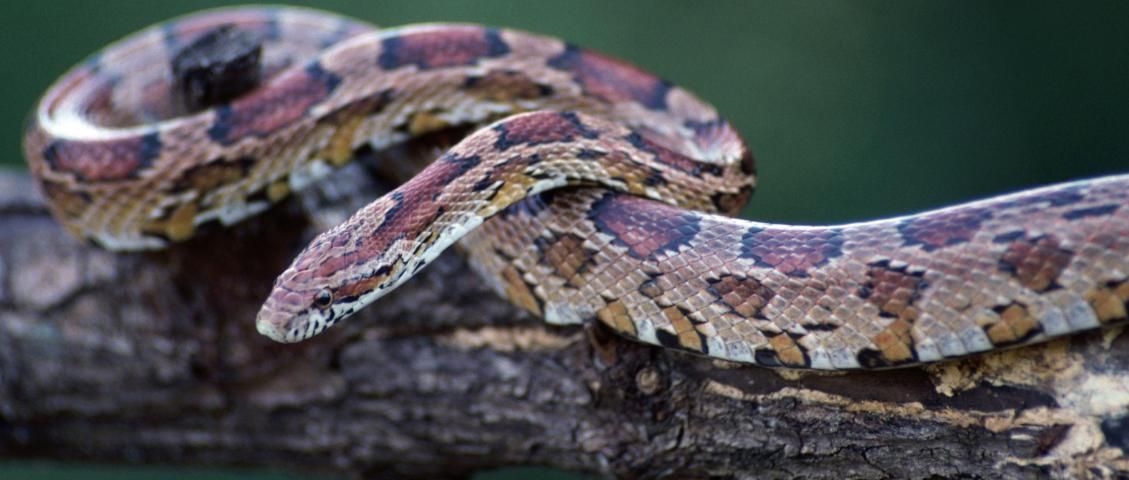
Also known as the red rat snake, the corn snake is nonvenomous and usually does not bite. This species is found in nearly any habitat. An excellent climber, it can occasionally be found in trees. Its prey consists of small rodents, lizards, birds, and frogs. This snake is usually variegated orange, gray and tan with reddish sides; sometimes exhibiting shades of gray and black.
Credit: WayPhanthit/iStock/Thinkstock.com
Credit: Purestock/Thinkstock.com
Yellow Rat Snake Elaphe obsoleta quadrivittata
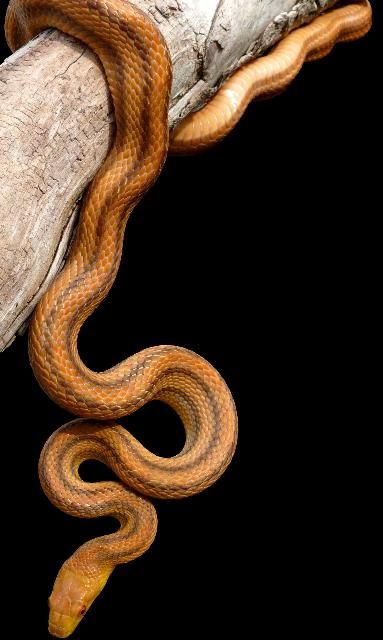
This common snake is non-venomous and may bite if threatened. The yellow rat snake is often seen in trees but can be found in a wide variety of habitats. Its diet consists of mostly rats, but this species will eat birds, squirrels, and other small mammals. Adult snakes of this species are dull yellow with dark stripes.
Credit: © David Desoer/Hemera/Thinkstock.com
Florida Kingsnake Lampropeltis getula floridana
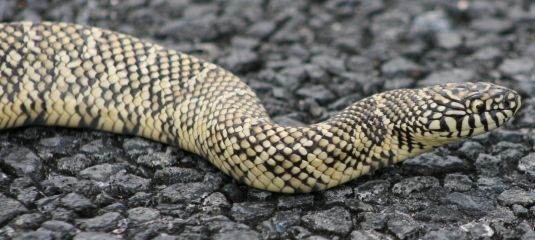
The Florida kingsnake is a nonvenomous species that rarely bites. This species is usually found near water in most habitats. Also commonly found near sugarcane fields, its diet consists of rodents, frogs, and other snakes, including venomous species such as the cottonmouth (Agkistrodon piscivorus). Its coloration is black with light crossbands and varying amounts of light speckling between crossbands. Juveniles tend to be darker in color.
Credit: elvis santana/iStock/Thinkstock.com
Scarlet Kingsnake Lampropeltis triangulum elapsoides
This uncommon species is nonvenomous and does not bite. The scarlet kingsnake is found in most habitats, primarily pine flatwoods, wet prairie hammocks, and sugarcane fields. It preys on smaller snakes, skinks, and other small animals. The Scarlet Kingsnake has wide red, and narrow yellow and black bands, and a red snout. The red and yellow bands never touch. Note: Compare to the eastern coral snake and Florida scarlet snake.
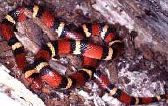
Florida Scarlet Snake Cemophora coccinea coccinea
This snake is nonvenomous. The Florida scarlet snake prefers habitat with soil suitable for burrowing. It can also be found in logs or beneath bark. Its diet consists of young mice, small snakes, and lizards, but it will also eat snake eggs. This snake has wide red, and narrow yellow and black bands that do not encircle the body. Its snout is red and pointed. Note: Compare to the eastern coral snake and scarlet kingsnake.
Venomous Snakes
Eastern Coral Snake Micrurus fulvius fulvius
This snake is venomous and may bite if threatened. The eastern coral snake prefers wooded habitat, usually upland. Its diet consists of small snakes, but it will also eat other small animals. It has broad red and black bands separated by narrow yellow bands. The snout is black. Red bands touch yellow bands in this snake only.
Credit: JasonOndreicka/iStock/Thinkstock.com
Florida Cottonmouth Agkistrodon piscivorus conanti
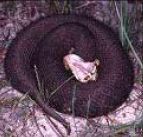
The Florida cottonmouth is a common snake, also known as the water moccasin. It is venomous and may bite if threatened. This snake is semiaquatic but may occur in many different habitats. It preys on frogs, fish, small mammals, and other snakes, and will eat carrion. Juveniles are banded, while adults are nearly uniform dark with a brown stripe on the face bordered by a light-colored stripe on either side.
Dusky Pigmy Rattlesnake Sistrurus miliarius barbouri
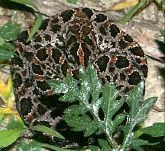
This small, common rattlesnake is venomous and may bite if threatened. The small size of the dusky pigmy rattlesnake mitigates extreme danger. Its rattler is small, sounding like an insect buzz and is hard to hear from more than a few feet away. It is terrestrial, found in both wet and dry areas. The dusky pigmy rattlesnake preys on amphibians, lizards, small snakes, and occasionally insects. It is gray with black blotches on its back and sides, and mid dorsal orange coloration is present between blotches on back.
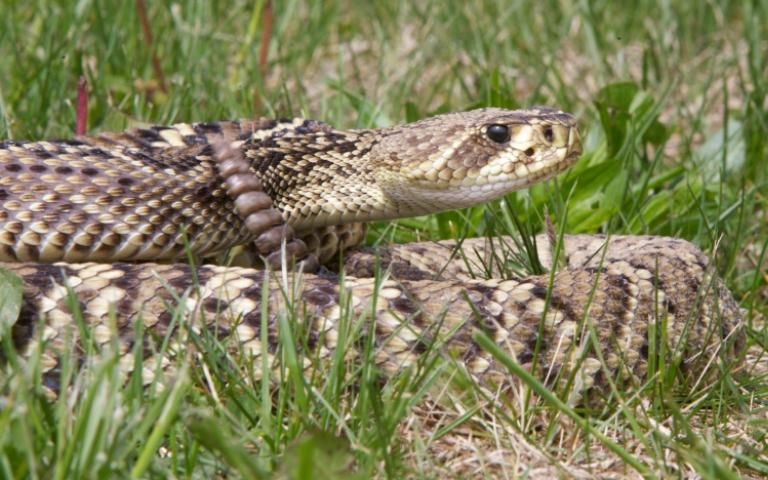
Eastern Diamondback Rattlesnake Crotalus adamanteus
This uncommon rattlesnake is highly venomous and may bite if threatened. Upland wooded areas is its preferred habitat, but the eastern diamondback rattlesnake can be found almost anywhere. Its diet consists of marsh rabbits and cottontails as well as other small mammals. It has dark diamonds edged in white on its back.
Credit: NajaShots/iStock/Thinkstock.com