


Spiny Amaranth (Spiny Pigweed) Control in Pastures
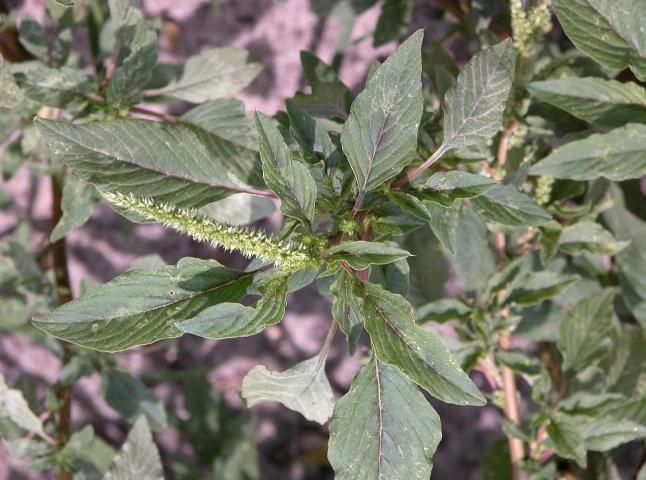
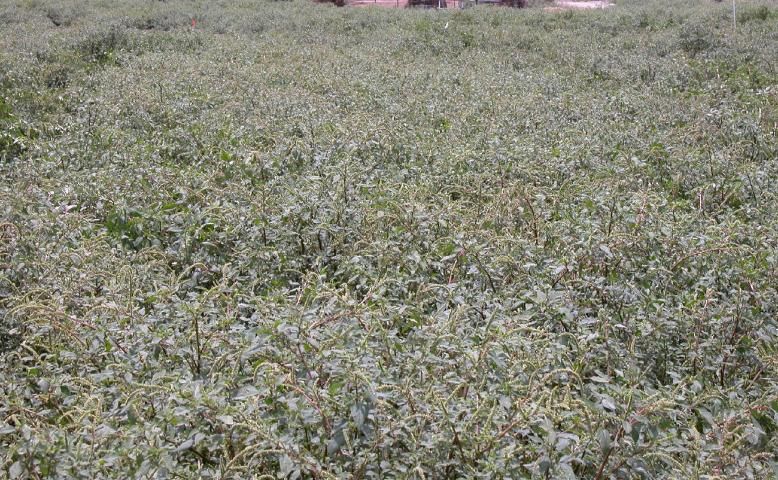
Spiny amaranth (Amaranthus spinosus), also known as spiny pigweed, is very common throughout Florida (Figure 1). This summer annual species is often observed in pastures, particularly in bareground areas (near feeding pens and water troughs). This weed seems to thrive in well-worn, highly compacted areas where stocking rates are high and desirable grasses are few. If left unchecked, spiny amaranth can eventually take over entire pastures (Figure 2).
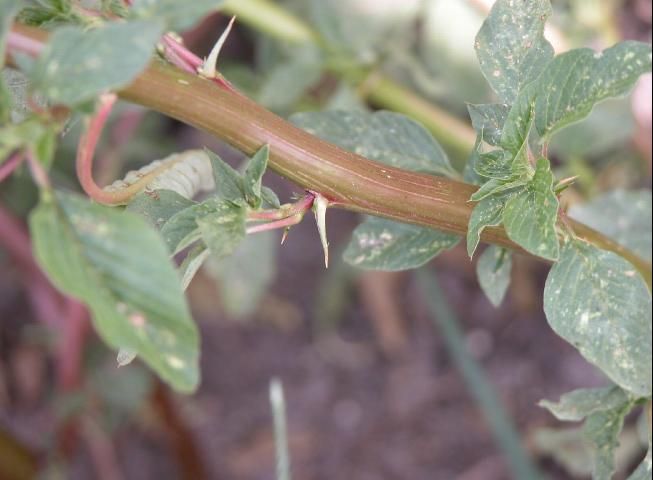
Spiny amaranth is particularly troublesome because sharp spines proliferate on the stem (Figure 3). This greatly deters grazing around the plant because animals avoid the sharp spines. Also, this weed is an abundant seed producer with well over 100,000 seeds per plant produced each year. The seeds germinate throughout the warm summer months, and each rainfall event results in another flush of spiny amaranth plants.
Since spiny amaranth seed germinates so frequently, any control measure will generally only last a few weeks before a new flush of seedlings overtakes the area once again. Therefore, it is important to determine if herbicides that provide soil residual activity can be used to provide long-term control of spiny amaranth. Conversely, if residual control cannot be obtained, then low-cost options must be found so that multiple applications can be made each season.
Control
The herbicides Telar (chlorsulfuron) and Milestone and GrazonNext HL (both possessing aminopyralid as the active ingredient) have been shown to provide extensive residual control of some weeds. Therefore, these herbicides were chosen to determine if they could adequately control spiny amaranth for an extended period of time. Additionally, these herbicides do not possess any grazing restrictions for beef or dairy animals.
It was observed that Telar and Milestone provided excellent spiny amaranth control at 1 month after treatment (Table 1). However, by 3 months, multiple seedlings had germinated and had resumed growth in the treated area. Therefore, neither of these herbicides provided sufficient residual control.
Since long-term control cannot be obtained with these herbicides, low (less expensive) use rates were explored. It was observed that low rates of GrazonNext HL and Telar were effective on spiny amaranth (Table 2). Therefore, for only a few dollars per acre, Telar can be used to manage this weed. Since long-term control will not be obtained, 2 or 3 applications per season should effectively manage spiny amaranth for the entire season.
Although Telar is very effective on spiny amaranth, there are few other weeds that it can control. Ragweed, coffeeweed, mexican tea (Jerusalem oak), tropical soda apple, and thistle will not be controlled with Telar. Conversely, GrazonNext HL is excellent on each of these weeds (depending on the application rate). Therefore, Telar is ideal for areas where spiny amaranth is the dominant species, but GrazonNext HL would be a better choice for areas that contain a mixture of different weeds.