
Physiological disorders are those caused by various environmental factors, rather than biological agents. Nutrient deficiencies are typically included within this category, but are discussed in other publications See: N deficiency, K deficiency, Mg deficiency, Mn deficiency, Fe deficiency, B deficiency.
Boron Toxicity
Symptoms
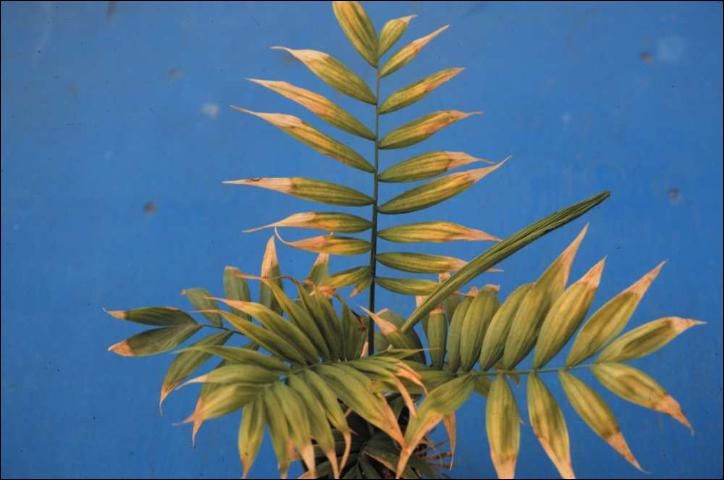
Older leaflets of affected palms have light tan necrotic tips, the necrosis gradually spreading up the leaflets (Figure 1).
Credit: T. K. Broschat
Cause
This disorder is caused by excessive B in the soil or irrigation water.
Occurrence
Boron toxicity is rare in areas that have high rainfall, but can occur in drier climates (e.g., central California). It can occur anywhere if excessive B fertilizers are applied or if high B water is used for irrigation. Boron toxicity has been artificially induced in Dypsis lutescens (areca palm) and Chamaedorea elegans (parlor palm), but many other species are probably also susceptible. It has never been documented in Florida landscape palms.
Diagnostic Techniques
Leaf analysis for B content along with visual symptoms are needed to diagnose B toxicity in palms since symptoms of B toxicity are similar to those of salt injury, water stress, and other toxicities. Generally, leaf B concentrations greater than 100 ppm are considered toxic for palms. When sampling for leaf analysis, select 4 to 6 central leaflets from the youngest fully-expanded leaf.
Management
Avoid using water high in B or excessive rates of high B fertilizers. Palms suffering from B toxicity can be treated by leaching the soil heavily.
Selected References
Marlatt, R. B. 1978. Boron deficiency and toxicity symptoms in Ficus elastica and Chrysalidocarpus lutescens. HortScience 13:442–443.
Cold Injury
Symptoms
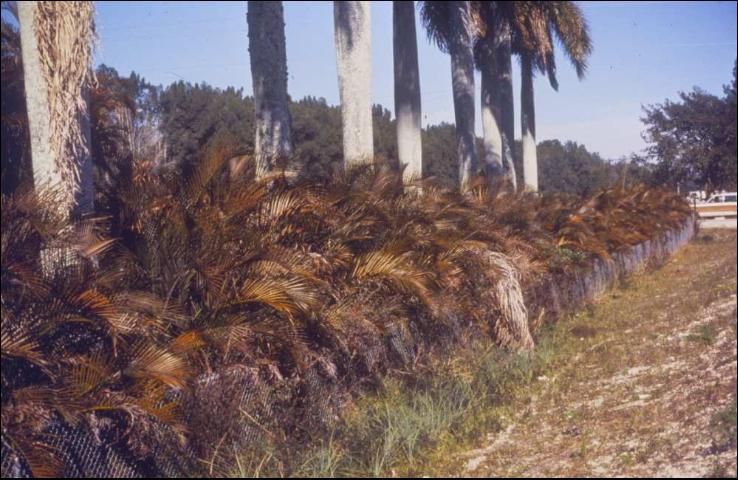
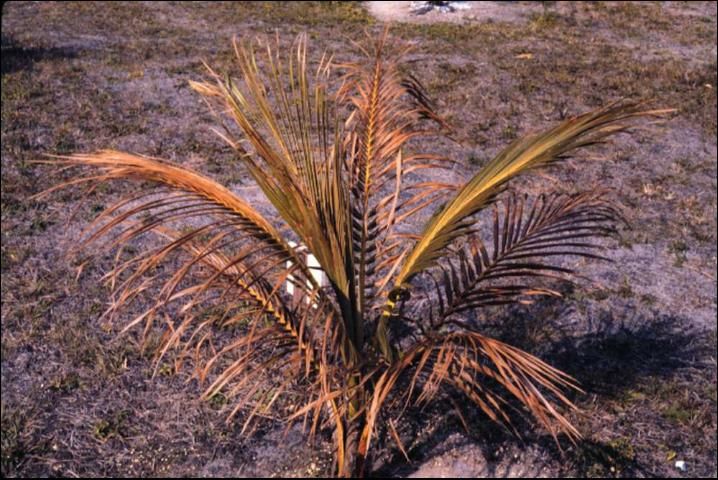
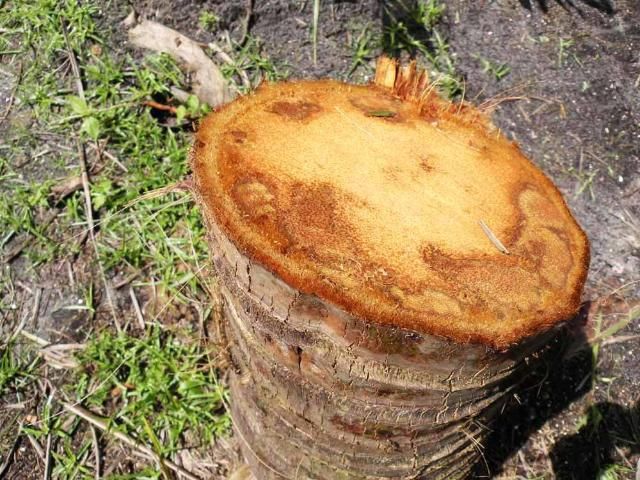
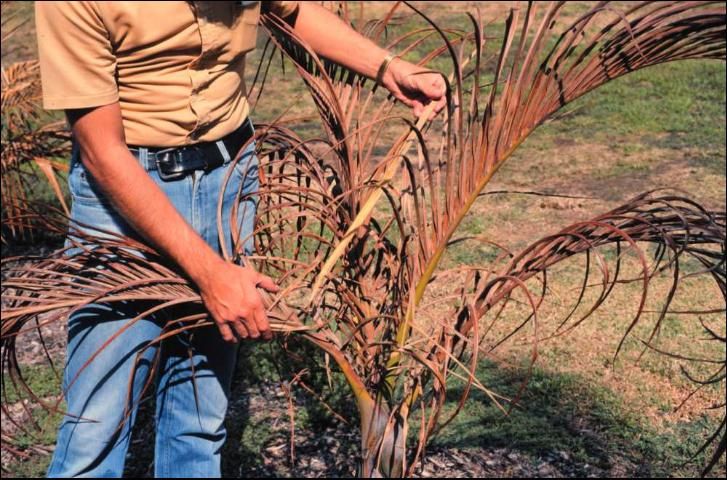
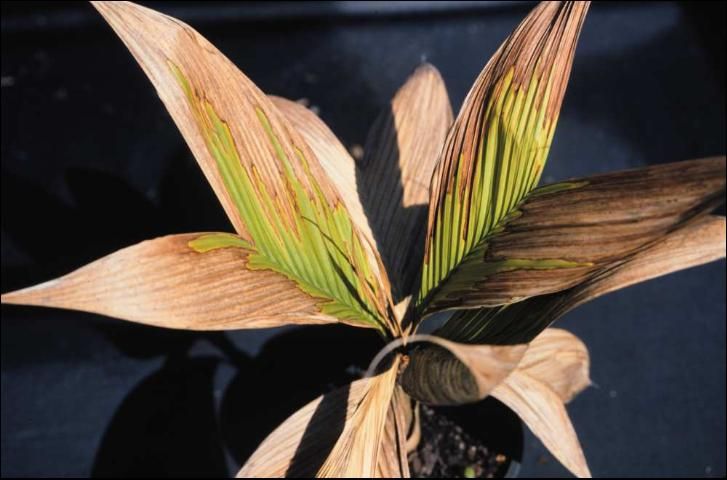
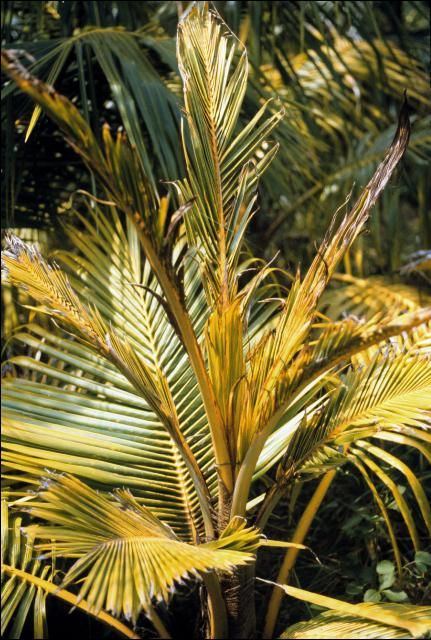
Primary symptoms include extensive and fairly uniform necrosis of the leaflets (Figures 2 and 3). In more severe cases, petiole, rachis, and even trunk tissue can become necrotic. Symptoms may include those of water stress such as wilting. Unhardy palms may be killed. Secondary symptoms include bud rot (Figure 5), trunk rots) (Figure 4), and transient micronutrient deficiencies (Figure 7). For additional information about cold injury on palms see EDIS MG318, Cold Damage on Palms.
Credit: T.K. Broschat
Credit: T.K. Broschat
Credit: T. K. Broschat
Credit: T.K. Broschat
Credit: T.K. Broschat
Credit: T.K. Broschat
Cause
Exposure to temperatures below that to which palms are acclimated will cause injury. Palms differ greatly with respect to their cold tolerance, both within and among species. Within a species, susceptibility to cold injury is reduced by gradually acclimating palms to cooler temperatures. Temperatures of 50°F or lower can injure some tropical palms (Figure 6), while some temperate species can withstand subfreezing temperatures with no injury. Palms stressed by cold temperatures are very susceptible to secondary bud rot (Figure 5) and may later show signs of micronutrient deficiencies, such as Mn, due to lower root activity at cooler temperatures (Figure 6).
Damage caused by hard freezes will affect all parts of a palm and all susceptible palms within an area, whereas damage caused by a frost will likely be spotty in distribution and may affect only exposed parts of individual palms.
Occurrence
All species of palms are susceptible to cold temperature, but the temperature at which injury will occur is dependent on the species and the extent of its cold acclimation.
Diagnostic Techniques
Symptomology plus knowledge of temperatures to which palms may have been exposed are sufficient for diagnosis of cold damage.
Management
Grow only palms that are adapted to your climate. Small, valuable palms can be covered during occasional freezes. Palms in containers can be moved indoors for protection during cold weather. Flooding of palm field nurseries can help prevent freeze damage. Running overhead irrigation continuously, starting before the temperature drops below freezing and ending only after the temperature is above freezing, is a good alternative for both container and field grown palms. Research has shown that cold hardiness in Cocos nucifera in the landscape or field nursery is enhanced by proper fertilization (see Fertilization of Field-grown and Landscape Palms in Florida). Since death of the palm is often caused by secondary bud rots, rather than the cold temperature itself, treatment for bud rot may improve the chances for palm survival. Suggested post-freeze treatments include removing rotted spear leaves to allow the bud area to dry out and drenching the bud with a copper-containing fungicide. Do not remove any foliage that is not completely necrotic.
Selected References
Broschat, T.K. 2010. Fertilization improves cold tolerance in coconut palm. HortTechnology 20:852-855.
Larcher, W. and A. Winter. 1981. Frost susceptibility of palms: Experimental data and their interpretation. Principes 25:143-152.
Meerow, A.W. 1994. Field production of palms. Acta Hortic. 360:181-188.
Excessive Water Uptake (trunk splitting)
Symptoms
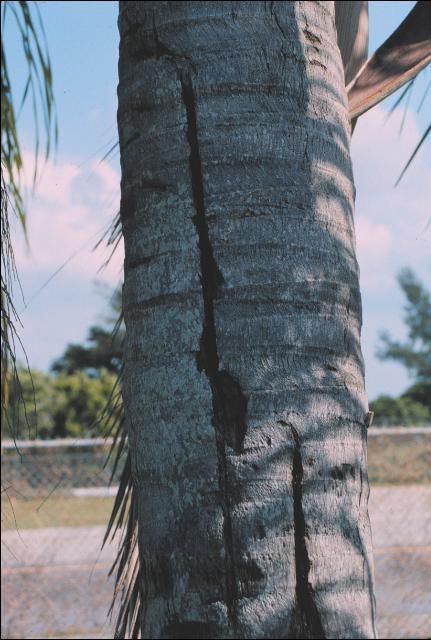
Palms that take up excessive amounts of water may have trunks with deep longitudinal splits. These trunks will often appear waterlogged and may be covered with mosses, lichens, algae, and other epiphytes (Figure 8).
Credit: T.K. Broschat
Cause
This trunk splitting may be due to greater water uptake and expansion of the soft-walled parenchyma cells that predominate in the central portion of most palm stems than in the peripheral tissue that is dominated by rather rigid vascular and fiber cells.
Occurrence
This problem is most common in areas that typically receive high rainfall, but can also occur in drier areas in response to extended wet weather.
Diagnostic Techniques
Visual symptoms should be sufficient to diagnose this disorder.
Management
The occurrence of this disorder cannot be predicted, prevented, or treated. The structural strength of a palm is usually not significantly weakened by minor stem cracking, but cracks extending half way through or more could substantially reduce trunk strength.
Foliar Salt Injury
Symptoms
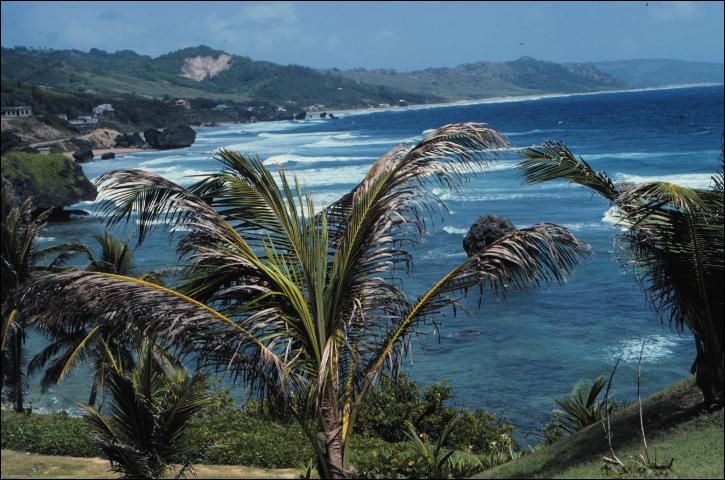
Foliar salt injury appears as desiccation of the foliage. Symptoms may be more severe on the exposed windward side of palms growing near the ocean (Figure 9). Some palms may be killed by salt spray.
Credit: T.K. Broschat
Cause
Salt spray from the ocean on the foliage can cause desiccation of leaves unless it is quickly rinsed off by rainfall or other fresh water.
Occurrence
Foliar salt injury is fairly common along seashores during dry periods with strong onshore winds. Many species are affected by salt spray, but Cocos nucifera (coconut palm), Serenoa repens (saw palmetto), Allagoptera arenaria, Hyophorbe spp., Coccothrinax spp., Thrinax spp., and Pseudophoenix spp. are most tolerant of seashore conditions.
Diagnostic Techniques
Visual symptoms are usually sufficient to diagnose this problem.
Management
Plant only salt-tolerant species of palms in areas exposed to salt spray. If strong onshore winds persist, foliage of sensitive palms should be rinsed with fresh water soon after these conditions subside.
Hapaxanthic Flowering
Symptoms
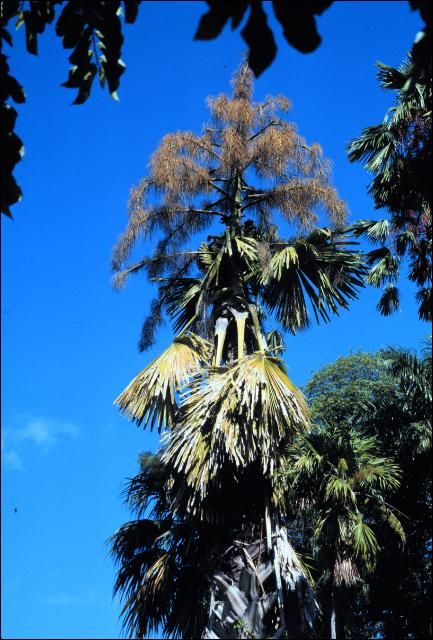
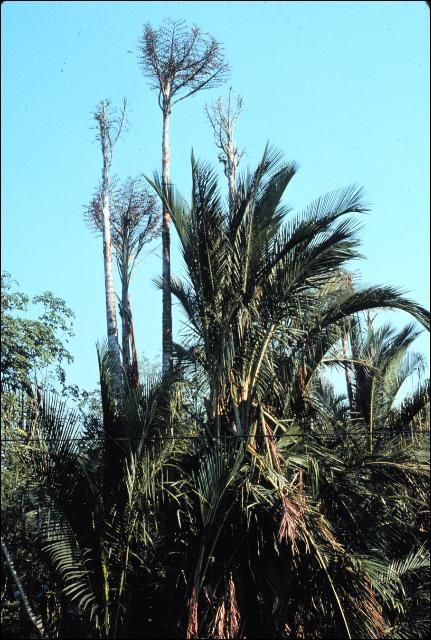
Stems of flowering and fruiting palms gradually decline and die (Figures 10 and 11). Flowering may be terminal, or along the trunk, the latter beginning either at the top or at the bottom, depending on the species.
Credit: T.K. Broschat
Credit: T.K. Broschat
Cause
In haxapanthic palm species, stems normally die after flowering and fruiting.
Occurrence
Hapaxanthic flowering occurs in Caryota spp., Arenga spp., Corypha spp., Wallichia spp., Nannorhops ritchiana, some Metroxylon spp., and Raphia spp. In clustering palms such as Arenga spp. individual palm stems die upon maturing and fruiting. However, in the clustering fishtail palm, Caryota, mitis, all stems in a clump, regardless of size, die once the palm has fruited. The small shoots often seen emerging from dying clumps of this species are seedlings, not young offshoots from the original clump.
Diagnostic Techniques
The presence of flowers or fruits in the above palm species is sufficient to diagnose this problem.
Management
Plant only pleonanthic palms for long-term landscape use. Pleonanthic palms do not die after flowering and fruiting.
Herbicide Toxicity
Symptoms
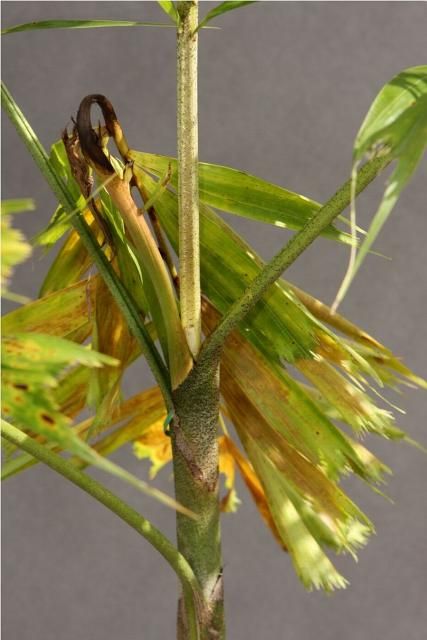
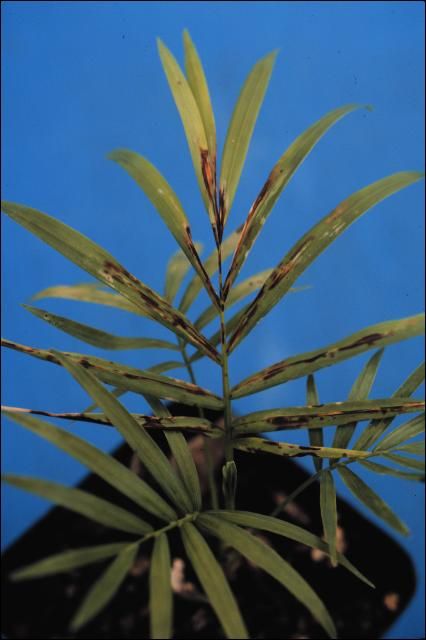
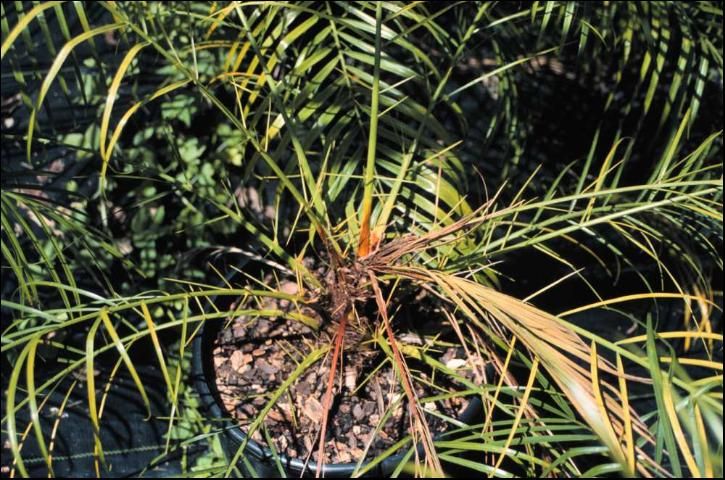
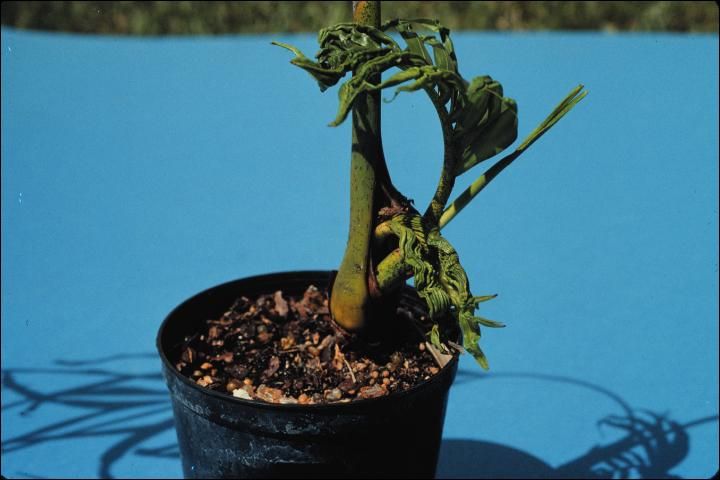
Symptoms of herbicide toxicity vary with the class of herbicide used. Contact herbicides such as paraquat or diquat cause necrosis only on leaf tissue that comes into contact with the herbicide. New growth will not be affected and the palms will eventually replace the damaged leaves.
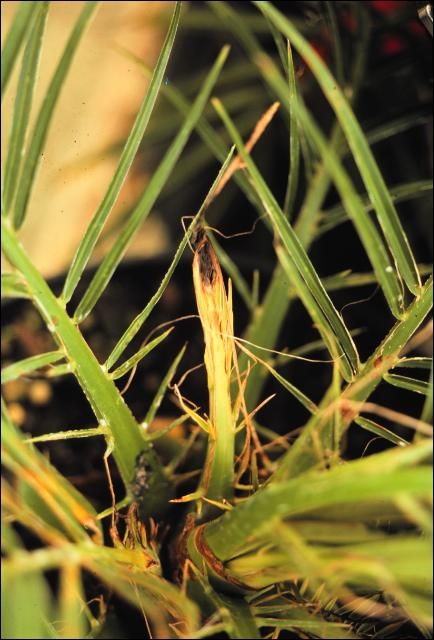
Systemic herbicides, whether preemergent or postemergent, typically affect only newly developing leaves, and because of their slow leaf production rates, symptomatic leaves may not become visible for 6–8 months following application. Most of these products cause stunting, distortion, and occasionally necrosis of the newly emerging leaves Figures 12–15). Although any of these chemicals can potentially kill palms of any age or size (Figure 16), they typically affect only one or two new leaves, with subsequent leaves emerging perfectly normal in appearance. Thus, these herbicides usually cause only temporary damage in palms.
Credit: T.K. Broschat
Credit: T. K. Broschat
Credit: T.K. Broschat
Credit: T.K. Broschat
Credit: T.K. Broschat
Cause
Herbicides applied to the foliage or soil can be absorbed by palms with variable results.
Occurrence
Injury due to preemergent herbicides is fairly common where these are applied to container-grown palms, but these products can also affect mature palms in the landscape that have been treated. Although some studies have shown certain preemergent products to be quite safe when used on palms at recommended rates, other studies have shown injury from these same products when applied to the same species at similar rates. This damage appears to be associated with periods of hot sunny weather.
In landscape situations, preemergent herbicide toxicity arises when materials are applied at rates higher than specified on the label or if they are applied too frequently. Most liquid preemergent herbicides will last about 2 months, whereas most granular formulations will last 6 months and should not be reapplied more frequently.
Postemergent herbicide damage is less common since these products are often used as directed sprays around the trunks of mature palms in field nurseries or landscapes and seldom contact the foliage. Most palms, Cocos nucifera in particular, are quite resistant to injury by glyphosate.
Diagnostic Techniques
Visual symptoms, plus a knowledge of treatment history, are needed to diagnose herbicide toxicity. Although leaf analysis can be used to test for suspected herbicides in the foliage, it is slow, expensive, and can only test for a single herbicide at a time. Furthermore, the results may not necessarily tell you if the concentrations found in the foliage are sufficiently high to have caused the symptoms you observed. Contact the laboratory that will conduct the analysis to determine which tissue they would like you to send them.
Management
Do not allow any herbicide to contact palm foliage. Postemergent herbicides such as glyphosate, gluphosinate-ammonium, paraquat, and diquat can safely be applied as directed sprays around the trunks of mature palms. Similarly, with the exception of metsulfuron, all postemergent herbicides labeled for use on lawns appear to be safe when applied to the soil or adjacent turfgrass. Preemergent herbicides should be used with great caution around palms.Products such as metolachlor are invariably toxic to palms, but most other products are unpredictable in their effects and may be safe one time, but highly damaging at another.
Selected References
Broschat, T.K. 2000. Phytotoxicity and longevity of twenty-two preemergent herbicides used on three species of container-grown palms. HortTechnology 10:597–603.
Broschat, T.K. and P. Busey. 2010. Toxicity of turfgrass postemergence herbicides on Wodyetia bifurcata. Palms 54:137–140.
Donselman, H. and T.K. Broschat. 1986. Phytotoxicity of several pre- and post-emergent herbicides on container-grown palms. Proc. Fla. St. Hort. Soc. 99:273–274.
Meerow, A.W. and T.K. Broschat. 1991. Phytotoxicity of the preemergent herbicide metolachlor on containerized palms. Foliage Digest 17(9):6.
Neel, P.L. 1977. Effects of oxadiazon preemergence herbicide on weed control and growth of sixteen species of containerized ornamental plants. Proc. Fla. St. Hort. Soc. 90:353–355.
High Soil Soluble Salts
Symptoms
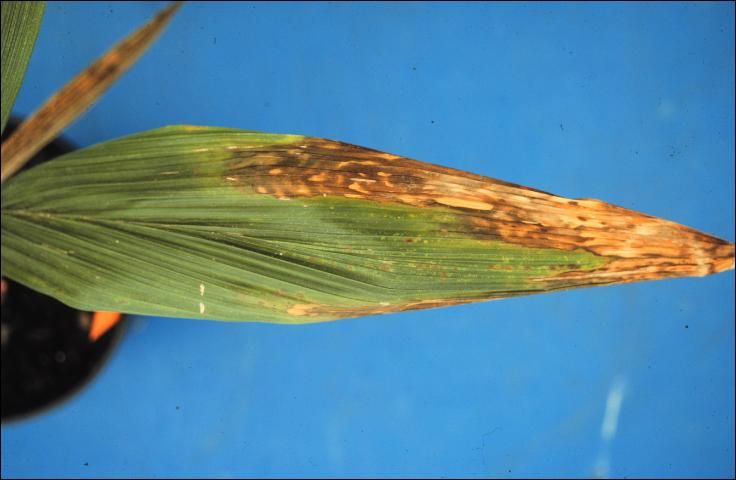
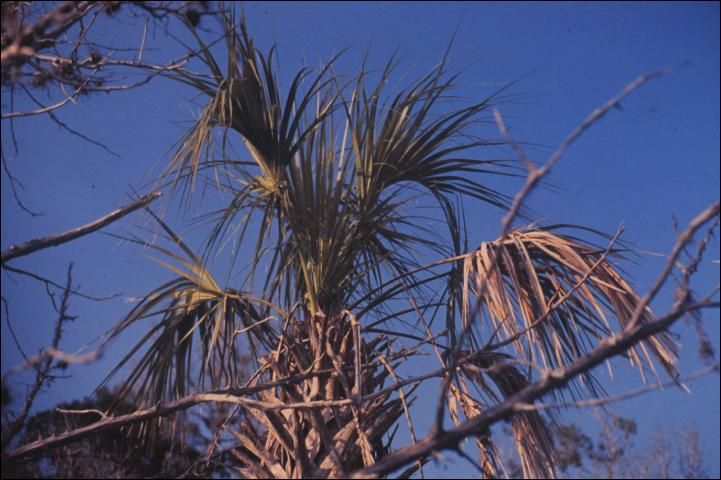
Palms suffering from high soil soluble salts usually have necrotic leaflet tips on older leaves (Figure 17). New foliage may express typical Fe deficiency symptoms or wilting due to reduced root surface area for nutrient and water absorption (Figure 18). Roots will often have necrotic tips or more extensive necrosis due to secondary root rots.
Credit: T.K. Broschat
Credit: T.K. Broschat
Cause
High soil soluble salts can be caused by excessive fertilization or the use of saline irrigation water in both container production and in the landscape or field nursery. In landscapes or field nurseries, salt water intrusion in low lying coastal areas is another source of soil salts.
Occurrence
Soluble salts injury can occur under landscape conditions, particularly in drier climates where rainfall or irrigation is insufficient to leach out excess salts from the soil. Palm species differ greatly in their susceptibility to soluble salts injury. Cocos nucifera, Phoenix dactylifera., Hyophorbe spp., Thrinax spp., Coccothrinax spp., Allagoptera arenaria, and Serenoa repens are highly tolerant of high soil soluble salts.
Diagnostic Techniques
Visual symptoms plus soil soluble salts analysis are needed to diagnose this disorder.
Management
Low salt fertilizers should be used and only at recommended rates. Some leaching of the container soil should occur at each irrigation to prevent the problem. If the problem is caused by saline irrigation water and a cleaner water source cannot be found, the soil should not be allowed to dry out and/or only salt tolerant species of palms should be grown. If the condition already exists, the soil should be leached thoroughly several times to remove excess salts.
Selected References
Furr, J.R. and C.L. Ream. 1968. Salinity effects on growth and salt uptake of seedlings of the date Phoenix dactylifera L. Proc. Amer. Soc. Hort. Sci. 92:268–273.
Koebernick, J. 1966. Salt tolerance in young palms. Principes 10:12–14.
Improper Planting Depth
Symptoms
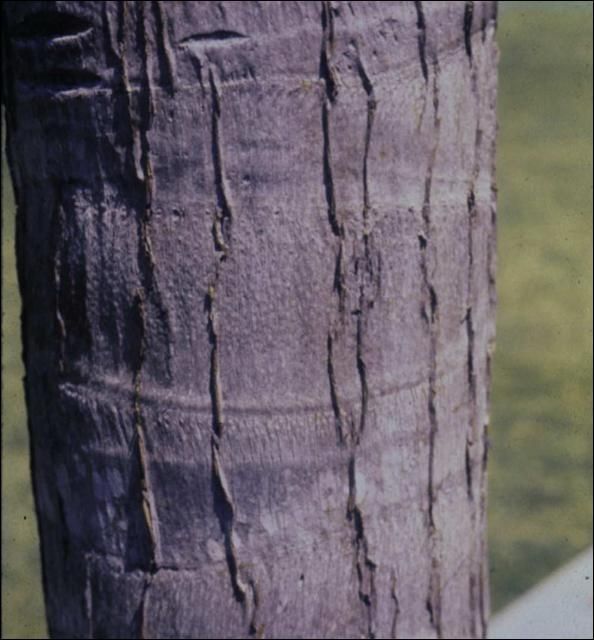
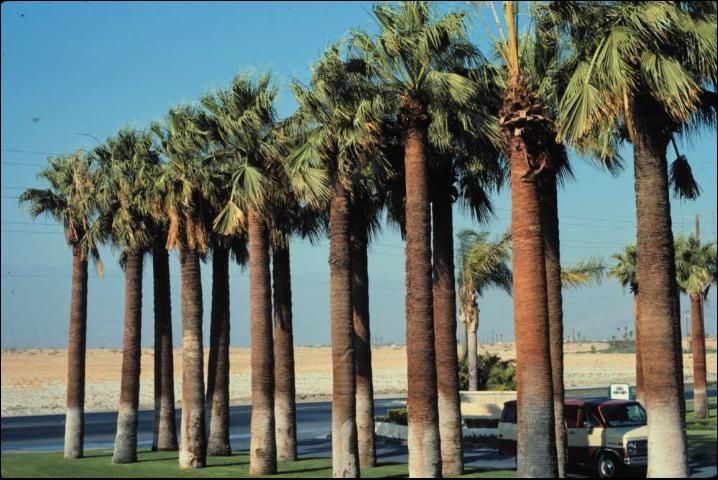
Palms planted too deeply usually exhibit symptoms of root suffocation such as chlorosis from Fe or Mn deficiency, wilting, shriveling of the trunk, reduced canopy size, root rots, and ultimately death (Figures 19 and 20). Palms stressed from deep planting are also more attractive to boring insects such as Dinapate wrighti in California or Rhynchophorus spp. or Metamasius spp. in more humid tropical areas.
Credit: T.K. Broschat
Credit: T.K. Broschat
Palms planted too shallowly typically have their trunks elevated above the soil line and are often supported by only a few roots, while hundreds of new adventitious root initials remain in a state of arrested development at the base of the trunk due to desiccation. Shallowly planted palms are structurally unsound and can easily topple over in moderate to high winds (Figure 21).
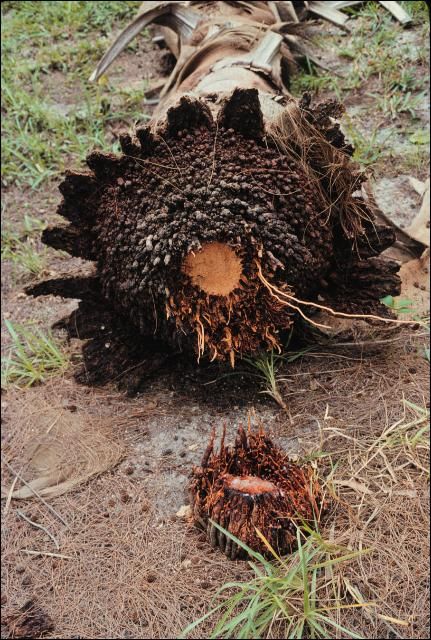
Credit: T.K. Broschat
Cause
Deep planting results in reduced root zone oxygen levels, which in turn reduces root respiration rates and ultimately the effectiveness of the root system in taking up nutrients and water. Planting of palm seedlings in containers as little as 1 inch too deep can result in chronic Fe deficiency symptoms and reduced growth rate. Aerial root initials extending up the base of old palm trunks will resume normal development if buried, but no root will ever develop from the trunk above this zone of active root initiation.
In shallow planted palms, newly emerging adventitious roots arising from the base of the stem axis are exposed to dry air, rather than moist soil and this dry environment inhibits their normal development. Only those roots already in the soil at the time of transplanting will ever support the palm and these are usually insufficient to support the weight of a large mature palm.
Occurrence
Deep planting is quite common when seedlings are planted in containers, but also occurs in the landscape when large specimen-sized palms are intentionally planted deeply for added support or to reduce the final height of a palm to a particular size. Shallow planting is primarily a problem when juvenile palms are transplanted either from small to large containers or from containers into the landscape.
Diagnostic Techniques
Deep planting is easily diagnosed by symptoms plus digging down into the soil to determine the depth of the root ball. The top of the root ball should be at ground level.
Shallow planting is obvious by the presence of an inverted cone-shaped trunk base covered with undeveloped root initials. These palms will show few roots actually penetrating into the soil.
Management
Always plant large palms such that the top of the root ball is about even with the soil line. For juvenile palms that have not yet developed trunks, the base of the stem should be about 1 inch below the surface of the soil. Palms planted too deeply should be dug up and replanted at the proper depth. Shallowly planted palms, if small, can be similarly replanted at the proper depth, but large, established palms can be stabilized by simply mounding up soil around the base of the undeveloped root initials at the base of the trunk. These root initials will quickly resume their growth down into the soil and firmly anchor the palm.
Selected Reference
Broschat, T.K. 1995. Planting depth affects survival, root growth and nutrient content of transplanted pygmy date palms. HortScience 30:1031–1032.
Lightning Injury
Symptoms
Lightning injury symptoms are quite variable, but often include shot holes, bleeding, splitting of the trunk, wilting, and collapse of the crown (Figure 22, 23, 24, and 25). Multiple palms can be killed by a single strike if they are growing close together. Lightning strikes are usually fatal to palms, although some may survive for 6 months or longer following a strike.
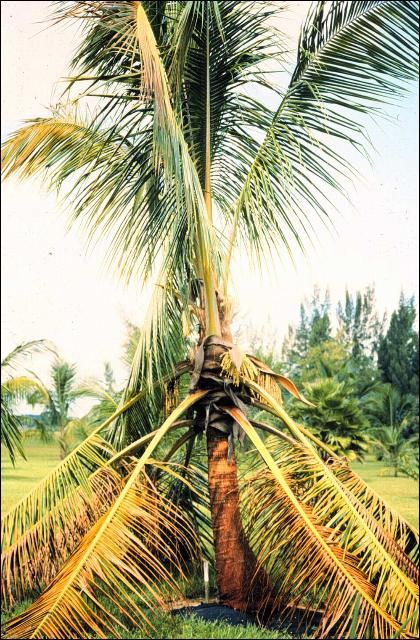
Credit: T.K. Broschat
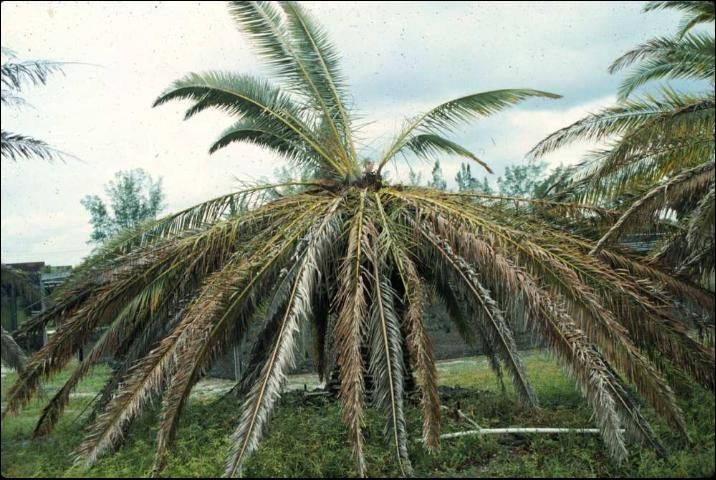
Credit: T.K. Broschat
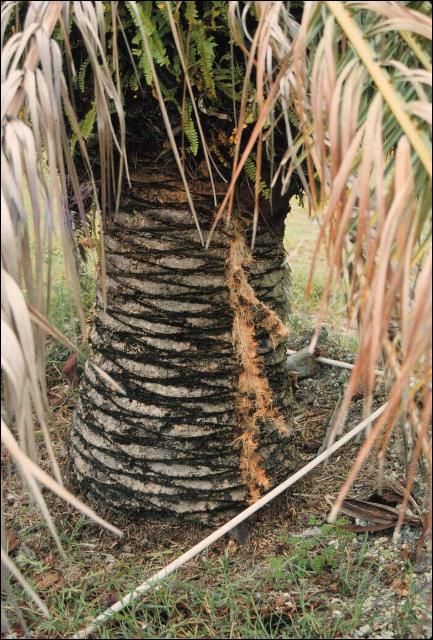
Credit: T.K. Broschat
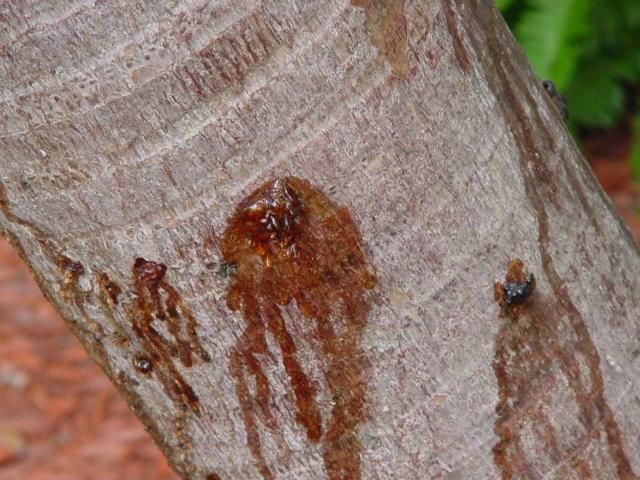
Credit: T. K. Broschat
Cause
This disorder is caused by lightning striking the palm.
Occurrence
Lightning injury is fairly common in areas receiving frequent electrical storms. Although tall palms are most susceptible, shorter palms adjacent to a struck palm can also be affected.
Diagnostic Techniques
Visual symptoms are usually sufficient for diagnosis. No other disorder can cause a perfectly healthy palm to collapse and die within a couple of days.
Management
Lightning injury cannot be treated, and prevention by mounting lightning grounds within palm canopies is impractical for all but the most valuable of palms.
Powerline Decline
Symptoms
Leaves near high voltage overhead power lines often exhibit chlorotic or necrotic tips (Figures 26, 27, and 28). In severe cases, the entire crown may become chlorotic with necrotic leaf tips. Palm death is relatively rare, however.
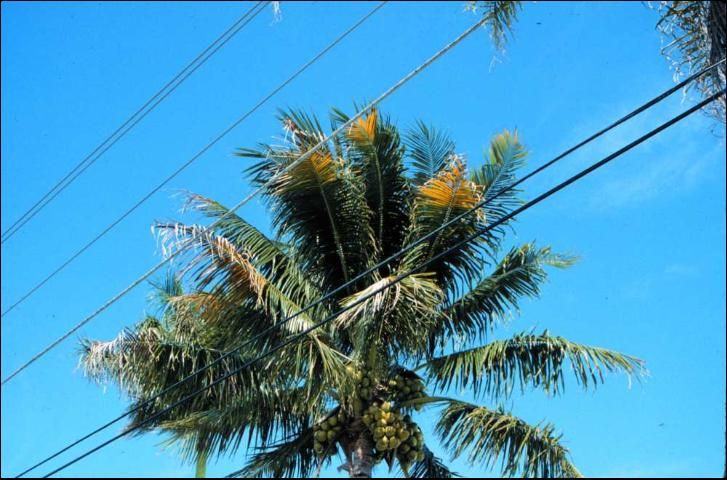
Credit: T.K. Broschat
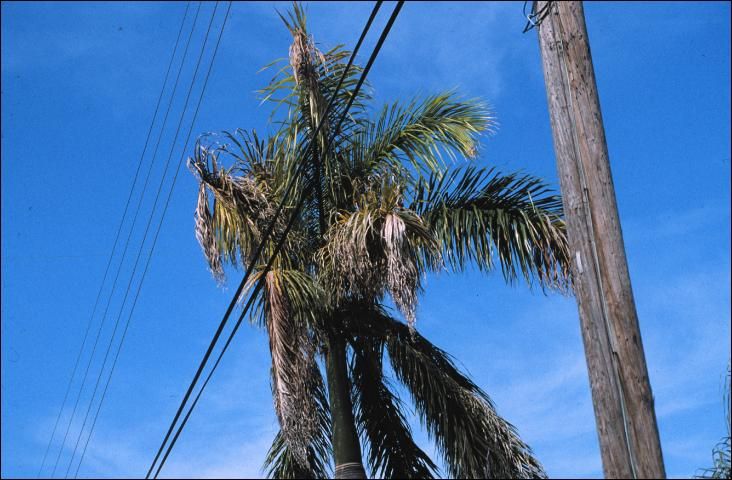
Credit: T. K. Broschat
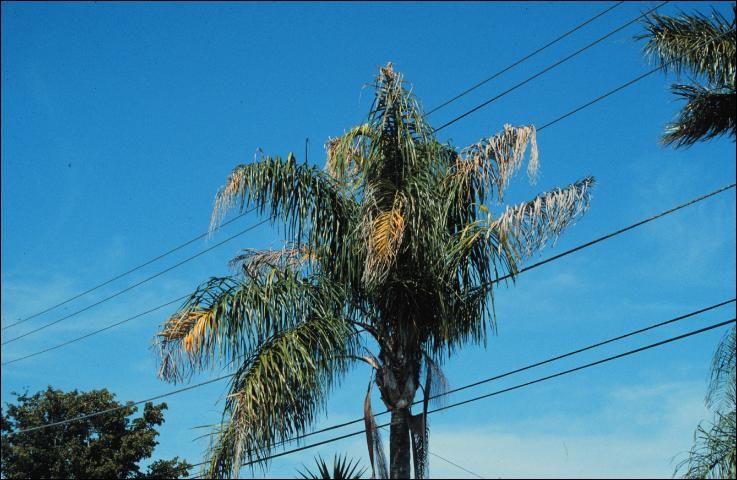
Credit: T.K. Broschat
Cause
Electromagnetic fields within 5 feet of a high voltage power line appear to cause injury to palm foliage. Leaves do not need to physically contact the wires for injury to occur and often occurs on the side of the palm opposite the wires as well as those nearest to the lines.
Occurrence
Powerline decline is common wherever palms are planted under overhead power lines. Most species appear to be susceptible.
Diagnostic Techniques
Visual symptoms on palms near overhead power lines are usually sufficient to diagnose this disorder.
Management
Avoid planting tall palms directly under or near overhead power lines. If a palm is growing directly under a power line, it should be removed.
Root Suffocation
Symptoms
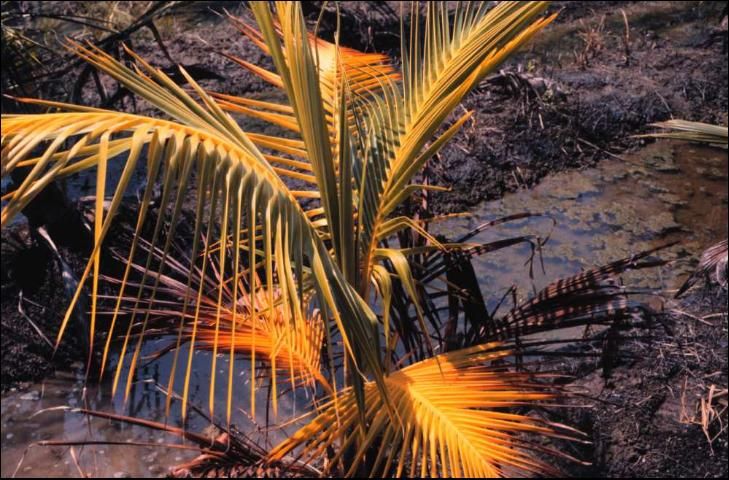
Early symptoms of root suffocation are often those of Fe deficiency, with chlorotic new leaves being produced (Figure 29). In severe cases, wilting of the foliage and shrinkage of the trunk may occur (Figure 19). Roots may appear rotted. The root rot diseases that often result are secondary problems.
Credit: T.K. Broschat
Cause
Planting palms more deeply than they were originally growing decreases oxygen levels in the soil and can cause root suffocation. This can lead to eventual death of the root system and of the entire palm. Waterlogged soils also reduce soil aeration with similar effects on palm roots.
Occurrence
Palms in poorly-drained landscape or field sites, or in poorly-drained container substrates often suffer from this problem.
Diagnostic Techniques
Visual symptoms are usually adequate for diagnosis of this problem. Look for Fe or Mn deficiency symptoms, wilting, shriveling of the trunk, or excessive water in the root zone. Dig down to determine if the palm was planted too deeply.
Management
Deeply planted palms should be dug up and replanted at the proper depth. Poorly-drained sites should be built up with a berm or hard pans in the subsoil perforated prior to planting. There is no point in treating root rot disease without first correcting the primary reason for root suffocation.
Selected Reference
Broschat, T.K. 1995. Planting depth affects survival, root growth, and nutrient content of transplanted pygmy date palms. HortScience 30:1031–1032.
Sunburn
Symptoms
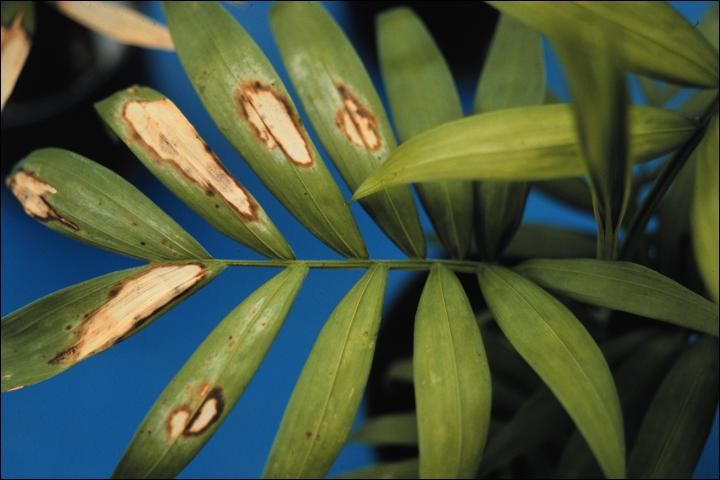
Large necrotic areas are visible on the upper surfaces of leaves, usually in the center of leaves or leaflets, rather than on the leaf tips or margins (Figure 30). Affected foliage on adjacent leaves will often have the same directional orientation. Leaves held in a horizontal position are more likely to exhibit sunburn damage than those with a more vertical orientation.
Credit: T.K. Broschat
Cause
Exposure of shade-grown foliage to high light intensities can injure leaves.
Occurrence
Sunburn can affect most species of palms.
Diagnostic Techniques
Visual symptoms alone are usually sufficient to diagnose this disorder.
Management
Palms to be planted in a full sun location should be produced under full sun conditions. Individual leaves of shade-grown palms cannot adapt to high light intensities, but must be replaced by new leaves produced under, and adapted to, high light intensity.
Water Stress
Symptoms
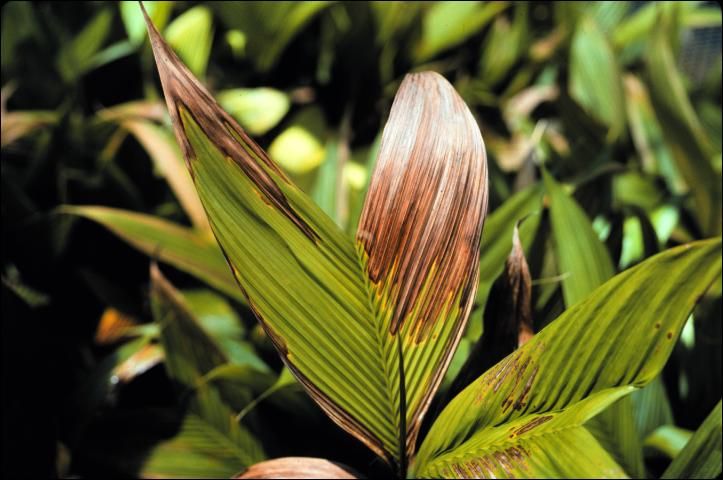
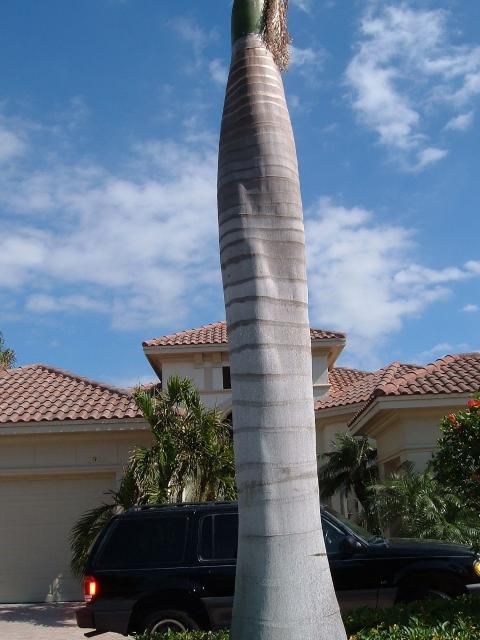
Typical water stress symptoms include reduced growth and necrosis of leaflet tips, spreading to the entire leaf as severity increases (Figure 31). Oldest leaves are usually the first to show symptoms, but eventually newly emerging leaves may also wither and die. Death of the meristem or bud may follow. Water stress in some species is indicated by leaflets folding about the midrib or wilting. In mature palms, shriveling (Figure 19), hollowing, or collapse of the trunk (Figure 32) may also occur.
Credit: T.K. Broschat
Credit: T. K. Broschat
Cause
Water stress occurs when water is limited or the root system is incapable of taking up sufficient water.
Occurrence
Water stress is fairly common in container-grown palms, but is less common in landscape or field situations because of the more extensive root systems of the latter. Wilting caused by water stress may be apparent on palms growing in wet soils due to root rot diseases, poor soil aeration, or vascular wilt diseases. Palm species native to dry climates are usually more drought tolerant than those from tropical rain forests that lack a distinct dry season. Palms in general are fairly tolerant of drought once established in the landscape.
Diagnostic Techniques
Visual symptoms are usually sufficient to diagnose this problem.
Management
Water stress is easily prevented by not allowing the soil to become excessively dry. Mildly stressed palms will usually recover when watered and lose only some of the oldest leaves, but severely stressed palms of sensitive species may die.
Wind Damage
Symptoms
Leaves of wind susceptible species appear tattered, often with only leaflet midveins remaining (Figure 33). Petioles of individual leaves anywhere within the canopy may snap and hang down (Figure 34). These may or may not remain green. In severe wind storms, palms may be uprooted, or the trunk will snap off at varying distances above the ground.
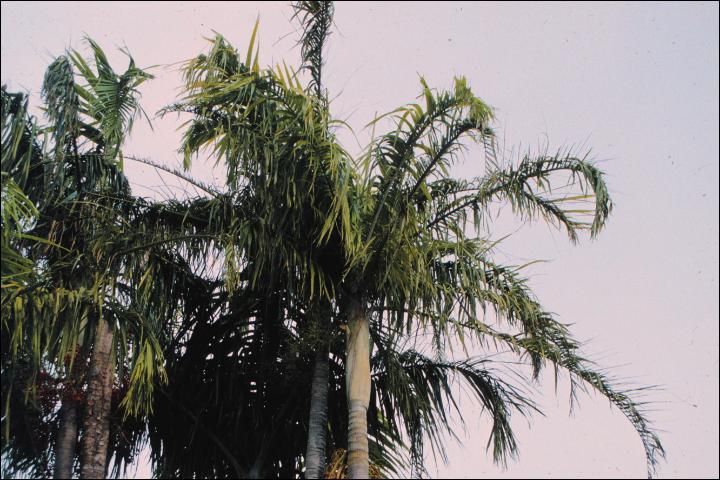
Credit: T.K. Broschat
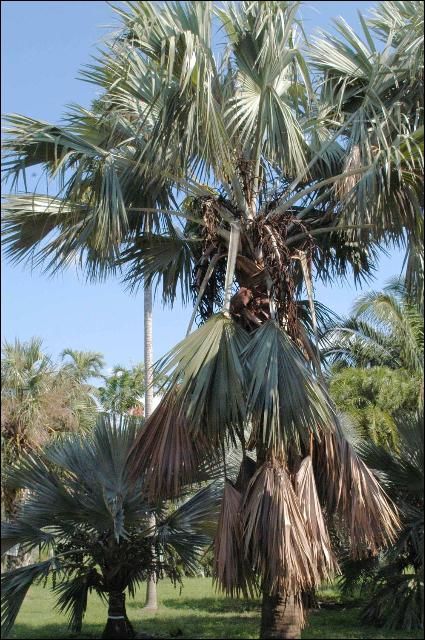
Credit: T.K. Broschat
Cause
High winds from storms can damage foliage of susceptible species or snap or uproot other palms. Biotic stresses such as boring insects, woodpeckers, or trunk-rotting fungi can predispose palms to snapping off from wind.
Occurrence
Foliar damage is fairly common in species such as Carpentaria acuminata (Carpentaria palm) and Pigafetta filaris that have rather soft foliage. Toppling or snapping of palm trunks is rather rare except in localized areas that have experienced severe wind storms. Washingtonia robusta and Syagrus romanzoffiana appear to be the most susceptible species to trunk snapping or crown toppling. Individual leaves of most species may snap after experiencing strong winds.
Diagnostic Techniques
Tattered foliage can easily be attributed to wind damage, while palms that snap off at or above the soil line may also have structural damage caused by boring insects, woodpeckers, or trunk rotting diseases such as Ganoderma butt rot or Thielaviopsis trunk rot.
Management
Do not plant wind-susceptible palms such as Carpentaria acuminata or Pigafetta filaris in areas that regularly receive strong winds. Broken but still green individual leaves may be removed unless they are the only foliage remaining after a severe storm. These should then be left on until the palm grows several new leaves to replace them. Palms that are uprooted by wind storms can usually be righted and braced. They will usually recover if righted within a few days after falling if the root system is kept moist. Treat these righted palms as though they were recent transplants. Palms whose trunks or crowns have snapped off will never recover and should be removed.