


Calathea makoyana Peacock Plant
Introduction
Beautifully marked leaves in various shades of green, cream, white, pink, and silver held aloft on maroon stems make peacock plant an attractive, clump-forming plant for outdoor use or as a house plant. The undersides of the leaves are dark purple making a striking contrast to the lighter colored tops of the leaves. Flowers are small and inconspicuous to all but the astute observer. The striking foliage gives this plant distinction.
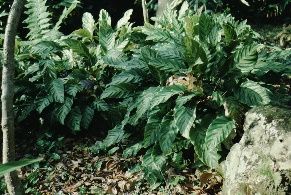
Credit: Edward F. Gilman, UF/IFAS
General Information
Scientific name: Calathea makoyana
Pronunciation: kal-luhth-EE-uh mack-oy-AY-nuh
Common name(s): peacock plant
Family: Marantaceae
Plant type: herbaceous; perennial
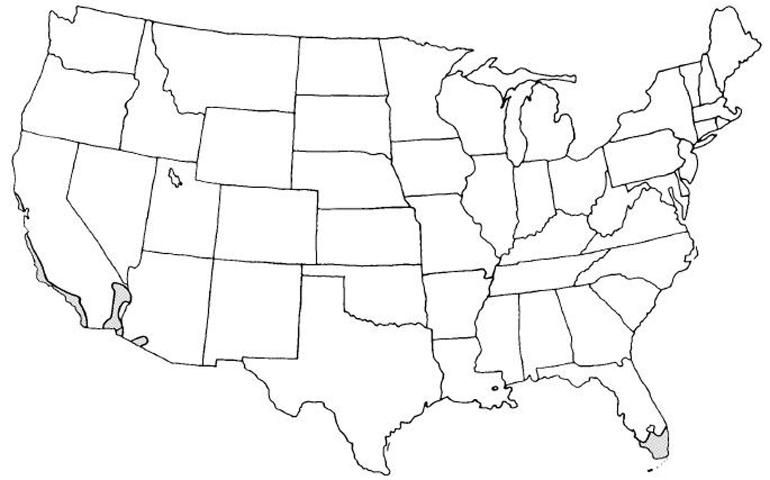
USDA hardiness zones: 10 through 11 (Figure 2)
Credit: undefined
Planting month for zone 7: year round
Planting month for zone 8: year round
Planting month for zone 9: year round
Planting month for zone 10 and 11: year round
Origin: not native to North America
Invasive potential: not known to be invasive
Uses: specimen; container or above-ground planter; border; ground cover; accent; suitable for growing indoors
Availability: generally available in many areas within its hardiness range
Description
Height: 2 to 4 feet
Spread: 2 to 4 feet
Plant habit: upright
Plant density: moderate
Growth rate: moderate
Texture: coarse
Foliage
Leaf arrangement: spiral
Leaf type: simple
Leaf margin: entire
Leaf shape: ovate
Leaf venation: pinnate
Leaf type and persistence: evergreen
Leaf blade length: 4 to 8 inches
Leaf color: variegated
Fall color: no fall color change
Fall characteristic: not showy
Flower
Flower color: white
Flower characteristic: flowers periodically throughout the year
Fruit
Fruit shape: unknown
Fruit length: less than 1/2 inch
Fruit cover: dry or hard
Fruit color: unknown
Fruit characteristic: inconspicuous and not showy
Trunk and Branches
Trunk/bark/branches: typically multi-trunked or clumping stems
Current year stem/twig color: green
Current year stem/twig thickness: thick
Culture
Light requirement: plant grows in the shade
Soil tolerances: clay; sand; loam; slightly alkaline; acidic
Drought tolerance:
Soil salt tolerances: poor
Plant spacing: 18 to 24 inches
Other
Roots: sprouts from roots or lower trunk
Winter interest: no special winter interest
Outstanding plant: not particularly outstanding
Pest resistance: very sensitive to one or more pests or diseases which can affect plant health or aesthetics
Use and Management
A porous potting media high in organic matter is preferred for best leaf color and growth but avoid constantly wet soil as root-rots are quite damaging. Filtered light is needed as bright light will wash out the brilliant leaf colors. High humidity is vital for growth as a house plant, with daily mistings recommended. Plant on three-foot centers for mass planting outdoors. Peacock plant also works well as a tall ground cover toward the front of a shrub border. It performs well in a container on a deck or patio in the shade.
Propagation is by cuttings or division.
Pests and Diseases
Mites can be a serious pest problem, particularly if the plant is in a sunny location.
No diseases are of major concern.


