


Crinum spp.Crinum Lily
Introduction
This large, coarse-textured, upright rosette of broad, light green, 4footlong leaves is topped most of the year with great clusters of fragrant, spidery flowers. A fine specimen plant, Crinums also make excellent underplanting’s for palms or other coarsely textured landscape plants. Plant four to six feet apart in a mass planting. Install a very low ground cover beneath and around individual plants or groupings to help "set-off" or display crinum lily. They accent any garden or landscape.
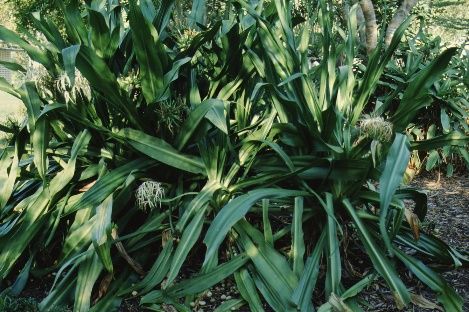
Credit: Edward F. Gilman, UF/IFAS
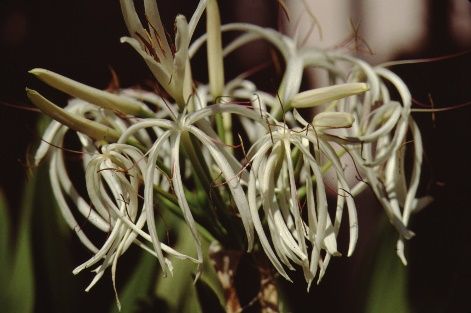
Credit: Edward F. Gilman, UF/IFAS
General Information
Scientific name: Crinum spp.
Pronunciation: KRYE-num species
Common name(s): crinum lily
Family: Amaryllidaceae
Plant type: bulb/tuber; perennial; herbaceous
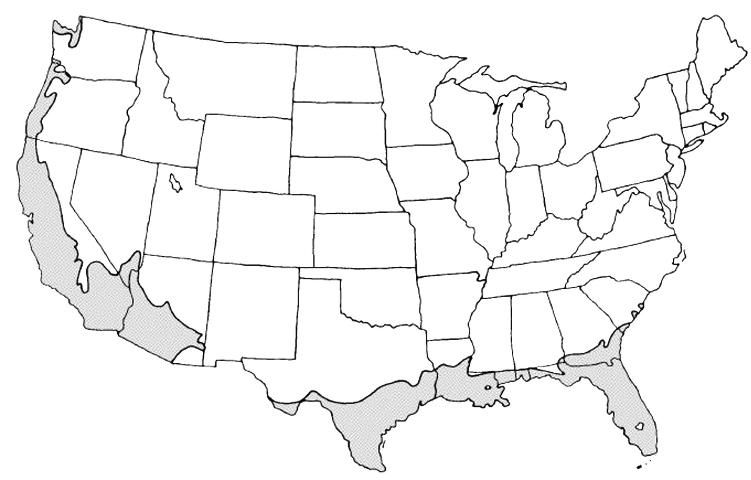
USDA hardiness zones: 8B through 11 (Figure 3)
Planting month for zone 8: year round
Planting month for zone 9: year round
Planting month for zone 10 and 11: year round
Origin: not native to North America
Invasive potential: not known to be invasive
Uses: mass planting; specimen; accent; small parking lot islands (< 100 square feet in size); medium-sized parking lot islands (100-200 square feet in size); large parking lot islands (> 200 square feet in size)
Availability: generally available in many areas within its hardiness range
Credit:
Description
Height: 3 to 5 feet
Spread: 3 to 5 feet
Plant habit: spreading
Plant density: open
Growth rate: moderate
Texture: coarse
Foliage
Leaf arrangement: spiral
Leaf type: simple
Leaf margin: entire
Leaf shape: linear
Leaf venation: parallel
Leaf type and persistence: evergreen
Leaf blade length: more than 36 inches
Leaf color: green
Fall color: no fall color change
Fall characteristic: not showy
Flower
Flower color: white
Flower characteristic: year-round flowering; pleasant fragrance
Fruit
Fruit shape: round
Fruit length: 1 to 3 inches
Fruit cover: dry or hard
Fruit color: green
Fruit characteristic: showy
Trunk and Branches
Trunk/bark/branches: not particularly showy; usually with one stem/trunk
Current year stem/twig color: not applicable
Current year stem/twig thickness: not applicable
Culture
Light requirement: plant grows in part shade/part sun
Soil tolerances: extended flooding; clay; sand; acidic; slightly alkaline; loam
Drought tolerance: moderate
Soil salt tolerances: unknown
Plant spacing: 36 to 60 inches
Other
Roots: usually not a problem
Winter interest: plant has winter interest due to unusual form, nice persistent fruits, showy winter trunk, or winter flowers
Outstanding plant: plant has outstanding ornamental features and could be planted more
Pest resistance: long-term health usually not affected by pests
Use and Management
Well-suited to hot, dry locations, crinum lilies grow from what are among the largest true bulbs, some weighing over 40pounds. Forming large clumps, crinums should have plenty of growing room in full or partial sun on well-drained soils, and are moderately salt-tolerant. Crinums recover quickly from killing frosts in USDA hardiness zones 8b and 9.
Species have blooms of white, pink, or rose, while others are striped with white and carmine, the so-called milk-and-wine lilies. Plants are available with maroon leaves at some nurseries.
Crinum x powelli cultivar 'Cecil Houdyshel' has fragrant, rosy-pink flowers. Crinum moorei, with a rose-red flower, is available in the cultivar 'Album' with white flowers and 'Roseum' with pink flowers. Crinum latifolium var. zeylanicum is the milk-and-wine lily.
Crinums are best divided during the winter when not actively growing. The large clump is simply lifted and some of the offshoot bulbs removed.
Pests and Diseases
Crinum is a very sturdy plant and is only occasionally bothered by caterpillars or other chewing insects.
No diseases are of major concern, but leaf spots could occur in moist shaded areas.

