


Dryopteris erythrosora Autumn Fern, Japanese Shield Fern, Japanese Wood Fern
Introduction
This finely divided, dark green fern has a delicate appearance but is actually a very hardy survivor. Its slowly spreading habit and ability to tolerate neglect make it an ideal candidate for use as a groundcover. This underutilized plant is one of the few ferns to have seasonal color value; the fronds appearing reddish when young. It combines well with Mahonia fortuneii and holly fern for a mixed planting in a shady location. It will grow to about 18 inches tall with single plants spreading no more than 24 inches.
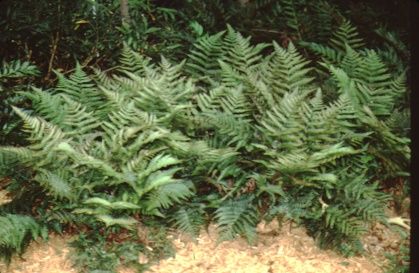
Credit: Edward F. Gilman, UF/IFAS
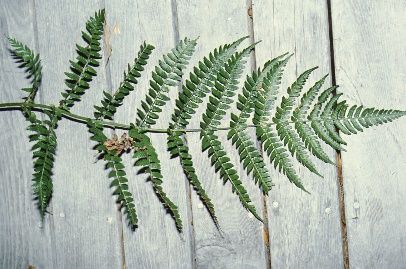
Credit: Edward F. Gilman, UF/IFAS
General Information
Scientific name: Dryopteris erythrosora
Pronunciation: dry-OP-teer-iss air-rith-roe-SOR-uh
Common name(s): autumn fern, Japanese shield fern, Japanese wood fern
Family: Aspleniaceae
Plant type: herbaceous; perennial
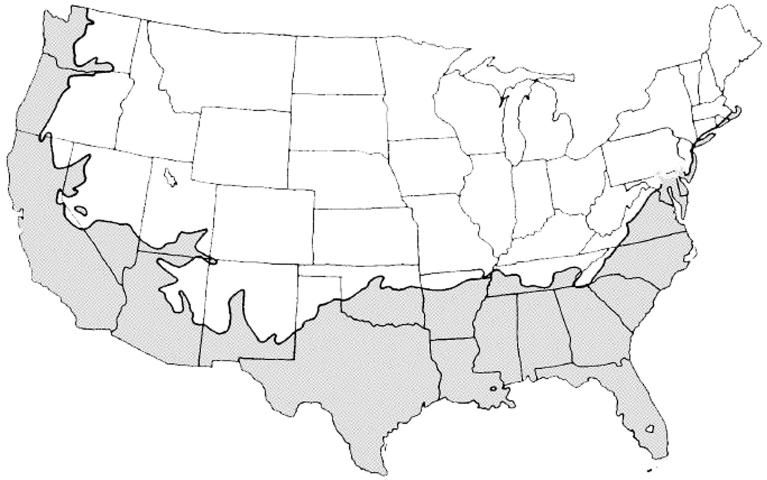
USDA hardiness zones: 5 through 11 (Figure 3)
Planting month for zone 7: year round
Planting month for zone 8: year round
Planting month for zone 9: year round
Planting month for zone 10 and 11: year round
Origin: not native to North America
Invasive potential: not known to be invasive
Uses: mass planting; edging
Availability: somewhat available, may have to go out of the region to find the plant
Credit:
Description
Height: 1 to 2 feet
Spread: 1 to 2 feet
Plant habit: upright
Plant density: moderate
Growth rate: slow
Texture: fine
Foliage
Leaf arrangement: most emerge from the soil, usually without a stem
Leaf type: bipinnately compound
Leaf margin: lobed
Leaf shape: oblong
Leaf venation: pinnate; none, or difficult to see
Leaf type and persistence: evergreen
Leaf blade length: less than 2 inches
Leaf color: purple or red
Fall color: no fall color change
Fall characteristic: not showy
Flower
Flower color: no flowers
Flower characteristic: no flowers
Fruit
Fruit shape: unknown
Fruit length: unknown
Fruit cover: unknown
Fruit color: brown
Fruit characteristic: inconspicuous and not showy
Trunk and Branches
Trunk/bark/branches: not applicable
Current year stem/twig color: not applicable
Current year stem/twig thickness: not applicable
Culture
Light requirement: plant grows in the shade
Soil tolerances: clay; sand; acidic; loam
Soil salt tolerances: poor
Plant spacing: 18 to 24 inches
Other
Roots: not applicable
Winter interest: no special winter interest
Outstanding plant: plant has outstanding ornamental features and could be planted more
Pest resistance: no serious pests are normally seen on the plant
Use and Management
Requiring shady conditions, autumn fern grows in any good forest loam and has good drought tolerance. It can withstand an hour or two of direct sun. California ratings state autumn fern is accepting of temperatures ranging from 109°F down to 3°F. Its slow growth habit makes the plant expensive to purchase but it is well worth it. This is truly a no-maintenance plant. Plant on 12 to 18inchcenters to establish a solid ground cover. Fronds can be cut and used in vases for indoor greenery but will last only three or four days.
Propagation is by division or by spores.
Pests and Diseases
No pests or diseases are of major concern.

