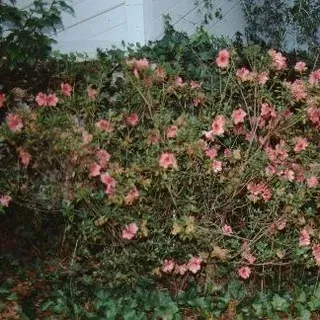


Rhododendron x 'Fashion' 'Fashion' Azalea
Introduction
Most are relatively short and serve well as ground cover shrubs. Flowers are large, of various colors, and occur late (June) so they are not injured by cold.
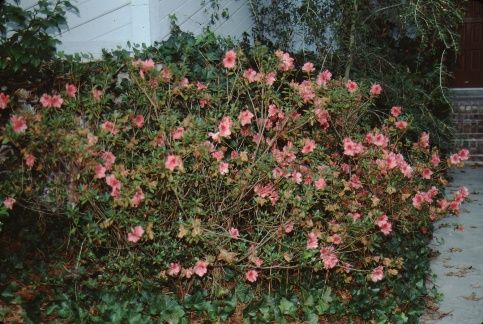
Credit: Edward F. Gilman, UF/IFAS
General Information
Scientific name: Rhododendron x 'Fashion'
Pronunciation: roe-duh-DEN-drun
Common name(s): 'Fashion' azalea
Family: Ericaceae
Plant type: shrub
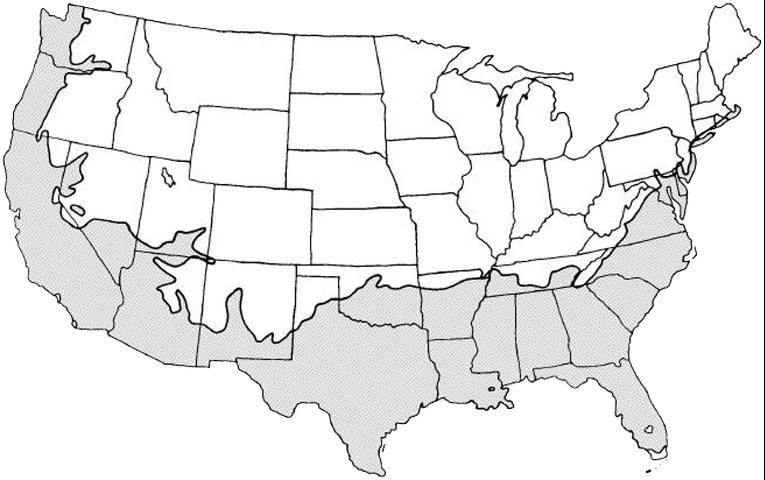
USDA hardiness zones: 7 through 10A (Figure 2)
Planting month for zone 7: year-round
Planting month for zone 8: year-round
Planting month for zone 9: year-round
Planting month for zone 10: year-round
Origin: not native to North America
Invasive potential: not known to be invasive
Uses: mass planting; specimen; container or above-ground planter; attracts butterflies; cut flowers; accent; foundation
Availability: generally available in many areas within its hardiness range
Credit:
Description
Height: 3 to 5 feet
Spread: 4 to 6 feet
Plant habit: round
Plant density: dense
Growth rate: slow
Texture: fine
Foliage
Leaf arrangement: alternate
Leaf type: simple
Leaf margin: entire
Leaf shape: elliptic (oval)
Leaf venation: pinnate
Leaf type and persistence: evergreen
Leaf blade length: less than 2 inches
Leaf color: green
Fall color: no fall color change
Fall characteristic: not showy
Flower
Flower color: salmon
Flower characteristic: spring flowering; fall flowering; winter flowering
Fruit
Fruit shape: elongated
Fruit length: 0.5 to 1 inch
Fruit cover: dry or hard
Fruit color: brown
Fruit characteristic: inconspicuous and not showy
Trunk and Branches
Trunk/bark/branches: not particularly showy; typically multi-trunked or clumping stems; can be trained to grow with a short, single trunk
Current year stem/twig color: brown
Current year stem/twig thickness: thin
Culture
Light requirement: plant grows in part shade/part sun
Soil tolerances: acidic; clay; loam; sand
Drought tolerance: moderate
Soil salt tolerances: poor
Plant spacing: 36 to 60 inches
Other
Roots: usually not a problem
Winter interest: plant has winter interest due to unusual form, nice persistent fruits, showy winter trunk, or winter flowers
Outstanding plant: plant has outstanding ornamental features and could be planted more
Pest resistance: long-term health usually not affected by pests
Use and Management
The most popular cultivars in the group are in the Gumpo series: 'Gumpo Pink'—pink ruffled flowers; 'Gumpo Rose'—rose colored flowers; 'Gumpo White'—white ruffled flowers, often with purple speckles.
Pests and Diseases
Black vine weevil and strawberry weevil adults feed at night, notching the leaf margins and making holes in the leaves. The larvae feed on the roots and bark, girdling and killing the plant.
Lace bugs cause leaf yellowing, particularly when plants are heated in too much sun. Brown specks on the undersides of leaves are insect excrement. Sunny sites may lead to higher lace bug populations.
Mites cause leaf discoloration.
Scales may be found on branches and stems of unhealthy-looking plants. Use dormant oil in spring.
Gray blight infection follows an injury, such as winter injury. A spot, which is at first white with a dark brown margin, forms on the leaf. Protect plants from winter injury.
Dieback is also called Botryosphaeria canker. The leaves are attacked near the tips or at the margins; then spots form on the entire leaf. Leaf stalks and twigs are eventually infected. Prune off infected parts.
Leaves infected with Phytophthora dieback turn brown, roll, then drop off. The stem shrivels and a canker forms, eventually girdling the stem. Prune out diseased branch tips.
Powdery mildews of different genera form a white coating on the leaves.
Leaf spots may be caused by any number of fungi.