Rhododendron x 'George Tabor' 'George Tabor' Azalea Rhododendron x 'George Tabor' 'George Tabor' Azalea
Rhododendron x 'George Tabor' 'George Tabor' Azalea1
Edward F. Gilman2Introduction
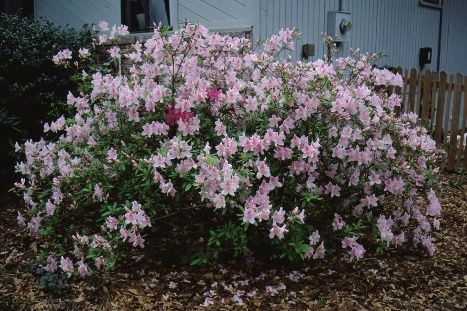
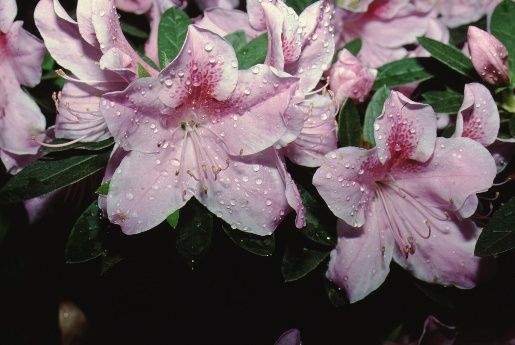
Profuse, pink springtime blooms are so plentiful and large that they completely hide the foliage, making 'George Taber' azalea a favorite landscape shrub in the south. This large, spreading evergreen azalea is most impressive when used in mass plantings but makes an attractive specimen planting as well. Plant in mass on 4- to 6-foot centers.General Information
Scientific name: Rhododendron x 'George Tabor'
Pronunciation: roe-duh-DEN-drun
Common name(s): 'George Taber' azalea
Family: Ericaceae
Plant type: shrub
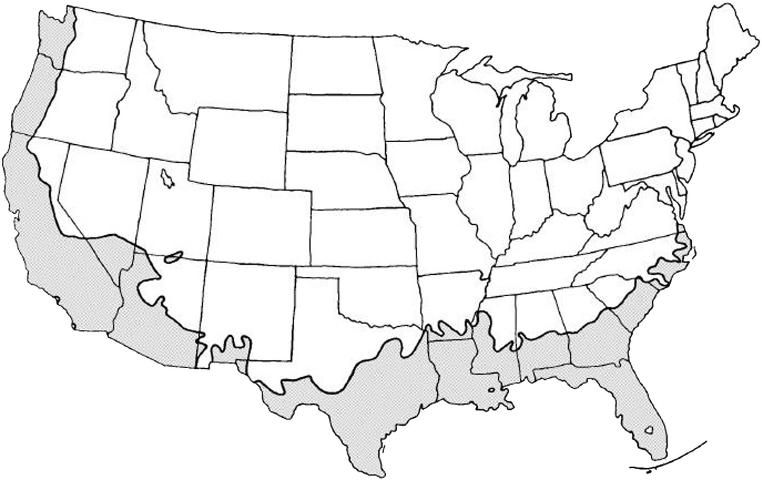
USDA hardiness zones: 8 through 10 ( Fig. 1 )
Planting month for zone 8: year round
Planting month for zone 9: year round
Planting month for zone 10: year round
Origin: not native to North America
Uses: mass planting; specimen; attracts butterflies; cut flowers; foundation
Availability: generally available in many areas within its hardiness rangeDescription
Height: 10 to 12 feet
Spread: 8 to 10 feet
Plant habit: round
Plant density: moderate
Growth rate: slow
Texture: mediumFoliage
Leaf arrangement: alternate
Leaf type: simple
![]()
Figure 1. Shaded area represents potential planting range.
Leaf margin: entire
Leaf shape: ovate
Leaf venation: pinnate
Leaf type and persistence: evergreen
Leaf blade length: 2 to 4 inches
Leaf color: green
Fall color: no fall color change
Fall characteristic: not showyFlower
Flower color: pink
Flower characteristic: spring flowering; winter floweringFruit
Fruit shape: elongated
Fruit length: .5 to 1 inch
Fruit cover: dry or hard
Fruit color: brown
Fruit characteristic: inconspicuous and not showyTrunk and Branches
Trunk/bark/branches: not particularly showy; typically multitrunked or clumping stems.Other
Use and Management
Pests and Diseases
Footnotes
1. This document is FPS509, one of a series of the Environmental Horticulture Department, Florida Cooperative Extension Service, Institute of Food and Agricultural Sciences, University of Florida. Original publication date October, 1999. Reviewed June, 2007. Visit the EDIS Web Site at http://edis.ifas.ufl.edu.2. Edward F. Gilman, professor, Environmental Horticulture Department, Cooperative Extension Service, Institute of Food and Agricultural Sciences, University of Florida, Gainesville 32611.
The Institute of Food and Agricultural Sciences (IFAS) is an Equal Opportunity Institution authorized to provide research, educational information and other services only to individuals and institutions that function with non-discrimination with respect to race, creed, color, religion, age, disability, sex, sexual orientation, marital status, national origin, political opinions or affiliations. For more information on obtaining other extension publications, contact your county Cooperative Extension service.
U.S. Department of Agriculture, Cooperative Extension Service, University of Florida, IFAS, Florida A. & M. University Cooperative Extension Program, and Boards of County Commissioners Cooperating. Larry Arrington, Dean.
Copyright Information
This document is copyrighted by the University of Florida, Institute of Food and Agricultural Sciences (UF/IFAS) for the people of the State of Florida. UF/IFAS retains all rights under all conventions, but permits free reproduction by all agents and offices of the Cooperative Extension Service and the people of the State of Florida. Permission is granted to others to use these materials in part or in full for educational purposes, provided that full credit is given to the UF/IFAS, citing the publication, its source, and date of publication.