
Eating a diet rich in dietary fiber is good for your health. This fact sheet provides tips on how to include foods with fiber in your diet.
What is fiber?
Dietary fiber is the parts of plants that we cannot digest. Only foods that come from plants contain dietary fiber. Fruits, vegetables, legumes, nuts, seeds, and whole-grain foods contain dietary fiber.
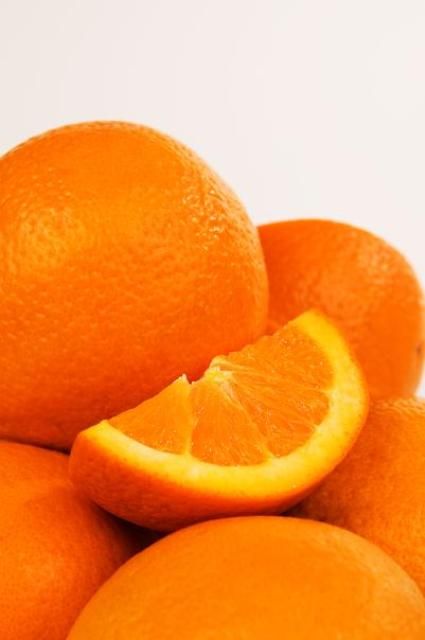
Credit: Amanda Mills, CDC
Some foods have non-digestible carbohydrates called "functional" fibers added to them. Functional fibers have various effects on the body, such as decreasing blood cholesterol or increasing stool bulk. Psyllium and cellulose are examples of functional fibers. Functional fibers may be added to foods that otherwise do not contain fiber, such as yogurt.
FACT: Total fiber in your diet is the sum of dietary fiber and functional fiber.
Fiber and Your Health
Fiber contributes to health in several ways. Fiber adds bulk to our diet. Having enough fiber in the foods we eat helps prevent constipation. Certain fibers help us feel full so we may eat less if a meal includes foods with dietary fiber, such as oatmeal, fruits, vegetables, or legumes. A dietary pattern high in fruits, vegetables, and whole grains that provides adequate fiber decreases our risk of getting diverticular disease (Aune et al. 2020). Diverticular disease is a bowel problem that can cause discomfort and sometimes severe pain. It is often treated with a high-fiber diet.
FACT: Eating foods with fiber can help keep your digestive tract healthy.
Fiber can help us fight high blood cholesterol. Certain kinds of fiber help to lower blood cholesterol, which helps prevent heart disease in some people.
Check your diet for fiber
See Table 4.
Is all fiber the same?
No! There are different kinds of fiber that are good for us in different ways. This is one reason we should eat a variety of foods each day. One way we classify fiber is based on how well it dissolves in water. Fibers that do not dissolve in water are insoluble; those that dissolve in water are soluble. Most foods high in dietary fiber contain both soluble and insoluble fiber, but they have them in different amounts. These two types of fiber have different effects on our health.
Most insoluble fibers add bulk to the stool. This helps prevent and treat constipation.
You can get insoluble fiber from the following:
- Wheat bran
- Whole-grain breads, cereals, and pasta
- Fruit with edible peel or seeds
- Vegetables
Certain kinds of soluble fiber help lower blood cholesterol when eaten as part of a low-fat diet.
You can get soluble fiber from the following:
- Oat bran
- Barley
- Nuts and seeds
- Apples, oranges, and grapefruit
- Cabbage
- Legumes (dry beans, lentils, or peas)
- Psyllium supplements
A Look at Whole Grains
Whole grains and foods made from whole grains are better sources of fiber than refined grains. Whole grains include the germ, endosperm, and bran parts of the grain. Refined grains include only the endosperm. The bran and germ contain most of the fiber in the grain. Refined grains are low in fiber because they are missing the bran and germ.
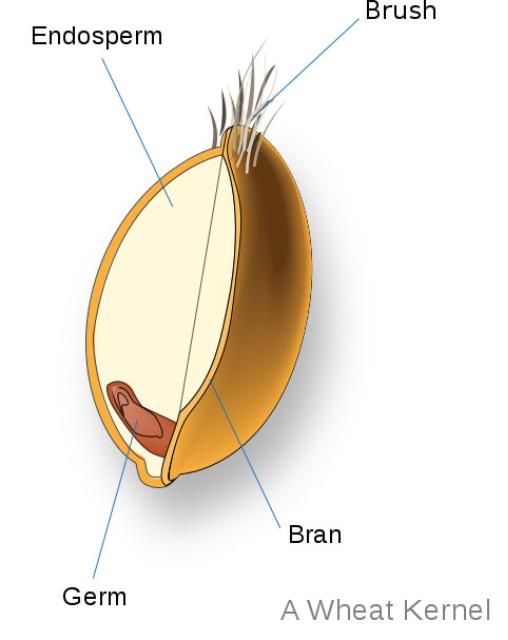
Credit: Jkwchui, CC BY-SA 3.0
You can learn to cook and eat lots of new grain foods for variety! Try some of these whole-grain foods:
- Whole wheat
- Cracked wheat
- Bulgur
- Whole cornmeal
- Barley
- Popcorn
- Brown rice
- Whole rye
- Oatmeal
- Quinoa
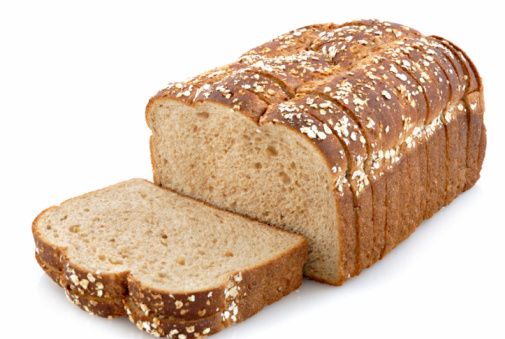
Some foods contain both whole grains and refined grains. Check the ingredient label to know what you are getting. The following foods usually contain both whole grains and refined grains. Including some of these in your diet will help to increase your fiber intake:
- Wheat bread
- Bran muffins
- Oatmeal bread
- Cracked wheat bread
- Pumpernickel bread
- Graham crackers
- Rye bread
Credit: iStockphoto
How much fiber should we eat?
Most Americans eat very little fiber, about half of recommended amounts. The amount recommended to help protect against heart disease is 14 g of dietary fiber per 1,000 calories eaten. Older people need fewer calories, so their fiber recommendations are lower. However, everyone should get plenty of fiber to help prevent chronic disease (Dahl and Stewart 2015). See Table 1 for more details on fiber recommendations.
Too much fiber may cause gastrointestinal symptoms for some people. Most people can eat large amounts of fiber with no discomfort; however, other people may have gas pains. Read the next section to see how to avoid discomfort as you add fiber to your diet.
Increasing Fiber in Your Diet
Many Americans are not used to eating lots of foods with fiber, so it is often easier to make small changes over time. This gives family members time to adjust to diet changes and accept new foods. Here is one step-by-step approach to increasing fiber in your diet.
Step 1
Add ½ cup of fresh fruit and one ounce of whole-grain bread, cereal, or pasta to your daily diet. Choose any in-season fruit that you like. One ounce of a grain is:
1 slice of bread, or
¾ cup of ready-to-eat cereal, or
½ cup of cooked cereal or pasta
Step 2
After a few days, add about ½ cup of fresh or frozen vegetables and another ounce of a whole-grain product to your daily diet.
Step 3
Keep adding vegetables and whole-grain foods until every day you eat at least:
1½ cups of fruit, and
2½ cups of vegetables, and
3 ounces of whole-grain breads, cereals, or pasta
These amounts are based on a daily energy intake of about 1,800 calories. If you need more calories, then your recommended intake from each food group will be higher. Include legumes as a main dish or side dish several times each week for good health. Legumes include dry beans, lentils, and peas. See http://choosemyplate.gov for more information about healthy food choices and recommended intakes from each food group.

Credit: USDA, SNAP photo gallery
Using Food Labels
This section focuses on using food labels to see how much fiber is in packaged foods. Food labels help you compare the fiber content of foods to plan a healthy diet. They have both nutrition and ingredient information.
Nutrition Information on Food Labels
Nutrition information is presented on the Nutrition Facts panel. The fiber content must be listed on most foods. Since almost all foods have the Nutrition Facts panel, it is easy to compare the fiber content of different foods. You can compare the amount of fiber in different brands of the same food since the serving size on the label must be the same for all brands of that food.
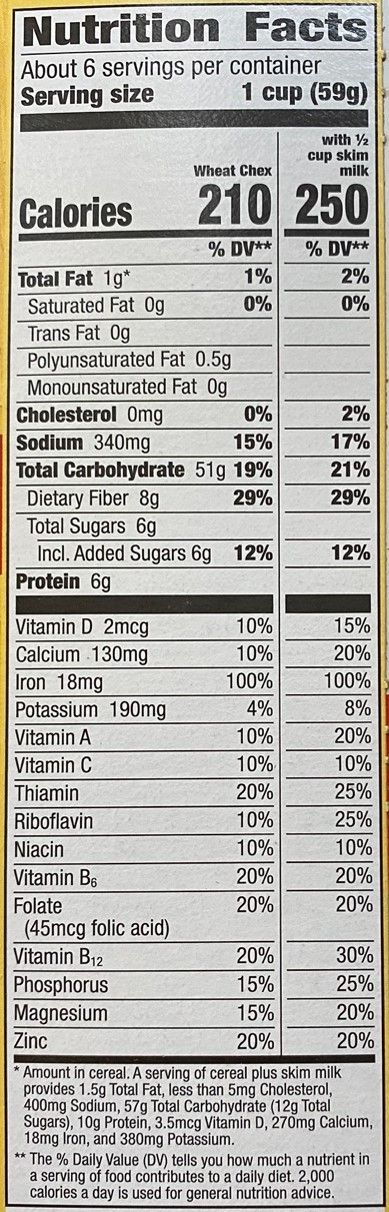
Credit: UF/IFAS
Fiber is listed in Nutrition Facts as Dietary Fiber, and the amount is given in grams (g) and % Daily Value.
The Daily Value for fiber is 28 g for a 2,000-calorie diet (see Table 1). You may want to aim for a higher level of fiber from a variety of fruits, vegetables, whole grains, and legumes.
Ingredient List
Food labels of most packaged foods include a list of ingredients. Ingredients are listed in descending order by weight. The item present in the greatest amount by weight is listed first and the item present in the smallest amount is last.
Look for foods with high-fiber ingredients listed first or second. Some high-fiber ingredients are:
- Brown rice
- Bulgur
- Cracked wheat
- Kasha
- Legumes (dry beans, peas, or lentils)
- Oatmeal or oat bran
- Quinoa
- Rye bran
- Wheat bran
- Whole cornmeal
- Whole-rye flour
- Whole-wheat flour
What about food label claims?
Food labels may include claims about fiber. These claims have certain definitions. See Table 2 to learn what these claims mean.
Keep in mind that even if a food provides only 2 or 3 g of fiber in a serving, it contributes to your total fiber intake for the day. The Nutrition Facts label in Figure 5 is for a "high fiber" food since the food provides 29% of the Daily Value for fiber per serving.
If you eat several servings each day of a food with 2 g of fiber, that food is an important source of fiber for you.
FACT: Legumes, such as lentils, dried beans, and peas, are very good sources of dietary fiber. Enjoy them at least two times a week as a main dish.
Increasing Fiber in Recipes
When using recipes, you can increase fiber by making ingredient substitutions. For tried-and-true family recipes, you may want to start slowly. Substitute a portion of the total quantity of the ingredient with a higher fiber choice and see how it turns out. This will allow you and your family to get used to the change in taste and texture before making drastic changes. Table 3 provides ideas to add fiber to your recipes.
Here are more tips for increasing dietary fiber in your diet.
- Two or more times each week, serve a bean, pea, or lentil main dish instead of meat, chicken, or fish.
- Serve whole-grain bread or high-fiber tortillas with dinner.
- Eat a whole orange instead of orange juice for breakfast.
- Have fresh or canned fruit for dessert instead of sweets.
- Serve an extra vegetable for dinner
- Add sliced banana, peaches, or other fruit to whole-grain cereal.
- Keep prepared carrot and celery sticks, cucumber rounds, or other fresh vegetables in the refrigerator at home and work for a quick, fiber snack.
- Keep whole-wheat crackers, whole-grain tortilla chips, or roasted chickpeas at work for an easy, crunchy snack.
For More Information
Contact your local UF/IFAS Extension Family and Consumer Sciences educator or a Registered Dietitian (RD or RDN). You can also get information from the Internet but be sure you visit reliable sites! Try those that end in .gov or .edu. They are government (.gov) or university/school (.edu) sites that have information you can trust. Other sites may have good information, but make sure to check them carefully. To start, try these sites:
Recipes That Provide Dietary Fiber
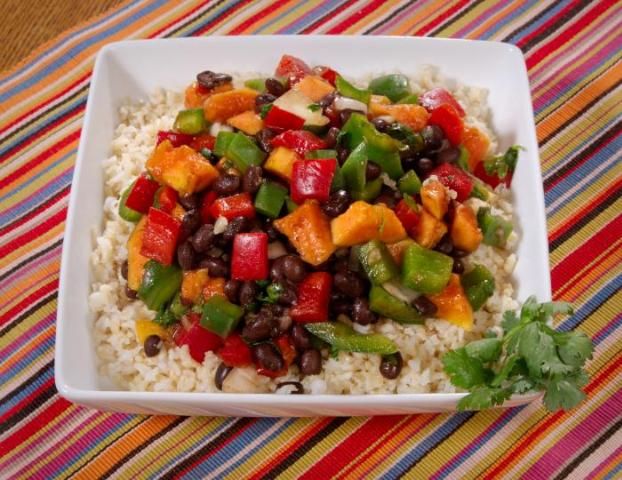
Black Beans and Rice
3 (16 oz) cans low-sodium black beans, drained
2 tablespoons olive oil
1 cup onion, chopped
1 green bell pepper, chopped (can use yellow, orange, or red bell pepper)
1 clove garlic, crushed
4 cups hot cooked brown rice
1 sweet onion, chopped (optional)
In a small skillet, heat olive oil over low heat. Add 1 cup onion, green pepper, and garlic. Sauté for several minutes. Put beans into a saucepan, add the sautéed vegetables, and heat. Serve the beans over rice and sprinkle with the chopped sweet onion if desired. Makes 8 servings.
Each serving provides approximately:
Calories: 330
Fat: 5 g
Carbohydrates: 55 g
Dietary fiber: 15 g
Credit: James Gathany, CDC
Fruity Oatmeal
For a change of pace, try this tasty breakfast treat!
2/3 cup water
2/3 cup low-fat (1%) milk
1/2 teaspoon cinnamon
1/4 teaspoon salt (optional)
1/2 small apple, washed and chopped
1/2 cup old fashioned rolled oats (not quick-cooking)
3 tablespoons oat bran
1 tablespoon brown sugar
1 small banana (or 1/2 medium or large)
Bring milk and water almost to a boil. Add cinnamon, salt, apple, rolled oats, and oat bran. Cook uncovered for about 5 minutes until liquid is mostly absorbed. Add brown sugar and sliced banana and serve. Makes 2 servings.
Each serving provides approximately:
Calories: 280
Fat: 3 g
Carbohydrates: 45 g
Dietary fiber: 6 g
Oven Fries
An old favorite minus the deep frying! Try a variation by using unpeeled sweet potatoes cut into sticks (sprinkle with cinnamon and sugar).
2 pounds potatoes, scrubbed with vegetable brush, unpeeled, cut into large sticks
2 tablespoons vegetable oil
1/2 teaspoon pepper
1/2 teaspoon paprika
Preheat oven to 375°F. In a large bowl, combine potatoes, oil, pepper, and paprika; toss to coat well. Arrange the potatoes in a single layer on a nonstick baking sheet. Cover with aluminum foil. Bake 20 minutes. With a spatula, loosen potatoes and toss gently. Bake 20 minutes longer, uncovered. Remove potatoes to a serving plate. Makes 6 servings.
Each serving provides approximately:
Calories: 160
Fat: 5 g
Carbohydrates: 24 g
Dietary fiber: 3 g
White Bean and Tomato Salad
2 cups canned white beans, no salt added, drained
2 tablespoons olive oil
Freshly ground pepper to taste
2 large ripe tomatoes, seeded and diced
1/4 cup red onion, peeled and finely diced
2 teaspoons dried oregano
In a small bowl gently mix beans, olive oil, and pepper. Add tomatoes, onion, and oregano; toss to mix. Makes 4 servings.
Each serving provides approximately:
Calories: 240
Fat: 8 g
Carbohydrates: 22 g
Dietary fiber: 6.5 g
Fufu
This is a popular African dish that can be served in place of mashed potatoes. The recipe is from the Fruits & Veggies—More Matters website (http://www.cdc.gov/nutrition/downloads/explore_recipe_cards_Tag508.pdf).
5 cups water
4 ripe plantains (skin will be black)
1 tablespoon butter
1 clove of garlic, minced
4 green onions (scallions), chopped
Peel plantains and slice into 1-inch pieces. Bring water to a boil. Add plantain pieces and cook on medium-high heat for 20 minutes until most water is absorbed. Add butter and garlic to plantains. Mash with a potato masher or fork. Garnish with green onions and serve. Makes 4 servings.
Each serving provides approximately:
Calories: 250
Fat: 3.5 g
Carbohydrates: 58 g
Dietary fiber: 5 g
Barbecued Lentils
Lentils are a tasty legume that can be prepared in many ways. Here is an easy recipe that uses barbecue sauce and fresh vegetables for a unique dish.
12 ounces barbecue sauce
3½ cups water
1 pound dry brown lentils
2 green peppers, diced
2 red peppers, diced
2 small onions, diced
2 cloves garlic, minced
Combine all ingredients in a slow cooker. Cover and cook on low heat for 6–8 hours.
You can bake this recipe instead of using the slow cooker: Sauté the peppers, onions, and garlic for 5 minutes. Add the lentils and stir for an additional 5 minutes. Mix all of the ingredients in a glass baking dish and bake at 375°F for 60 minutes. Makes 8 servings.
Each serving provides approximately:
Calories: 270
Fat: 1.5 g
Carbohydrates: 25 g
Dietary fiber: 4.4 g
References
Dahl, W. J., and M. L. Stewart. 2015. "Position of the Academy of Nutrition and Dietetics: Health Implications of Dietary Fiber." J Acad Nutr Diet 115 (11):1861-70. doi: 10.1016/j.jand.2015.09.003.
Institute of Medicine. 2005. Dietary Reference Intakes for Energy, Carbohydrate, Fiber, Fat, Fatty Acids, Cholesterol, Protein, and Amino Acids. Washington, DC: The National Academies Press.