
Body Lice and Pubic Lice

Credits: UF/IFAS
The word "lousy" was coined from individuals that were infested with lice, and it is still a great description of how it feels to have a lice infestation. Body lice and pubic lice, or crab lice, are two of the three types of lice species affecting humans. The head louse, the third species, possesses unique behavior and is most commonly a pest of school children. Head lice and body lice look identical but as their name implies, each infests different areas. Body lice and pubic lice are found only on humans. Presence of the body louse is of great concern because it is the vector of several human diseases. Epidemic typhus, trench fever, and epidemic relapsing fever (louse-borne typhus) are all transmitted by the body louse. Fortunately, body lice are not common in the United States.
The pubic louse is of much less medical importance but remains a significant nuisance. It is estimated that over 12 million people in the United States contract pubic lice each year.
Biology
The body louse and pubic louse are blood-sucking insects. These insects bite into the skin of human hosts and take a blood meal much like fleas and mosquitoes. A louse cannot survive off the host longer than 48 hours.
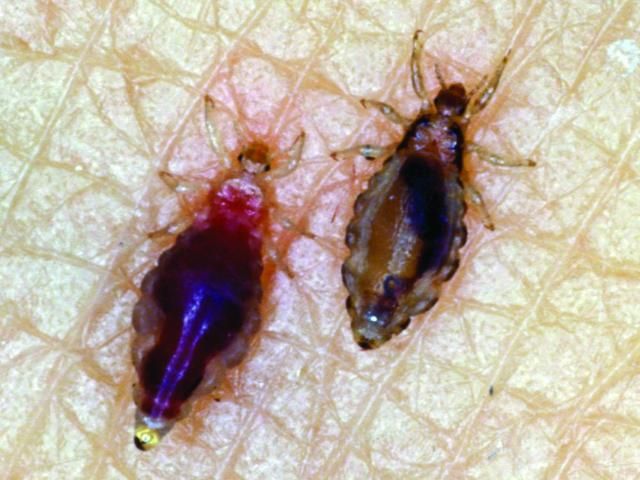
The body louse (Figure 1) usually resides within the clothing of its host (most commonly as an adult) and comes into contact with the skin only to feed. The female body louse lays its eggs in the seams and folds of clothing. These eggs (nits) then hatch within about a week to 10 days. The young body lice (nymphs) then grow and molt three times over another week or so before becoming mature adults approximately 1/8 inch (3 mm) in length. A mature body louse might live up to 10 days. A female body louse might lay over 200 eggs during this period. The eggs of lice are very small — less than 1/16 inch long (1.6 mm) — and are typically white to yellowish-brown.
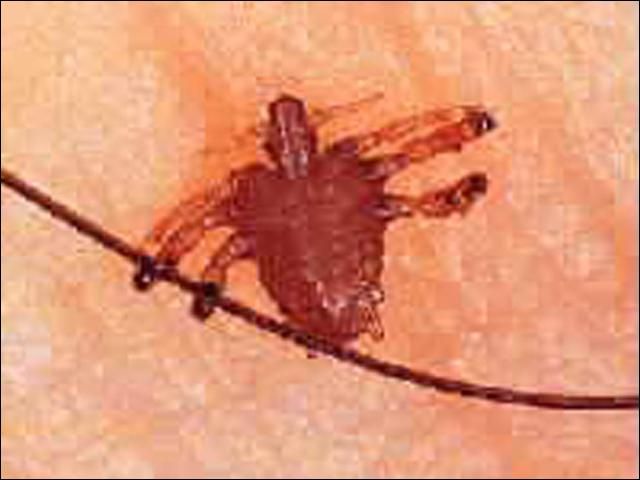
The pubic louse (Figure 2) is most often associated with the pubic region of its host, where it clings to pubic hairs with highly modified claws. The female pubic louse lays its eggs attached to the base of pubic hairs near the skin surface. A pubic louse egg will hatch within six to eight days. After 15 to 16 days and three molts, an adult pubic louse will emerge. A female pubic louse may lay up to 90 eggs during its lifetime, which lasts about 12 days.
How You Get Lice
Body lice are associated with, but not restricted to, unclean people who do not change clothing often. Once infested, a person can transmit individual body lice through direct contact or by sharing infested clothes or bedding.
Transmission of pubic lice is usually associated with sexual contact. During this type of close personal contact, pubic lice may be transferred from one person to another directly. It is possible for pubic lice to be transmitted from undergarments, bedding, and toilet seats, but this indirect transmission is very uncommon.
Symptoms and Detection
The first symptom associated with body and pubic lice is itching. This itching is usually followed by the infected person scratching these areas. The scratching can lead to further skin irritation, which may lead to an infection, especially if lice feces is present. Lice are very small, so close, careful inspection is necessary in order to determine their presence.
Treatment and Control
Body lice are usually associated with destitute adults who regularly sleep in their clothes. Because body lice live within clothing, the easiest method of treating them is to wash all clothing. These clothes should be washed in hot soapy water and dried using a clothes dryer on the "high heat" cycle. This will kill all eggs, nymphs, and adults of lice. The infested individual should then bathe and wash the entire body thoroughly with soapy water. Because some adult body lice may have fallen off the host, steps should be taken to inspect all bedding material or other close personal belongings of the infested person. If possible, any of these materials should be washed and dried in a similar fashion as clothing. Otherwise, thorough cleaning should be used to completely eliminate louse adults, nymphs, and eggs.
Because pubic lice live on the host among pubic hairs, treatment is not as simple. If phthiriasis (the condition associated with a pubic louse infestation) is diagnosed, treatment should be sought immediately. Products for treatment are marketed as shampoos or cream rinses and some are available over-the-counter, while others are prescription products. Careful attention should be employed while following all directions on product labels. An infested person's bedding and clothing should be washed in hot soapy water and dried in a clothes dryer on the "high heat" cycle. It is important to alert any sexual partner of the infested individual to the presence of pubic lice, because sexual partners may require treatment as well.