Lyme Disease in Florida Horses1
Can Florida horses get lyme disease?
Lyme disease does affect horses but is relatively unstudied compared to the disease in humans and dogs. Symptoms vary but can include behavioral changes and lameness.
How do horses get lyme disease?
In the Eastern United States, the bacteria that cause Lyme disease, Borrelia burgdorferi, are transmitted by the black-legged tick, Ixodes scapularis (Figure 1).
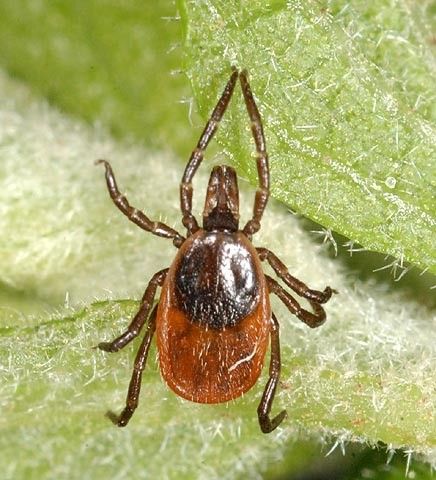
Credit: James M. Newman, UF/IFAS FMEL
Adult black-legged ticks are usually host-seeking from October through April and will feed on most medium to large-sized mammals, including humans, horses, and dogs. Immature ticks are difficult to find in Florida, unlike other parts of the country, and generally feed on lizards, small mammals, and birds. The black-legged tick is most commonly found in wooded areas or along the edges of wooded areas, although they can be brought into other areas while attached to hosts.
Distribution in Florida
The bacteria that cause Lyme disease are present in Florida, but we have little information on prevalence or geographic distribution. There are relatively few Lyme disease cases in Florida compared to areas like the northeastern United States. The black-legged tick is found throughout Florida but it is not very abundant.
Symptoms, Diagnosis, and Treatment
Many clinical symptoms in horses have been attributed to Borrelia burgdorferi infection, but it is not clear which symptoms are caused by the bacteria. Symptoms observed include lameness, uveitis, stiffness, and behavioral changes. Fever has been reported but is inconsistent and often absent. The disease can progress to involve the neurological system (neuroborreliosis), potentially including ataxia and other neurological symptoms.
Symptoms can be similar to other equine neurological disease, and can be complicated by co-infection with other tick-borne pathogens such as Anaplasma phagocytophila. Diagnosis is made by clinical history, symptoms, and a blood test for antibodies to the bacteria. It is important to note that the antibody test indicates exposure to the bacteria only, not whether there is an active, current infection. Several serological tests are available. Discuss the best test for your situation with your veterinarian. Subclinical infections, where the animal is infected with the bacteria but does not show any symptoms, are common. Thus, animals living in areas where Lyme disease is present may be exposed and have antibodies (and so would test positive) but do not have clinical illness. Symptoms can take a long time to develop. It is possible for a horse (or human!) to be infected by a tick bite while living in one area but not show symptoms or be diagnosed until later, after moving elsewhere. This complicates our understanding of the disease and its transmission. Because Lyme disease is not well-studied in horses, we have little information on how long it can take for symptoms to appear.
Treatment for Lyme disease is antibiotics, most frequently doxycycline or tetracycline. Earlier treatment is more successful in humans, and very likely for horses as well. However, Lyme disease can be difficult to diagnose and may not be detected until long after the tick bite. Treatment with antibiotics is often helpful even in later stage Lyme disease, but it may take more intensive or longer treatment.
How can I protect my horse from lyme disease?
The best way to prevent Lyme disease in horses is to reduce contact with ticks. The black-legged tick usually must be attached for at least 24 hours before transmitting Borrelia burgdorferi. Frequent tick checks and removal of any attached ticks, particularly after the horse has been in areas known to have ticks, will reduce the chances of transmission. Many fly sprays, lotions, or spot-on treatments are also labeled for use against ticks, particularly those containing pyrethrins or pyrethroids such as permethrin. These treatments can repel ticks and reduce attachment. Use all pesticides according to the label directions. Vegetation management can reduce tick activity in pastures, reducing tick-horse contact. If a tick does attach, remove it by grasping the tick as close to the skin as possible and pulling straight back. Tweezers or forceps will help. Do not squeeze the tick's abdomen; this will inject the gut contents into your horse (or you!). The folk remedies for removing ticks (heat, Vaseline, oils) do not work and will not cause the tick to detach. Apply antibiotic ointment to the attachment site if the tick mouthparts broke off and remain in the site, or if there is an open wound. There is a Lyme disease vaccine available for dogs, but not for horses.
For More Information
American College of Veterinary Internal Medicine Borrelia burgdorferi infection and Lyme disease in North American horses: a consensus statement https://doi.org/10.1111/jvim.15042
http://www.thehorse.com; search for Lyme disease. However, these articles are written primarily for more northern areas. In Florida, the adult ticks are active all winter, and nymphs are less likely to bite large mammals such as humans and horses.
Other fact sheets about ticks, horses, and protecting horses from diseases transmitted by ticks are available from EDIS:
Lyme Disease in Florida—Fact sheet IN121
Ehrlichia and Anaplasma in Florida—Fact sheet IN191