


Bean, Dry—Phaseolus vulgaris L.1
Dry beans, also called field beans, belong to the same botanical classification as garden beans—P. vulgaris. Edible dry beans include a wide assortment of varieties differing in size, shape, and color. While the dry edible bean is a basic food item found in the markets of every continent, it is of increasing interest to home gardeners wishing to produce as much of their food as possible.
Unlike garden beans, dry beans are allowed to mature in the pod on the plant. These beans are generally used as a soup bean, stewed bean, or baked bean.
Description
The following are some of the more popular types grown in the United States.
Pea (navy)—round, white seed.
Great northern—similar to enlarged, lengthened navy beans.
Pinto—similar to great northern in size, but plumper; color pinkish buff blotched with brown.
Cranberry—horticultural type; plump, oblong, buff splashed with carmine
Red kidney—long, broad-oval, kidney shaped, varies from pink crimson to reddish brown.
White kidney—similar to red kidney, but white.
White marrow—short, plump, rounded, white.
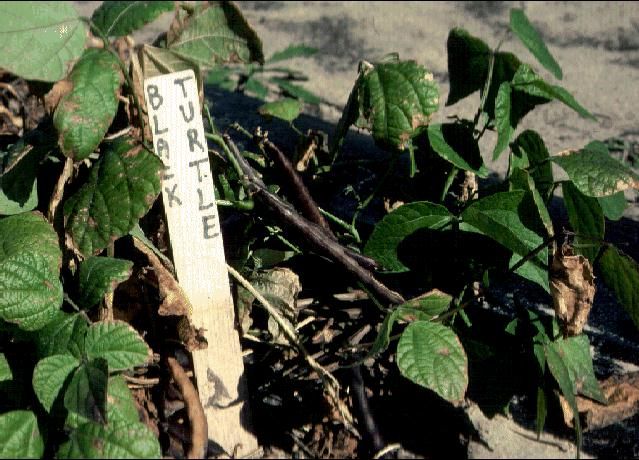
Black turtle soup—also called black Spanish, Tampico, and Venezuelan. Small, elongated, flattened, round ends, jet-black color.
Yellow eye—large, broad, plump, white with distinct darkened area.
Jacob's cattle—plump, elongated rounded ends, unusual color pattern having brownish crimson round spots and blotches on cream surface.
Soldier—intermediate in shape between navy and marrow; brownish red with blotchy markings.
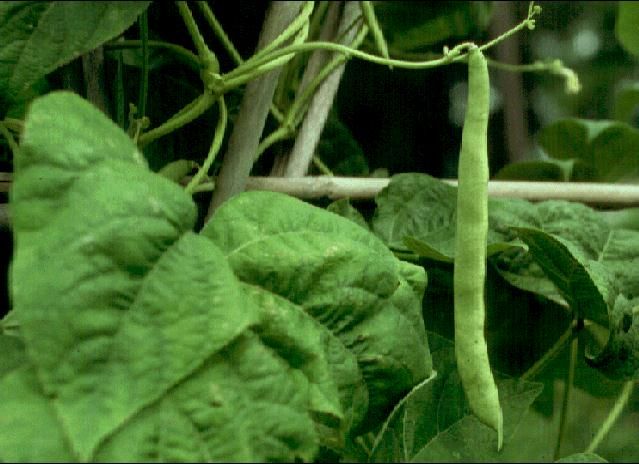
Regular beans—planted for fresh use. May be dried and stored in a home gardening situation.
Credit: James M. Stephens
Credit: James M. Stephens
Culture
Traditionally, dry beans are grown commercially in western states and in other such states as Maine, Michigan, and New York. Production in Florida is limited, not only because of marketing situation, but also rainy weather conditions during the curing and drying periods. However, some trials, particularly with the black beans, have met with some degree of success. Dry beans grow best between 65°F and 75°F.
Gardeners wanting to try growing dry beans in Florida should allow about 120 days for production in the early spring or late in the fall. Follow a cultural program of spacing, seeding, and fertilization similar to that for fresh bush snap beans or Southern peas.
Harvesting
High temperatures and humidity damage the beans drying on the plants. Pull the dry pods and shell the beans. Curing is sometimes necessary on the colored varieties and navy beans. This is done by piling the plants in windrows and then turning and drying out the beans in about 2 days. More curing is needed if wet, humid weather sets in during harvest. An alternative approach to drying the beans as quickly as possible is to pull the plants with pods attached and hang or spread them in an airy, sheltered place.