

Handling Total Release Foggers
Introduction
Total release foggers—sometimes called "bug bombs," "insect foggers," or "total release insecticides"—can be hazardous. It is not uncommon to find reports in the mass media of a fire or an explosion in a home caused by a total release fogger. (See Figure 1)
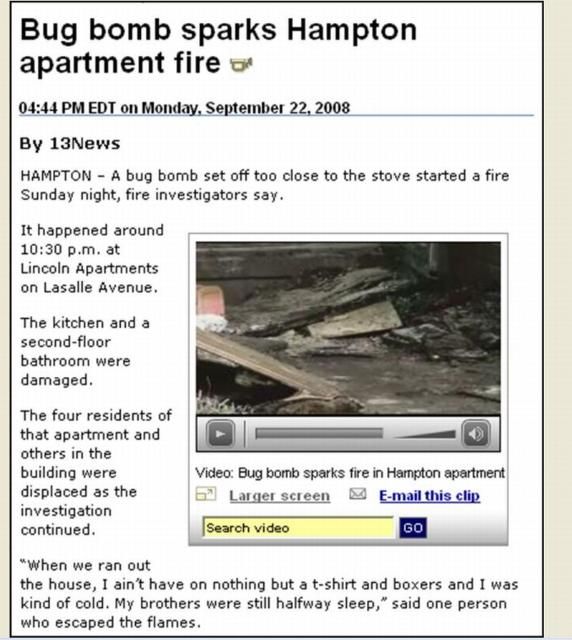
Credit: WVEC.com
Total release foggers (TRFs) are pesticide products designed to fill an area with insecticide and often are used in homes, workplaces, and greenhouses to kill indoor pests. The active ingredients in TRFs usually contain pyrethroid, pyrethrin, or both, and may also contain piperonyl butoxide. Additionally, TRFs contain flammable aerosol propellants that can cause fires or explosions.
Risks
When nonchemical measures are not effective in controlling indoor pests, some people choose to use a chemical pesticide. One type of chemical product is the TRF. While these products can be effective under the proper circumstances, they can also pose real risks to residences, people, and pets if used improperly. Besides causing fires and explosions, there have been cases of acute health problems associated with TRF use. According to the Centers for Disease Control and Prevention, investigations conducted in ten states, including Florida, report 3,222 acute TRF-related cases identified during 2007–2015. Of that total number, approximately 20 percent were reported in Florida. Some causes of those illnesses or injuries were the following:
-
Inability or failure to vacate before the TRF discharged;
-
Reentry into the treated space too soon after the TRF was discharged;
-
Excessive use of TRFs for the space being treated;
-
Failure to notify others nearby.
The severity of reported illnesses or injuries, factors contributing to the exposures, and the three most common chemical classes involved are shown in Tables 1–3, respectively. The signs and symptoms typically reported were respiratory and gastrointestinal-tract irritation and neurological disorders, which are typical for exposure to organophosphate and pyrethroid insecticides.
Common Sense Precautions
Before using a TRF in any building, including a home, read and follow the product's label directions. TRF common sense precautions include the following:
-
Do not use more foggers than necessary. Their label statements are based upon the recommended area that a single container will effectively and safely treat.
-
Keep foggers away from ignition sources, such as pilot lights or sparks from an electrical appliance that cycle on and off. All ignition sources should be extinguished.
-
Remove all children, pets, toys, and uncovered food from the area to be treated.
-
Stay out of the treated area for as long as the label directs.
-
Properly ventilate the treated area after releasing foggers.
-
Wash all surfaces where food has contact.
-
Keep the product away from children, such as in a locked cabinet or closet.
-
Thoroughly read and follow the product's label for any additional precautions and other specific directions.
Label Amendments to Reduce Risks
In 1998, the EPA approved requirements for fogger products to ensure that consumers are provided adequate information to use such products safely. There were two general amendments concerning these products:
-
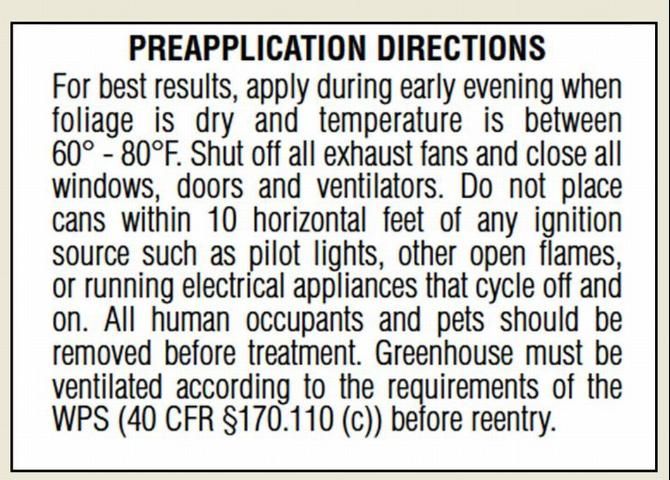
The "Physical and Chemical Hazards" section of the label must contain a graphic symbol depicting fire and contain language regarding highly flammable and explosive ingredients (Figure 2). The "Directions for Use" section of the label includes specific wording that addresses pilot lights and other potential ignition sources (Figure 3).
-
The "Directions for Use" section of the label must contain wording that specifically addresses the area that one TRF can treats (Figure 4).
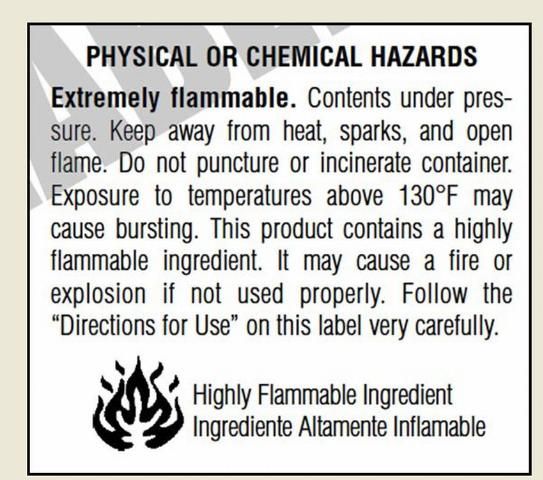
Credit: Whitmire Micro-Gen
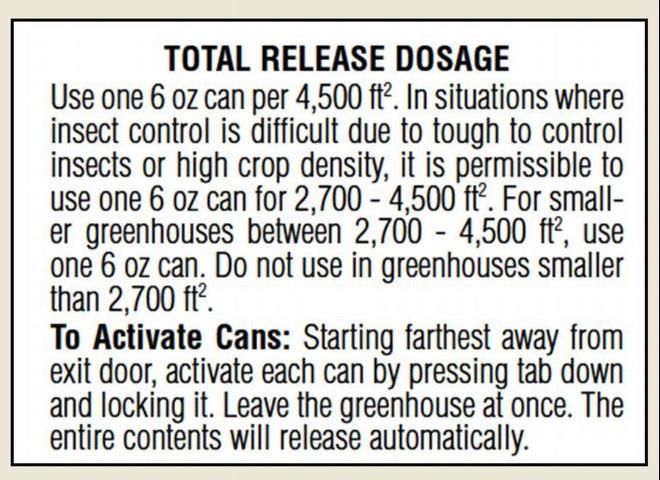
Credit: Whitmire Micro-Gen
Credit: Whitmire Micro-Gen
Although labeling requirements for TRFs have increased in recent years, all accidents have not been prevented since 1998. EPA expects the revised label warnings to reduce risks. Any reduction of accidents would be considered an accomplishment. As with all pesticides, read and follow all label directions.
Additional Information
Fishel, F.M. 2008. Pesticide Toxicity Profile: Organophosphate Pesticides. PI-150. Gainesville: University of Florida Institute of Food and Agricultural Sciences. https://edis.ifas.ufl.edu/document_pi087 (February 2018)
Fishel, F.M. 2008. Pesticide Toxicity Profile: Synthetic Pyrethroid Pesticides. PI-154. Gainesville: University of Florida Institute of Food and Agricultural Sciences. https://edis.ifas.ufl.edu/document_pi091 (February 2018)
Liu, R., et.al. 2018. "Acute illnesses and injuries related to total release foggers - 10 states, 2007-2015." Morbidity and Mortality Weekly Report. Vol. 67/No. 4. https://www.cdc.gov/mmwr/volumes/67/wr/pdfs/mm6704-H.pdf (February 2018)