
Alternaria leaf and pod spot (ALPS) is a common and potentially destructive disease of snap bean in Florida, especially in the southern part of the state. This plant disease is also reported to be widely present in other bean-growing areas of the United States, Latin America, and Western Europe.
Symptoms
The most serious symptoms of ALPS occur on bean pods. The direct damage to the marketable portion of the plant renders the produce unfit for sale. Lesions on pods usually appear as very small, dark-brown to black flecks. When examined with a hand lens, these flecks are somewhat raised and cone-like. The damage may be insufficient to result in rejection at the packinghouse when only a few flecks occur on a pod (Figure 1). However, large numbers of unsightly flecks (Figure 2) can result in rejection of the entire lot, especially at lower market prices.
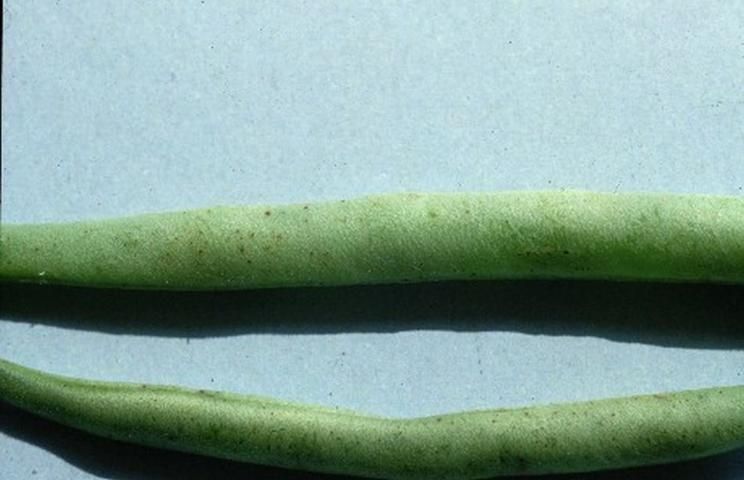
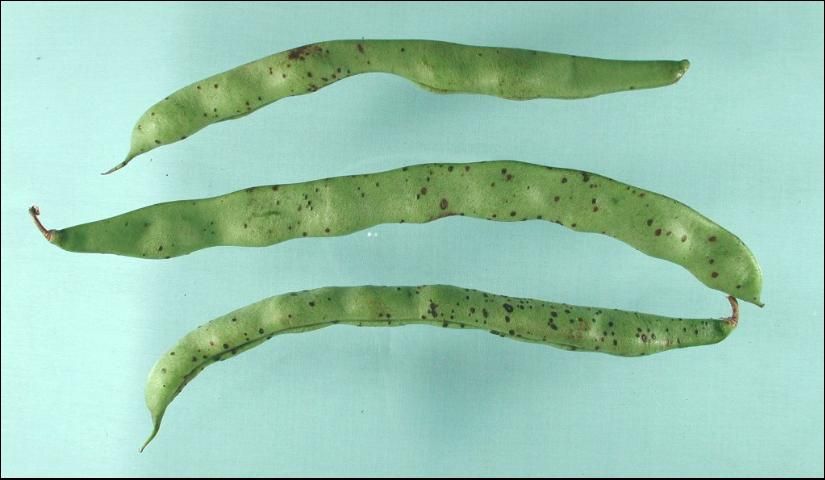
Leaf symptoms first appear as small, water-soaked flecks that rapidly develop into circular to irregular spots with pale-brown centers and reddish-brown borders (Figure 3). Faint, concentric rings may occasionally be visible in older lesions. Leaf lesions may coalesce, leading to large, blighted areas and premature leaf drop as the disease progresses.
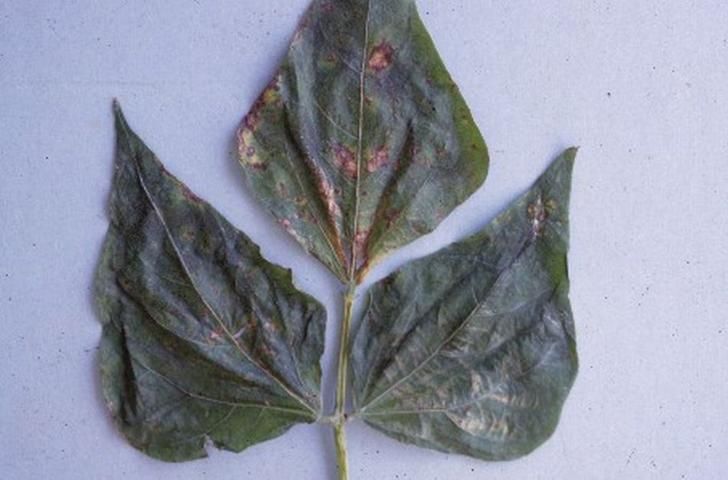
Cause and Disease Cycle
Several species of Alternaria have been reported as causal pathogens attacking snap bean, but the consensus is that A. alternata is probably responsible for most outbreaks of ALPS in Florida. In general, A. alternata is a weak pathogen and not as aggressive as A. solani, which causes the devastating early blight of potato and tomato, nor as aggressive as A. cucumerina, which causes Alternaria leaf spot of cucurbits.
High relative humidity, rainfall, and cool temperatures (60°F–75°F for daytime highs) are ideal environmental conditions for ALPS development. Under such conditions, ALPS can cause major losses in snap bean. Severe outbreaks of ALPS can be expected to occur from January through March in Homestead, FL, and the Devil's Garden growing areas (Hendry County) of South Florida.
For scouts and others with access to a microscope, characteristics that are diagnostic of this disease are multi-celled, pigmented spores—which have both transverse and longitudinal septa (cell walls)—and the short "tail" or "beak" of the spore.
Bean crops that are nutritionally stressed are most susceptible to ALPS. In particular, plants that are deficient in nitrogen and/or potassium are most likely to suffer from ALPS.
High plant densities due to narrow row spacing and high seeding rates result in greater disease severity and more frequent epidemics of ALPS.
Control
- Maintain adequate nutrient status of the crops.
- Avoid close between-row and within-row plant spacing.
- Attention should be paid to proper culling of infected pods at the packing house in order to maintain the confidence and goodwill of produce brokers and retailers.
- Fungicide sprays still play a major role in the integrated management of ALPS. It is vitally important that effective fungicides be applied when pods are small (pin pod stage) in order to avoid infections that will be evident later as pods mature. Some fungicides—including strobilurins—have provided good control, but should be applied according to the label and rotated with materials with other modes of action to avoid potential resistance problems. Best control has been reported in areas that received two applications of Quadris/Amistar. For specific and current fungicide recommendations, consult labels and the UF/IFAS Plant Disease Management Guide https://edis.ifas.ufl.edu/topic_book_plant_disease_management_guide.