
Botrytis Fruit Rot or Gray Mold of Strawberry
Botrytis fruit rot (BFR), also known as gray mold, is caused by the fungus Botrytis cinerea and is one of the most important diseases of strawberry in Florida and worldwide. The fungus infects all aerial parts of the plant; however, most economic damage occurs when flowers and fruit are affected, occasionally resulting in yield losses greater than 50%. BFR is also a post-harvest disease, because infections that begin in the field continue to develop during storage and transit at refrigeration temperatures. Weather conditions favorable to disease development are 63ºF to 77ºF and prolonged leaf wetness, and are often encountered in Florida during the strawberry production period from November to March.
Symptoms
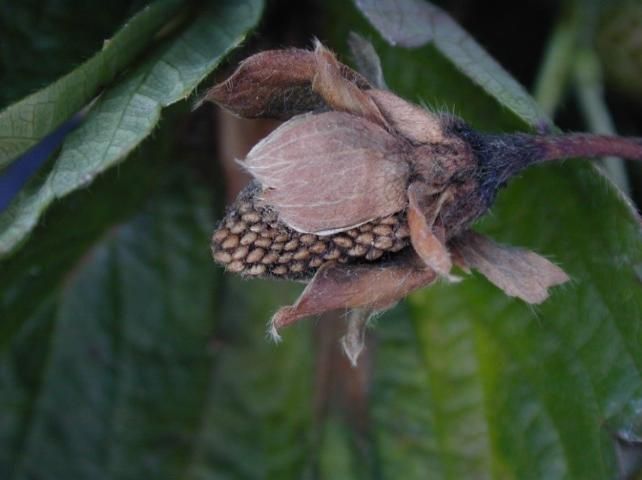
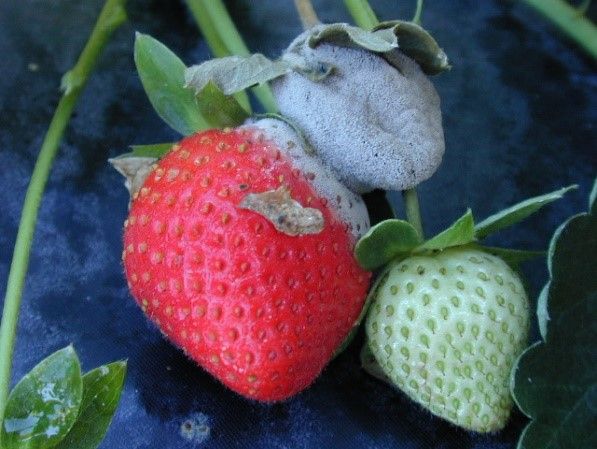
Strawberry flowers are highly susceptible to B. cinerea, and may be blighted directly. However, symptoms are usually observed 2 to 4 weeks after infection, on green and ripening fruit. Lesions typically develop under the calyx as small, light brown spots (Figures 1 and 2) that enlarge quickly and invade the rest of the fruit (Figure 3). Lesions become fully covered with dark mycelium bearing many gray spores (conidia) (Figure 4). Large numbers of spores are released as visible gray puffs when infected fruit are disturbed. Eventually, the fruit becomes totally covered and mummified (Figure 5).
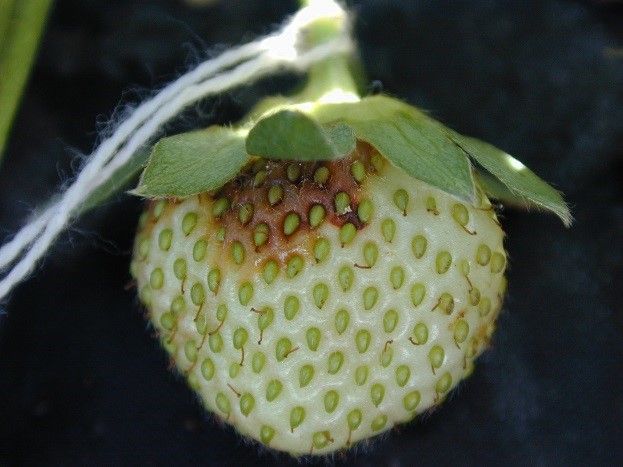
Credit: James Mertely, UF/IFAS
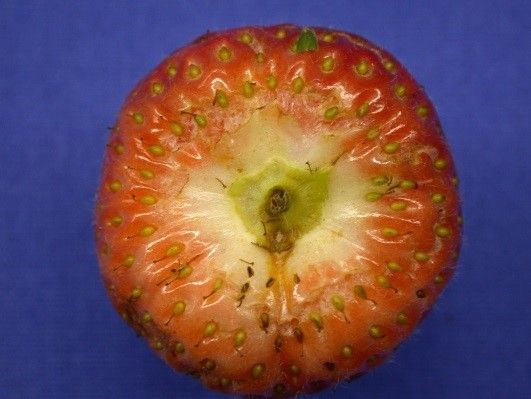
Credit: James Mertely, UF/IFAS
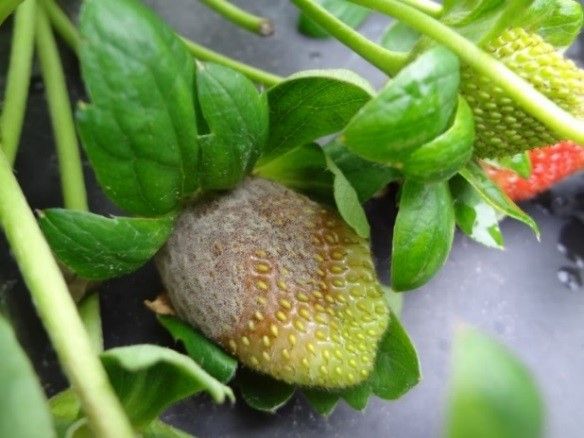
Credit: Michelle S. Oliveira, UF/IFAS
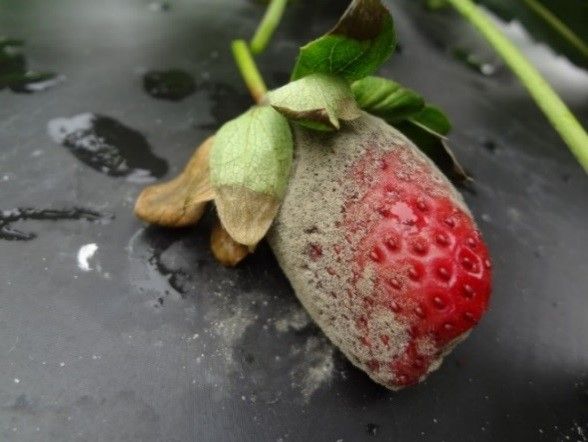
Credit: Michelle S. Oliveira, UF/IFAS
Credit: UF/IFAS
Disease Development and Spread
B. cinerea can survive in soil as sclerotia or mycelium. However, due to high temperatures during the Florida summer, the pathogen is not able to survive and is commonly introduced into production fields through infected transplants. Foliage from nursery transplants are a known source of B. cinerea inoculum. After transplanting, old, infected leaves gradually die, becoming a source of inoculum (spores) responsible for infection of emerging leaves and flowers. B. cinerea is a polycyclic pathogen that continuously produces inoculum throughout the season. The spores are dispersed by air, water splash, harvesters' hands, and direct contact with infected stems and fruit (Figure 6). A combination of weather conditions conducive for disease (63ºF to 77ºF and at least 13 hours of continuous leaf wetness), presence of the pathogen and susceptible tissue (flowers and fruit) will result in disease development. As an epidemic progresses, diseased fruit, mummified fruit, and decayed flowers and pedicels become important new sources of inoculum. Consequently, BFR is usually more severe during the late season fruiting period in February and March.
Credit: UF/IFAS
BFR Management
BFR should be managed by cultural and chemical methods. There are no commercial cultivars highly resistant to this disease. Removal of diseased fruit from under the plant canopy reduces inoculum and, consequently, infection efficiency and disease spread by fruit-to-fruit contact. Leaf pruning, on the other hand, only modestly reduces disease incidence, and usually does not increase marketable yield. Yields may even be reduced by pruning if partially green leaves are also removed.
Therefore, growers primarily rely on fungicide sprays for management of BFR. An initial fungicide dip treatment of the plants is often used to manage other pathogens, such as the anthracnose fungus Colletotrichum acutatum, but studies have shown that they are not effective for BFR management. Traditional foliar spray programs consisted of calendar sprays at regular intervals. Protectant fungicides such as Captan and Thiram were applied when flowers were sparse and weather unfavorable, whereas single-site botryticides (Elevate, Kenja, Luna, Switch, etc.) were applied during bloom periods when weather conditions favored the disease. This management method involved up to 22 applications per season, and many of these may have been unnecessary if applied when weather conditions were not favorable for disease development.
An alternative to calendar-based sprays became available with the release of the Strawberry Advisory System (StAS) in 2009 (http://agroclimate.org/tools/sas/fl/). The StAS is a weather-based decision support system that forecasts the risk of anthracnose fruit rot and BFR incidence based on leaf wetness duration and temperature during the wet period. The system advises growers on the timing of fungicide application, as well as which fungicide should be sprayed depending on the risk of infection and crop phenology. Experiments carried out on several commercial fields in Florida showed that the system, on average, reduces the number of fungicide sprays by about 50% without affecting disease incidence or yield compared to weekly sprays. Fungicides used to manage BFR in Florida are listed in Table 1.
Studies have shown that B. cinerea populations are currently resistant to fungicides from multiple chemical groups. Even populations from nursery transplants have shown multi-fungicide resistance (MFR) to two to six fungicides. Management strategies that aim to extend the life of effective fungicides include: i) alternating fungicides with different modes of action, ii) tank mixtures of single-site and multi-site fungicides, and iii) restrictions on the maximum number of applications for any given product or mode of action. Many of these strategies are incorporated into the recommendations from the StAS.