Edward F. Gilman, Dennis G. Watson, Ryan W. Klein, Andrew K. Koeser, Deborah R. Hilbert, and Drew C. McLean
2
Introduction
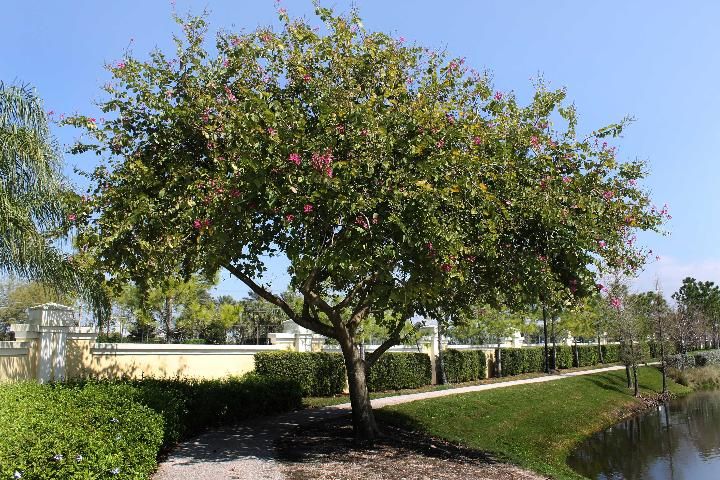
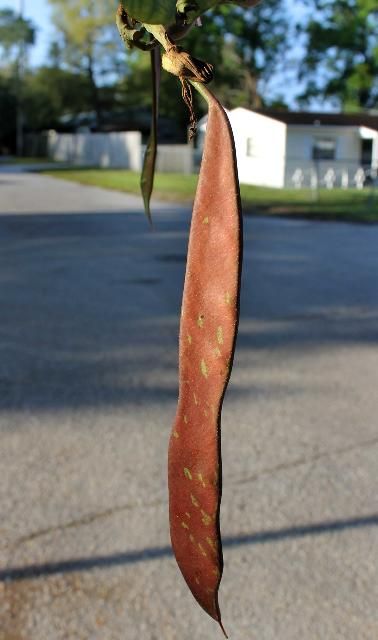
The fast-growing white orchid tree grows 20- to 40-feet in height with a 25- to 35-foot-spread, the slender trunks topped with arching branches clothed in large, two-lobed, deciduous leaves. In fall, before the leaves drop, white Orchid tree is festooned with many showy and delightfully fragrant, three to five-inch-wide, purplish to white, Orchid-shaped blossoms. These flowers appear on Orchid trees from January to April and are a beautiful sight to see. The flowers are followed by 6 to 9-inch-long, slender, brown, flat seedpods, which usually persist on the tree throughout the winter. This spectacular display makes Orchid tree a favorite for specimen and street-tree plantings.
Figure 1. Full Form - Bauhinia variegate: orchid tree Credit: UF/IFAS
General Information
Scientific name: Bauhinia variegata
Pronunciation: bah-HIN-ee-uh vair-ee-eh-GAY-tuh
Common name(s): orchid tree
Family: Fabaceae
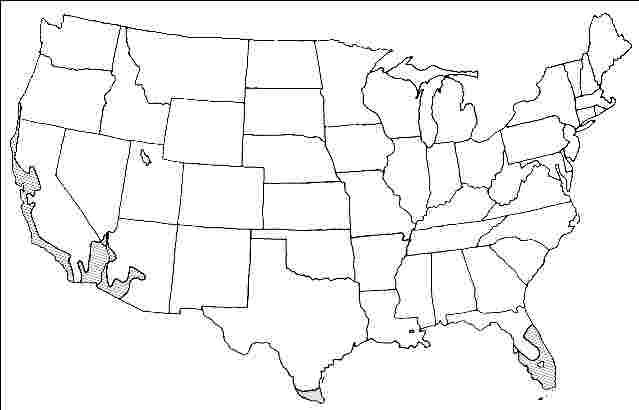
USDA hardiness zones: 9B through 11 (Figure 2)
Origin: native to India, Vietnam, and southeastern China
UF/IFAS Invasive Assessment Status: invasive and not recommended (South); caution, may be recommended but manage to prevent escape (Central); not considered a problem species at this time, may be recommended (North)
Uses: reclamation; street without sidewalk; deck or patio; shade; parking lot island < 100 sq ft; parking lot island 100–200 sq ft; parking lot island > 200 sq ft; tree lawn 3–4 feet wide; tree lawn 4–6 feet wide; tree lawn > 6 ft wide; highway median; specimen
Figure 2. Range
Description
Height: 20 to 40 feet
Spread: 25 to 35 feet
Crown uniformity: irregular
Crown shape: vase
Crown density: moderate
Growth rate: fast
Texture: medium
Foliage
Leaf arrangement: alternate
Leaf type: simple
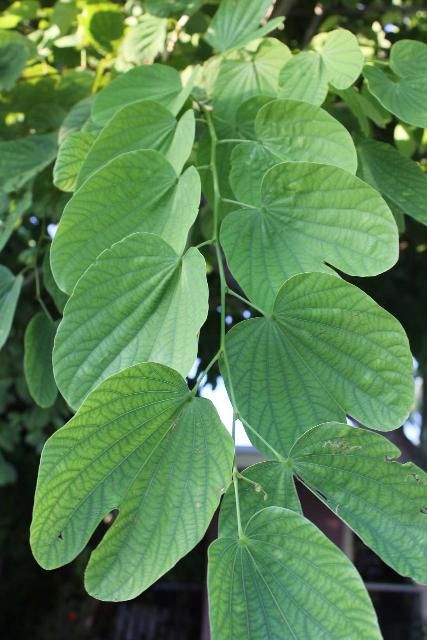
Leaf margin: cleft, lobed
Leaf shape: orbiculate
Leaf venation: palmate
Leaf type and persistence: semi-evergreen, deciduous
Leaf blade length: 4 to 6 inches
Leaf color: bright to dull green
Fall color: no color change
Fall characteristic: not showy
Figure 3. Leaf - Bauhinia variegate: orchid tree Credit: UF/IFAS
Flower
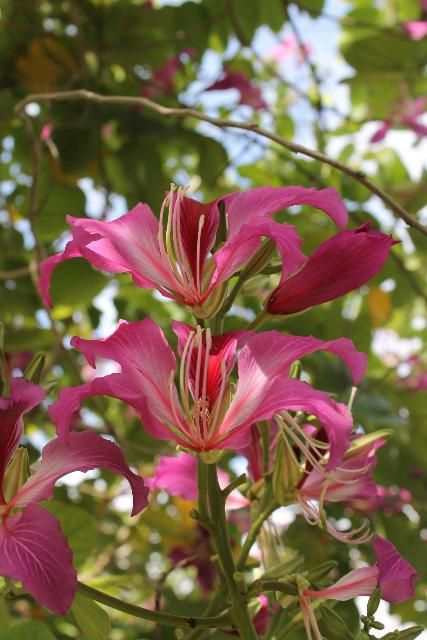
Flower color: purplish to white
Flower characteristics: very showy; fragrant; orchid-like and emerges in clusters at branch tips
Flowering: late winter to early summer
Figure 4. Flower - Bauhinia variegate: orchid tree Credit: UF/IFAS
Fruit
Fruit shape: elongated, flattened, pod or pod-like
Fruit length: 6 to 9 inches
Fruit covering: dry or hard
Fruit color: brown
Fruit characteristics: does not attract wildlife; showy; fruit/leaves a litter problem
Figure 5. Fruit - Bauhinia variegate: orchid tree Credit: UF/IFAS
Trunk and Branches
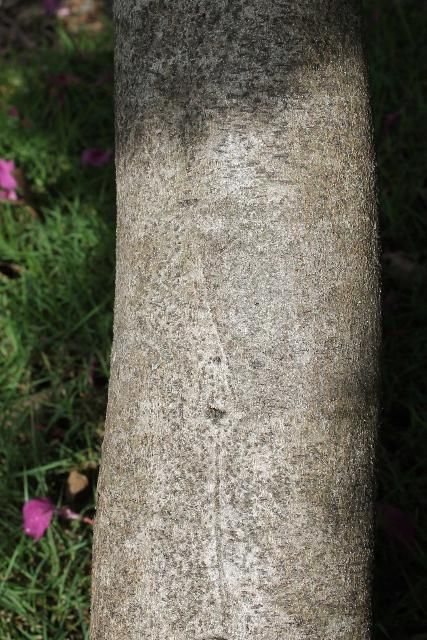
Trunk/branches: branches droop; not showy; can be trained to one trunk; no thorns
Pest resistance: free of serious pests and diseases
Use and Management
White Orchid tree should be grown in full sun on well-drained soil. Trees are very drought-tolerant and actually flower best on dry soils. Problems include a tendency to show nutritional deficiencies, especially potassium; the weak wood which is susceptible to breakage in storms; the abundant seedlings which may germinate in the landscape; and the litter problem created by the falling leaves, flowers, and seedpods. Orchid tree may need occasional pruning to develop a uniform shape when it is young. Branches tend to develop low on the trunk and droop toward the ground forming a large bush if left unpruned. Occasional pruning during the life of the tree will help maintain a nice, neat appearance.
Pests
Caterpillars, mites, and borers.
Diseases
Leaf spot, leaf scorch, and mushroom root rot diseases.
References
Koeser, A. K., Hasing, G., Friedman, M. H., and Irving, R. B. 2015. Trees: North & Central Florida. University of Florida Institute of Food and Agricultural Sciences.
Koeser, A.K., Friedman, M.H., Hasing, G., Finley, H., Schelb, J. 2017. Trees: South Florida and the Keys. University of Florida Institute of Food and Agricultural Sciences.
IFAS Assessment
Central
Caution
Caution - manage to prevent escape. May be recommended by IFAS. Will be reassessed in two years.
Invasive and not recommended by IFAS. Will be reassessed every 10 years. Specified and limited uses may be considered by the IFAS Invasive Plants Working Group.