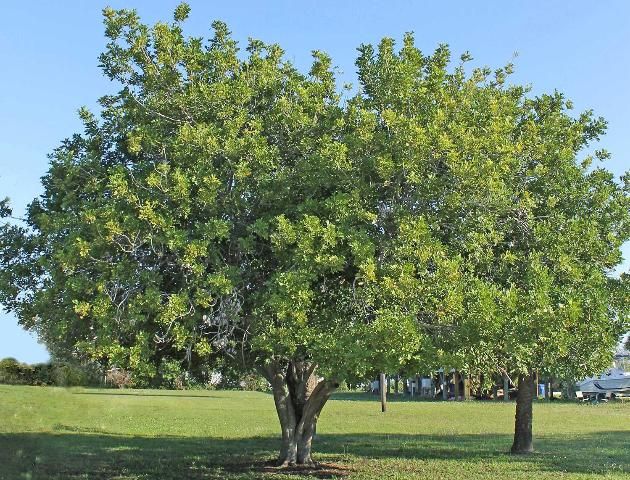
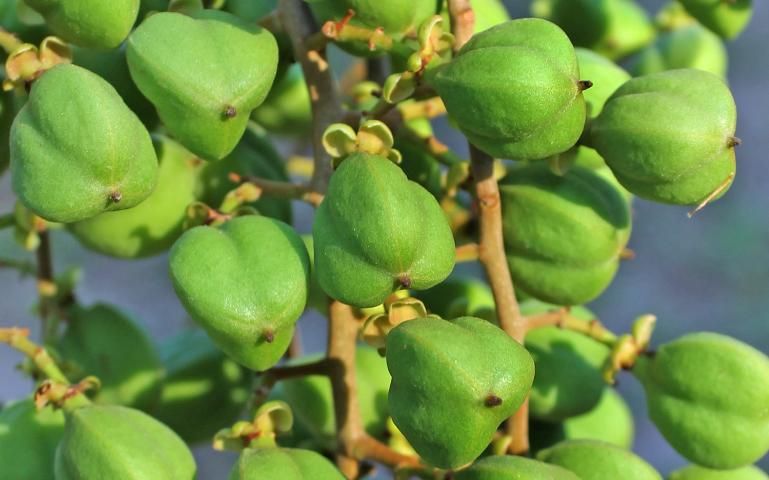
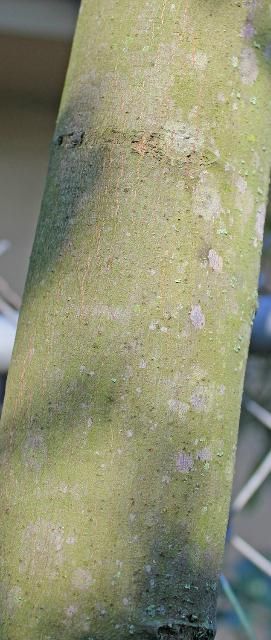
This compact evergreen tree has 4- to 8-inch-long, glossy, dark green, divided leaflets and makes an ideal shade, specimen, patio or poolside tree. It is popular in many yards and is used as a small to medium-sized street tree spaced about 20 feet apart. The insignificant small lime-green flowers are followed by 1/2-inch diameter, green fruits which split open to reveal seeds but do not squash or stain. The seeds germinate in the landscape and may be a litter problem. Carrotwood is considered an invasive, noxious weed in Florida and should not be planted. The seeds may be disseminated by birds which would make it easy for the tree to spread rapidly into native hammocks. Caution should be taken when planting in other warm, coastal climates.
Figure 1. Full form—Cupaniopsis anacardioides: Carrotwood Credit: UF/IFAS Extension
UF/IFAS Invasive Assessment Status: Prohibited from use in Florida according to the Federal Noxious Weed List, the Florida Department of Agriculture and Consumer Services (FDACS) 5B-64.011 Prohibited Aquatic Plants, or FDACS 5B-57.007 Noxious Weed List.
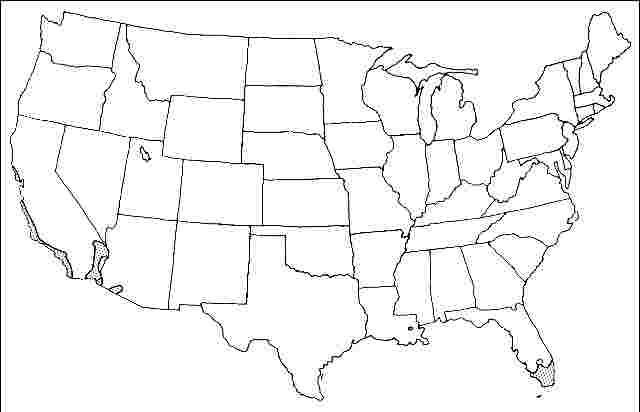
Figure 2. Range
Description
Height: 25 to 35 feet
Spread: 25 to 35 feet
Crown uniformity: symmetrical
Crown shape: round
Crown density: moderate
Growth rate: moderate
Texture: medium
Foliage
Leaf arrangement: alternate
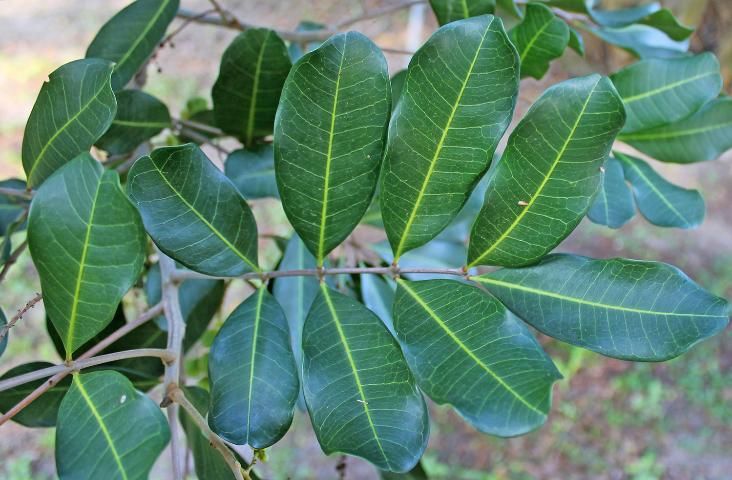
Leaf type: odd-pinnately compound; made up of 2 to 6 pairs of leaflets
Leaf margin: entire, undulate
Leaf shape: oblong, elliptic (oval)
Leaf venation: pinnate
Leaf type and persistence: evergreen
Leaf blade length: leaflets are 4 to 8 inches
Leaf color: dark green to yellow green, shiny on top, paler green underneath
Pest resistance: free of serious pests and diseases
Use and Management
Carrotwood tolerates poor, dry or wet soils, full sun, and hot, salty winds. It is truly a durable, urban-tolerant tree, able to grow even in confined planting pits in downtown sidewalks. Perhaps it is best used in these areas. It is deep-rooting on well-drained soils and will tolerate drought. Selected, upright branches in the crown can be removed to allow for more light penetration and better turf growth under the crown. If not, the dense canopy will shade out all but the most shade-tolerant plants. The wood is bright apricot-colored in cross-section, and resists breakage because it is hard. If you cut one down, save the wood. Wood-workers enjoy turning it on a lathe and making spindles and bowls.
Propagation is by seed.
Pests and Diseases
No pests or diseases are of major concern. Warning: Use with caution since the tree has become invasive in Florida. Commonly used as a street tree in southern California.
References
Koeser, A. K., Hasing, G., Friedman, M. H., and Irving, R. B. 2015. Trees: North & Central Florida. Gainesville: University of Florida Institute of Food and Agricultural Sciences.
Koeser, A.K., Friedman, M.H., Hasing, G., Finley, H., Schelb, J. 2017. Trees: South Florida and the Keys. Gainesville: University of Florida Institute of Food and Agricultural Sciences.