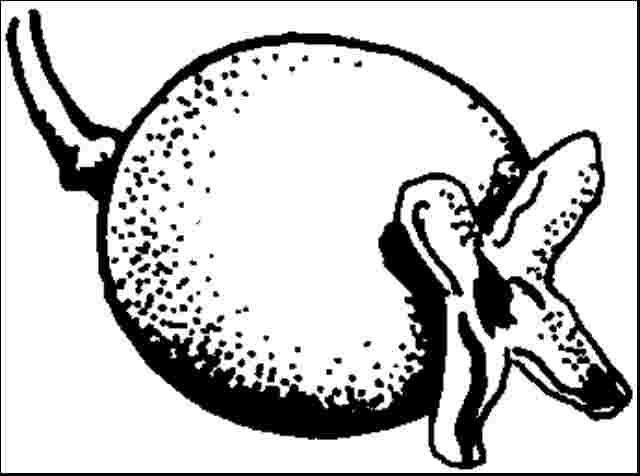
Feijoa sellowiana , or Pineapple Guava, is a gray-green evergreen shrub or tree (depending on pruning) which produces small, tasty fruit in late summer and early fall. The plants can be pruned to form a hedge or a small tree and will withstand several degrees below freezing. It is native to South America. The plant is not used nor is it commonly available in the eastern U.S.
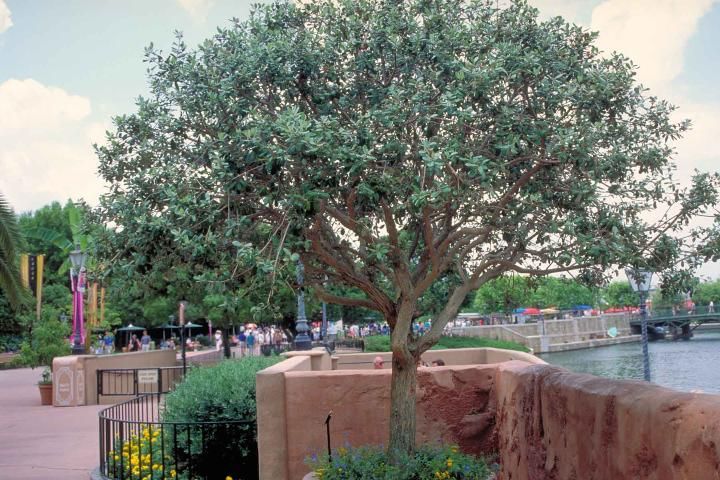
Figure 1. Young Feijoa sellowiana: Feijoa Credit: Ed Gilman
General Information
Scientific name: Feijoa sellowiana
Pronunciation: fay-JOE-uh sell-oh-wee-AY-nuh
Common name(s): Feijoa, Pineapple Guava
Family: Myrtaceae
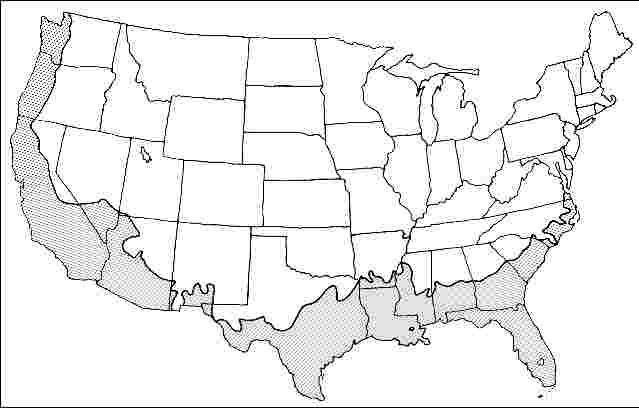
USDA hardiness zones: 8A through 11 (Fig. 2)
Origin: not native to North America
Invasive potential: has been evaluated using the IFAS Assessment of the Status of Non-Native Plants in Florida's Natural Areas (UF/IFAS 2018). This species is not documented in any undisturbed natural areas in Florida. Thus, it is not considered a problem species and may be used in Florida.
Uses: specimen; screen; hedge; fruit
Availability: not native to North America
Figure 2. Range
Description
Height: 10 to 15 feet
Spread: 10 to 15 feet
Crown uniformity: irregular
Crown shape: spreading, upright/erect, round
Crown density: dense
Growth rate: moderate
Texture: medium
Foliage
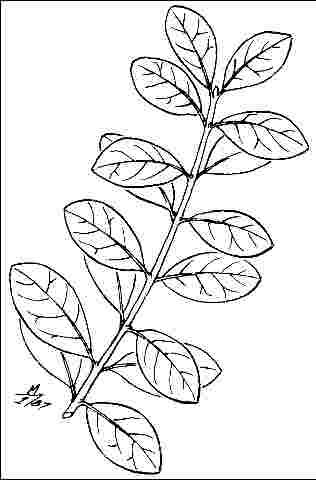
Leaf arrangement: opposite/subopposite (Fig. 3)
Leaf type: simple
Leaf margin: entire
Leaf shape: ovate, elliptic (oval)
Leaf venation: pinnate
Leaf type and persistence: evergreen
Leaf blade length: less than 2 inches, 2 to 4 inches
Leaf color: green
Fall color: no color change
Fall characteristic: not showy
Figure 3. Foliage
Flower
Flower color: white/cream/gray, red
Flower characteristics: showy
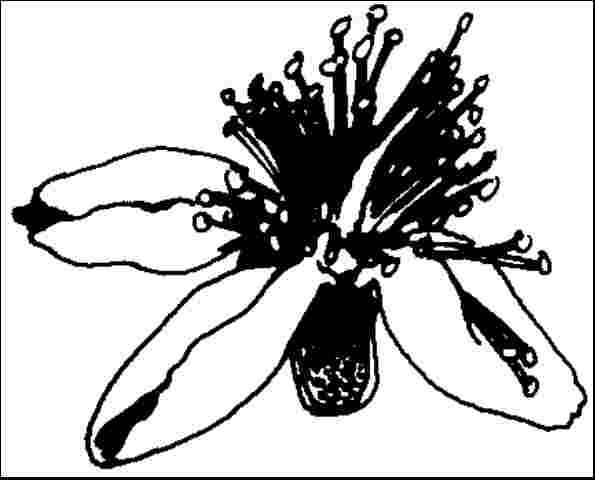
Figure 4. Flower
Fruit
Figure 5. Fruit
Fruit shape: oval
Fruit length: 1 to 3 inches
Fruit covering: fleshy
Fruit color: green, yellow
Fruit characteristics: does not attract wildlife; showy; fruit/leaves a litter problem
Trunk and Branches
Trunk/bark/branches: branches droop; showy; typically multi-trunked; thorns
Pruning requirement: needed for strong structure
Breakage: resistant
Current year twig color: gray, green
Current year twig thickness: thin, medium
Wood specific gravity: unknown
Culture
Light requirement: partial sun or partial shade, full sun
Pest resistance: free of serious pests and diseases
Use and Management
Propagation is done by seeds and by cuttings.
Pests and Diseases
No pests or diseases are of major concern.
Literature Cited
University of Florida, Institute of Food and Agricultural Sciences. 2018. "Assessment of Non-native Plants in Florida's Natural Areas" (https://assessment.ifas.ufl.edu, 4/29/2019) Gainesville, FL, 32611-4000, USA.