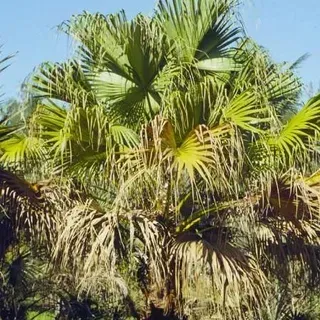
Livistona chinensis: Chinese Fan Palm
The Chinese fan palm is relatively slow growing, typically reaching about 30 feet in height (Figure 1). Its fan-shaped, costapalmate leaves can be 3 to 4 feet across and up to 6 feet long. Petioles of juvenile palms are spiny but have few or no spines in adult palms. Because of its gracefully drooping leaf segment tips, this species is sometimes called the "fountain palm" (Figure 2). Young specimens are slow to form a trunk, which has led to the unfortunate practice of planting these palms close together as a ground cover. Eventually, most of those closely planted palms will have to be removed to accommodate their 10-to-12-foot spread. Chinese fan palm has been assessed by UF/IFAS and found to be potentially invasive, and therefore should be used with caution in Florida and managed to prevent escape into natural areas.
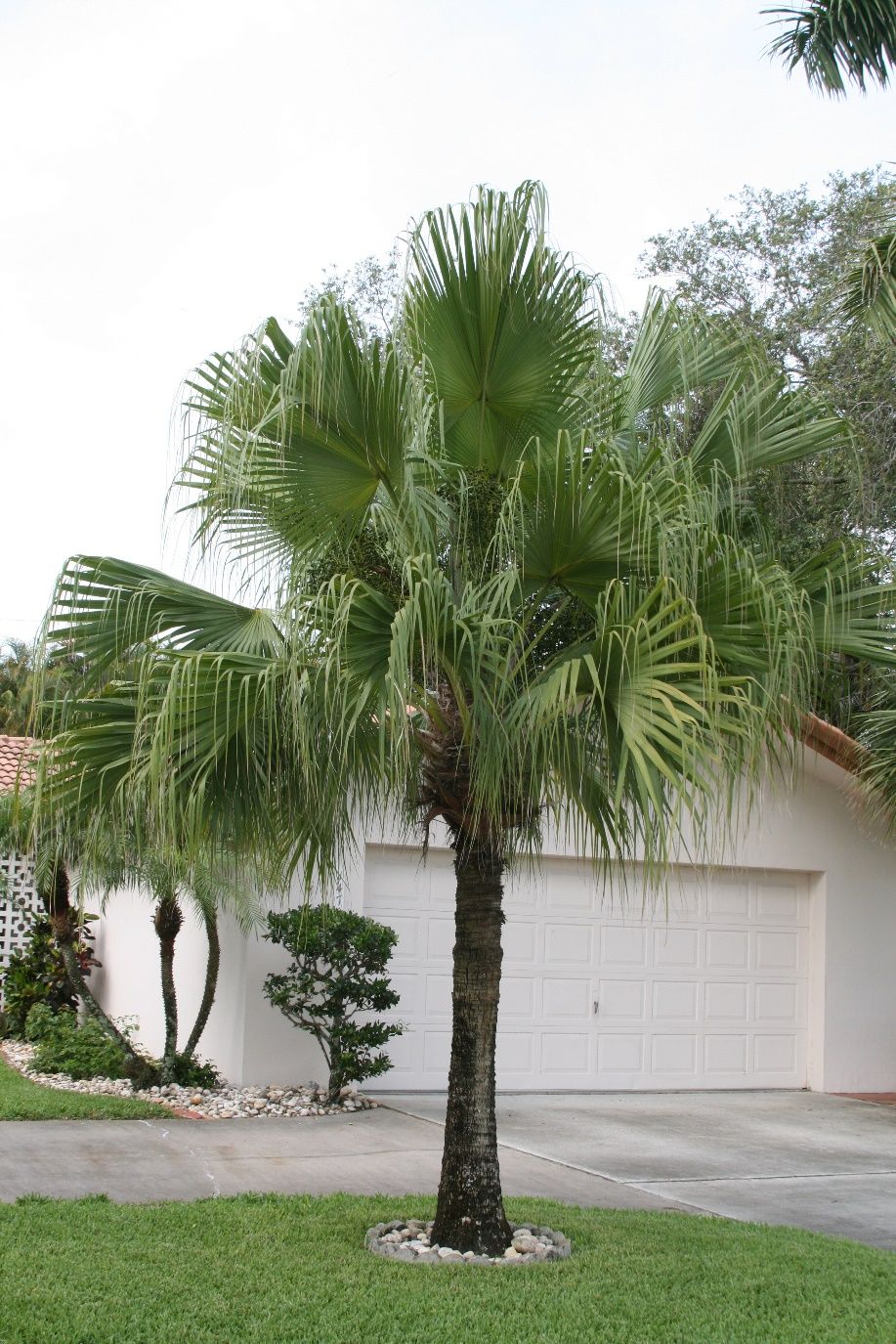
Credit: Stephen Brown, UF/IFAS
Chinese fan palms are cold hardy to about 20°F, making them suitable for planting in USDA plant hardiness zones 9A–11. They are adaptable to a wide range of soils and are considered to be tolerant of drought and moderately tolerant of salt spray. They grow well in light shade or in full sunlight. Flower stalks up to 6 feet long arise from within the crown and are relatively inconspicuous, but the 1/2 x 3/4-inch blue-green fruits (Figure 3) can weigh down the lower leaves, resulting in a two-tiered or split canopy. These fruits are consumed and dispersed by birds and small mammals, and they germinate readily. For this reason, Chinese fan palms are considered to be potentially invasive in central and south Florida.
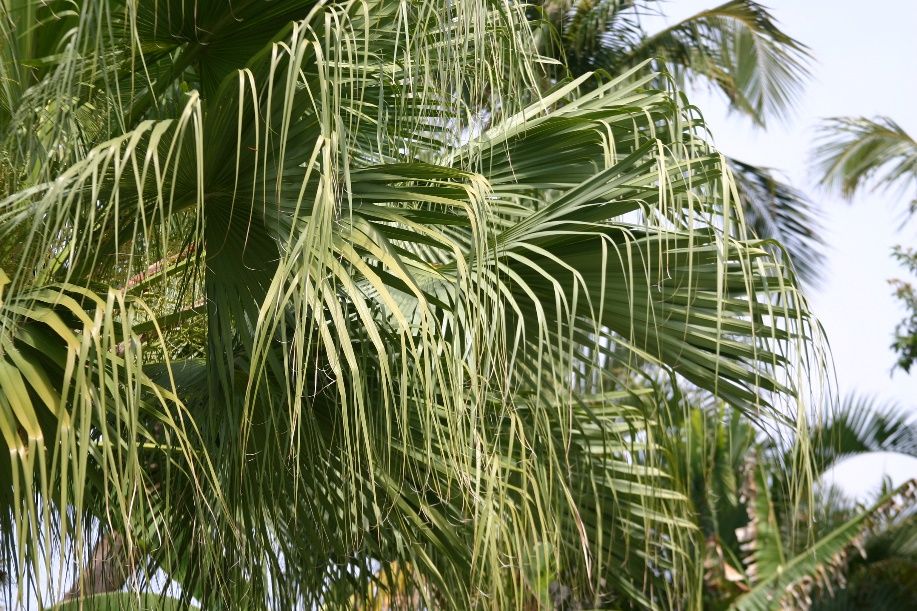
Credit: Stephen Brown, UF/IFAS
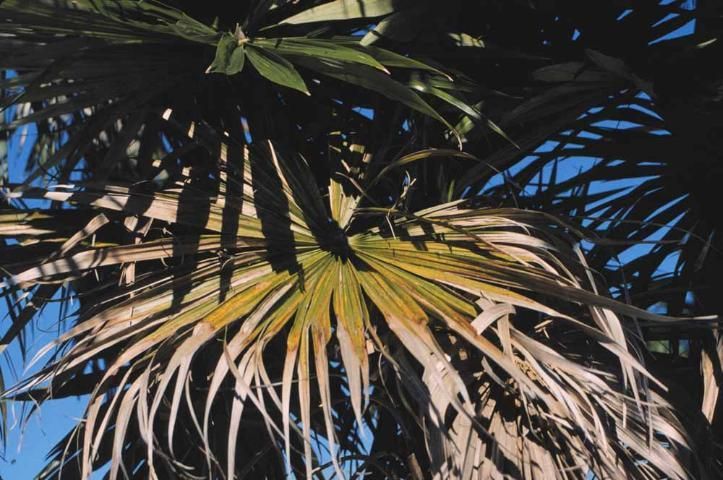
Compared to most palm species, Chinese fan palms exhibit few nutritional deficiencies. Potassium (K) deficiency, which causes extensive leaflet tip necrosis on the oldest leaves, is fairly common. The central portion of affected leaves may show orange-yellow discoloration, or it may be green (Figure 4). Regular fertilization with a controlled release 8-2-12 palm maintenance fertilizer will gradually eliminate this problem and prevent its recurrence. For more information about fertilizing palms in the landscape, see EP261 Fertilization of Field-Grown and Landscape Palms in Florida.
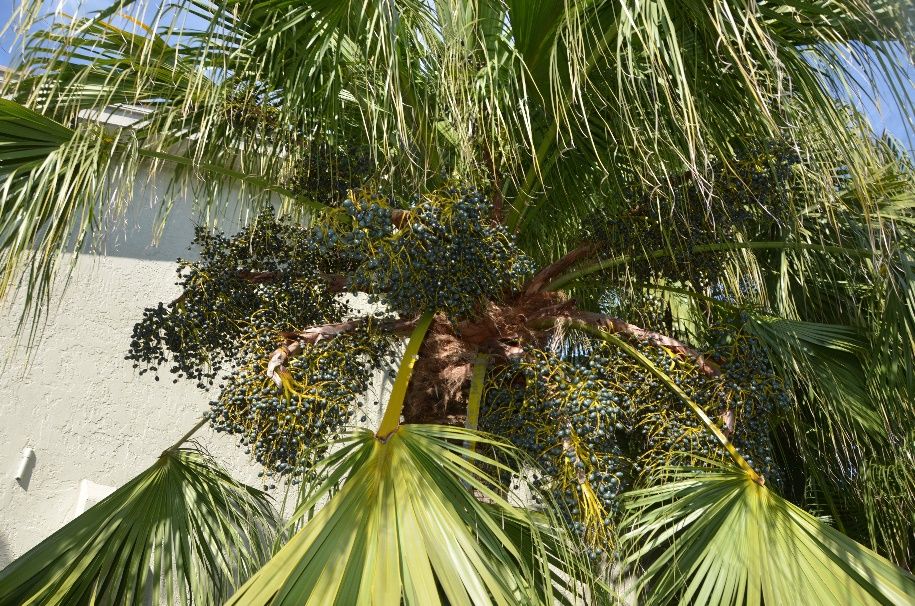
Credit: Stephen Brown, UF/IFAS
When trimming Chinese fan palms, it is important to remove only completely dead leaves. Half-dead, K-deficient older leaves should not be removed, as these serve as a supplementary source of potassium to the palm. Chinese fan palms, when free of K deficiency, should have a full, round 360° crown of green leaves. If the green portion of the crown is less than 360°, this is indicative of K deficiency. Completely dead leaves at the bottom of the crown will tightly persist for a year or longer before falling and will have to be cut off manually. The splitting of Chinese fan palm crowns caused by heavy fruit stalks can be prevented by removing the flower stalks prior to fruit development. See EP443 Pruning Palms for more information about palm pruning.
Credit: T. K. Broschat, UF/IFAS
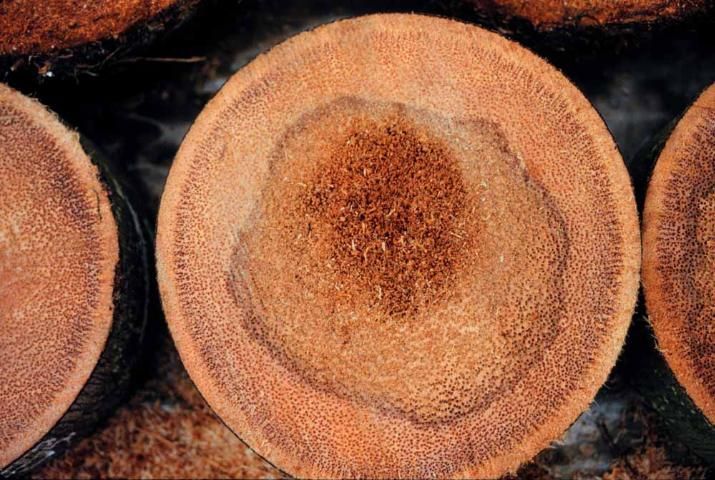
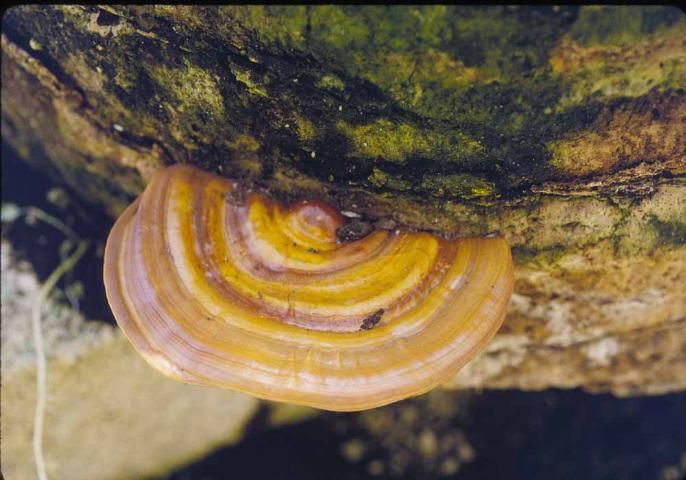
Chinese fan palms, like all other palm species, are susceptible to Ganoderma butt rot, a fungal disease caused by Ganoderma zonatum. This soil-borne fungus causes a trunk rot, usually confined to the bottom four feet of the trunk. A cross-section through an infected trunk will show internal discoloration, but no apparent softening of trunk tissue (Figure 5). A woody shelf-like mushroom called a conk (Figure 6) may or may not be visible on the lower portion of the trunk before the crown begins to wilt and die. If conks are observed on the trunk, the palm should be removed immediately as the tree is unstable and could fall at any time. There is no control for this disease. For more information about this disease, see PP100 Ganoderma Butt Rot of Palm.
Credit: M. L. Elliott, UF/IFAS
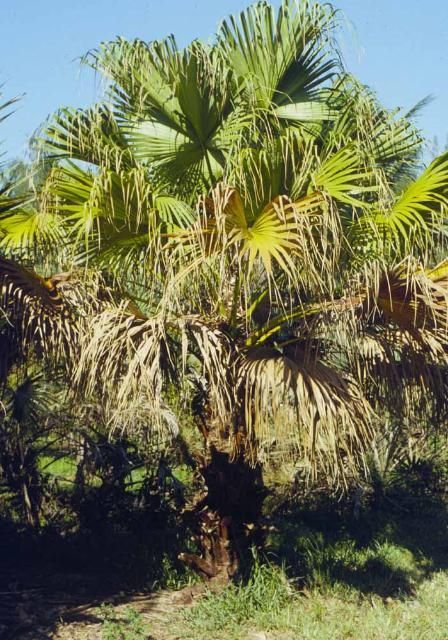
Lethal yellowing (LY) is also known to kill Chinese fan palms and the species is considered to be moderately susceptible to this disease. Symptoms include rapid loss of older leaves (Figure 7), but similar symptoms occur in palms infected with Ganoderma butt rot. Definitive diagnosis of LY can only be done by trunk coring and laboratory DNA analysis. In areas where LY is very active, trunk injection of oxytetracylcine (OTC) can prevent infection with this disease. For more information about LY in palms, see PP146 Lethal Yellowing of Palm.
Credit: T. K. Broschat, UF/IFAS
Another disease that affects all palms, including Chinese fan palms, is Thielaviopsis trunk rot. This fungus requires a wound in the upper portion of the trunk for infection to occur. The fungus then causes a soft rot of the trunk that eventually results in the trunk collapsing on itself or the entire crown toppling over. This collapse of the crown may or may not be preceded by wilt symptoms in the foliage. Although there is no chemical control for this disease, it can easily be prevented by taking care not to wound the trunk when removing leaves or transplanting. For more information about this disease, see PP143 Thielaviopsis Trunk Rot of Palm.
Credit: T. K. Broschat, UF/IFAS
References
Elliott, M.L., T.K. Broschat, J.Y. Uchida, and G.W. Simone. 2004. Compendium of ornamental palm diseases and disorders. Amer. Phytopath. Soc. Press, St. Paul, MN.
FLEPPC. 2005. List of Florida's invasive species. Florida Exotic Pest Plant Council. https://www.se-eppc.org/wildlandweeds/pdf/Summer2005-FLExoticsList-pp13-16.pdf
Meerow, A.W. 2006. Betrock's landscape palms. Betrock Information Systems, Hollywood, FL