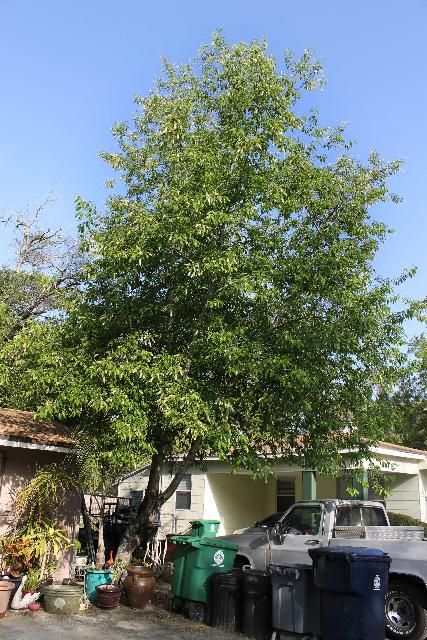
Black cherry is a 60 to 90-foot-tall native North American tree which has an oval silhouette. Low branches normally droop and touch the ground. These are easily removed to create clearance beneath the canopy. The finely-toothed, deciduous leaves are dark green and shiny, changing in fall for a short period to lovely shades of yellow to red, but this varies with weather conditions and among seedlings. The leaves and twigs contain hydrocyanic acid which could poison livestock or other animals if consumed in large quantities. Wild cherry cough syrup is made from the reddish-brown, fragrant, and bitter inner bark. The wood is highly prized by wood workers and it has been used since the colonial days for fine furniture.
Figure 1. Full Form - Prunus serotina: black cherry Credit: UF/IFAS
General Information
Scientific name: Prunus serotina
Pronunciation: PROO-nus sair-OTT-ih-nuh
Common name(s): black cherry
Family: Rosaceae
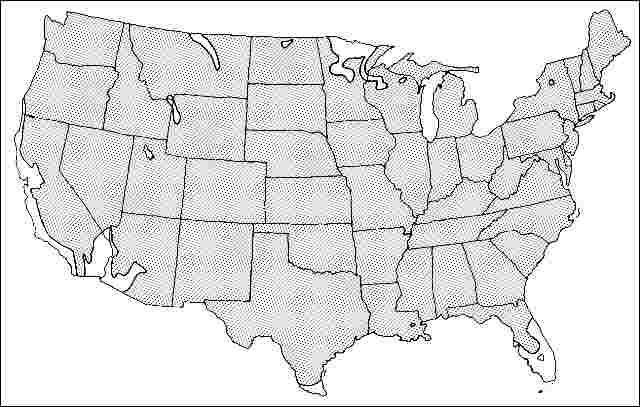
USDA hardiness zones: 3B through 9A (Figure 2)
Origin: native to eastern North America, Mexico, and Guatemala
UF/IFAS Invasive Assessment Status: native
Uses: reclamation
Figure 2. Range
Description
Height: 60 to 90 feet
Spread: 35 to 50 feet
Crown uniformity: irregular
Crown shape: oval
Crown density: moderate
Growth rate: fast
Texture: medium
Foliage
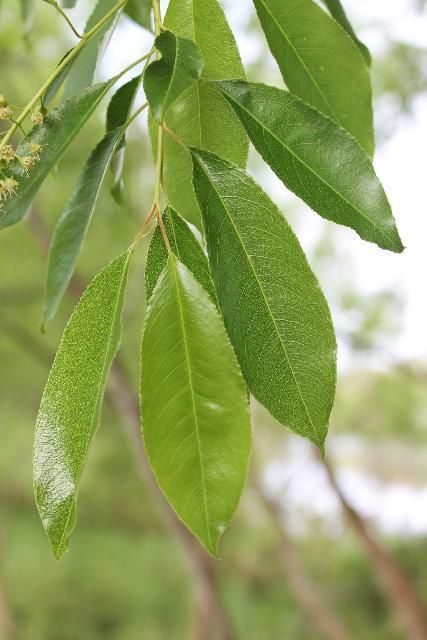
Leaf arrangement: alternate
Leaf type: simple
Leaf margin: serrulate
Leaf shape: oblong, ovate
Leaf venation: pinnate, bowed
Leaf type and persistence: deciduous
Leaf blade length: 2 to 4 inches
Leaf color: darkgreen and shiny on top, paler green underneath
Fall color: yellow to red
Fall characteristic: showy
Figure 3. Leaf - Prunus serotina: black cherry Credit: UF/IFAS
Flower
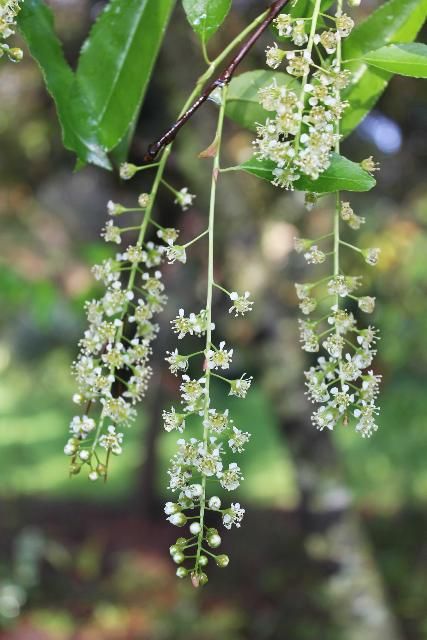
Flower color: white
Flower characteristics: showy; emerges on 4-6" long racemes
Flowering: late winter to early spring
Figure 4. Flower - Prunus serotina: black cherry Credit: UF/IFAS
Fruit
Fruit shape: round
Fruit length: ½ inch
Fruit covering: fleshy; shiny drupe
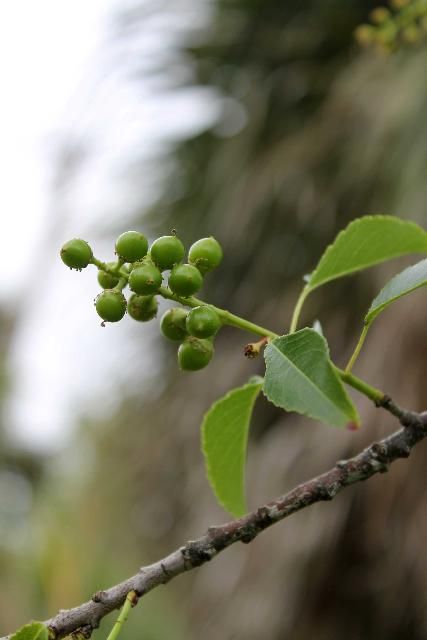
Fruit color: red topurple with maturity
Fruit characteristics: attracts birds; showy; fruit/leaves a litter problem
Fruiting: summer
Figure 5. Fruit - Prunus serotina: black cherry Credit: UF/IFAS
Trunk and Branches
Trunk/branches: branches don't droop; not showy; typically one trunk; no thorns
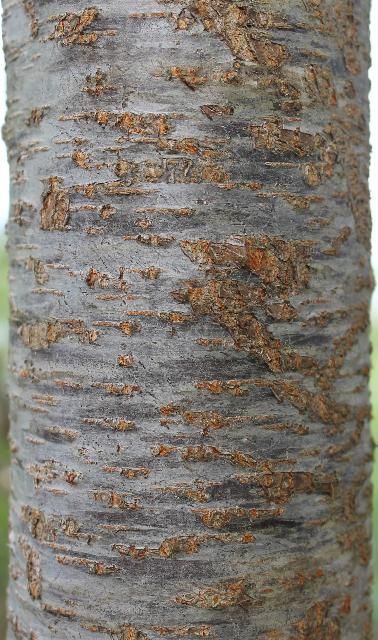
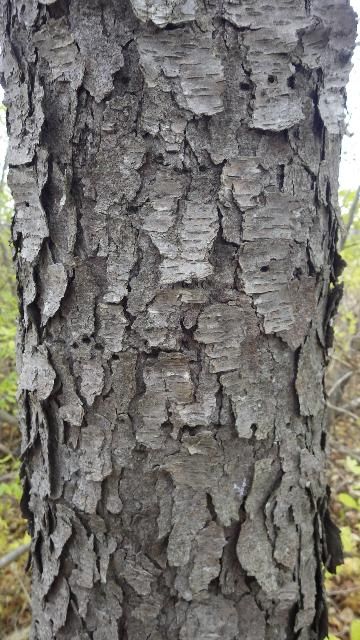
Bark: brownish, smooth, shiny, and peppered with horizontal lenticels when young, splitting into small, dark, reddish-brown to nearly black plates with maturity
Pruning requirement: little required
Breakage: resistant
Current year twig color: brown
Current year twig thickness: thin, medium
Wood specific gravity: 0.50
Figure 6. Bark, Young - Prunus serotina: black cherry Credit: UF/IFAS
In early spring as the new leaves are unfolding, black cherry produces small, white, fragrant blossoms. These are followed by small, bitter fruits which mature during summer and fall from red to dark purple or black. Sometimes used for jams, jellies, or liqueurs, these fruits are highly prized by birds and other wildlife who quickly devour them as they ripen. They stain concrete as they fall in summer, and people can roll on the hard seed. If you plant black cherry, it is probably best to locate it away from walks and pavement. The tree appears to be tolerant of drought in its native habitat where roots are allowed to explore a large volume of soil, but growth is often poor in restricted soil spaces characteristic of urban areas.
Black cherry should be grown in full sun or partial shade on well-drained, non-compacted soil in a location where it will not receive excessive heat or competition from grasses. Although somewhat tolerant of dry conditions, black cherry will respond best to rich, moist soil and a heavy mulch to keep the root zone cool. Plants should not be disturbed after becoming established and have a fairly shallow root system, making them susceptible to damage from anything stacked, stored, or parked within the dripline and slightly beyond.
Propagation is by seed which is spread by birds and other wildlife.
Pests
Black Cherry is susceptible to eastern tent caterpillar, fall webworm, other chewing insects, but they are usually enough of a problem to warrant control.
Diseases
No diseases are of major concern. Black Cherry is a host for Ganoderma root and butt rot.
Reference
Koeser, A. K., Hasing, G., Friedman, M. H., and Irving, R. B. 2015. Trees: North & Central Florida. University of Florida Institute of Food and Agricultural Sciences.