Edward F. Gilman, Dennis G. Watson, Ryan W. Klein, Andrew K. Koeser, Deborah R. Hilbert, and Drew C. McLean
2
Introduction
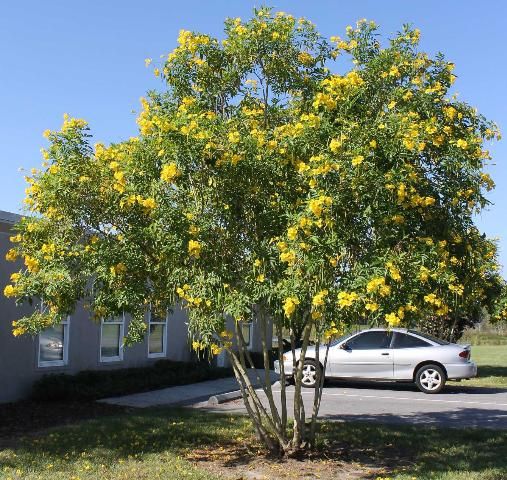
This spreading, fast-growing evergreen shrub or small tree can grow to a height of 10 to 30 feet and is noted for its brilliant, bell-shaped, fragrant yellow flowers. Reaching full bloom in fall, yellow elder produces some flowers with each flush of new growth and therefore has some color most of the year.
Figure 1. Full Form—Tecoma stans: yellow elder
General Information
Scientific name: Tecoma stans
Pronunciation: teh-KOE-muh stanz
Common name(s): yellow elder, yellow trumpet flower, yellow trumpetbush
Family: Bignoniaceae
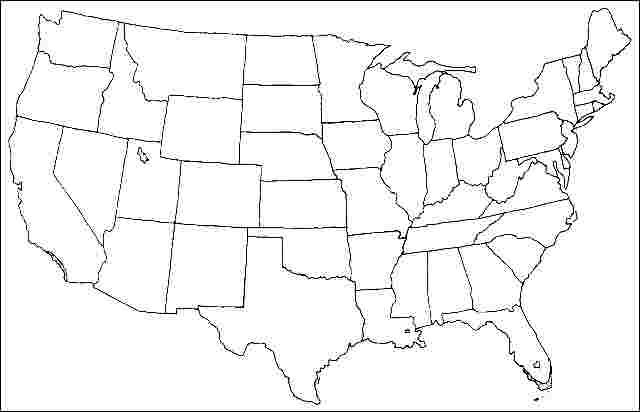
USDA hardiness zones: 10B through 11 (Figure 2)
Origin: native to the tropical America's and the West Indies
UF/IFAS Invasive Assessment Status: invasive and not recommended except for "specified and limited" use approved by the UF/IFAS Invasive Plant Working Group
Uses: street without sidewalk; parking lot island < 100 sq ft; parking lot island 100-200 sq ft; parking lot island > 200 sq ft; deck or patio; container or planter; specimen; espalier; tree lawn 3-4 feet wide; tree lawn 4-6 feet wide; tree lawn > 6 ft wide; highway median
Figure 2. Range
Description
Height: 10 to 30 feet
Spread: 8 to 30 feet
Crown uniformity: irregular
Crown shape: oval
Crown density: moderate
Growth rate: moderate
Texture: medium
Foliage
Leaf arrangement: opposite/subopposite
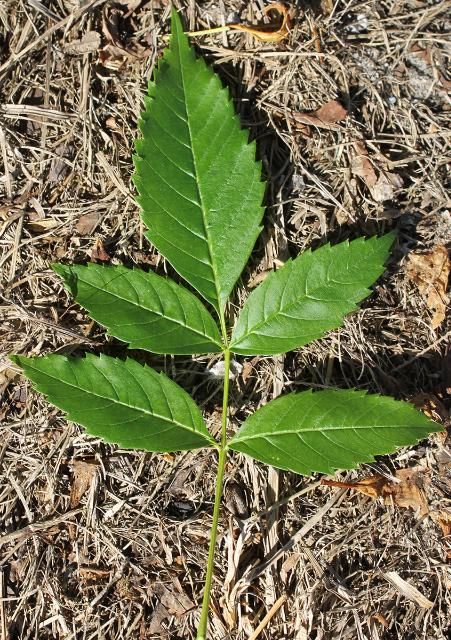
Leaf type: odd-pinnately compound; made up of 5 to 13 leaflets
Leaf margin: serrate
Leaf shape: lanceolate to elliptic
Leaf venation: pinnate, brachidodrome
Leaf type and persistence: semi-evergreen, evergreen
Leaf blade length: 4 to 10 inches; leaflets are 1½ to 5 inches
Leaf color: yellowish green to dark green
Fall color: no color change
Fall characteristic: not showy
Figure 3. Leaf—Tecoma stans: yellow elder
Flower
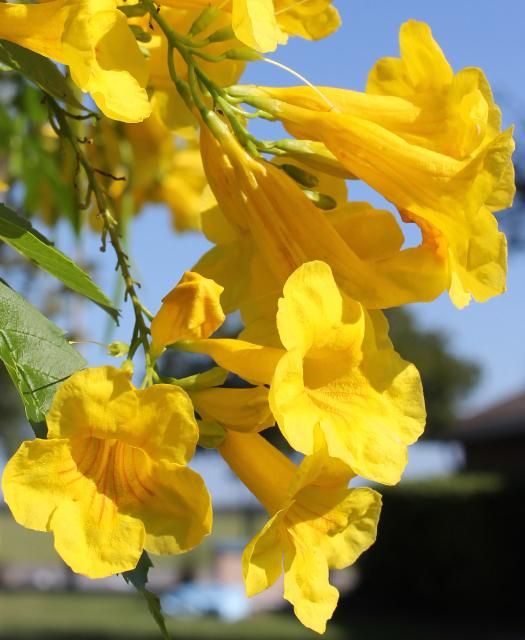
Flower color: bright yellow with thin, red vertical lines along the inner throat
Flower characteristics: very showy; trumpet-shaped; somewhat fragrant; emerges in clusters on racemes
Flowering: primarily spring and fall, but also year-round
Figure 4. Flower—Tecoma stans: yellow elder
Fruit
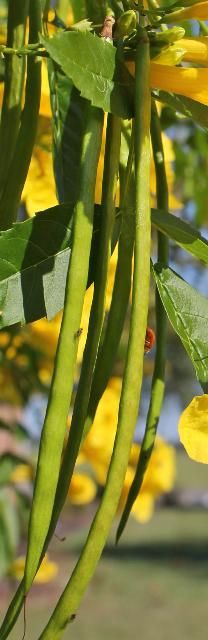
Fruit shape: elongated; long slender capsule
Fruit length: 4 to 10 inches
Fruit covering: dry or hard
Fruit color: turns from bright green tobrown when mature
Fruit characteristics: does not attract wildlife; showy; fruit/leaves not a litter problem
Fruiting: primarily spring and fall, but also year-round
Figure 5. Fruit—Tecoma stans: yellow elder
Trunk and Branches
Trunk/branches: branches droop; not showy; typically multi-trunked; no thorns
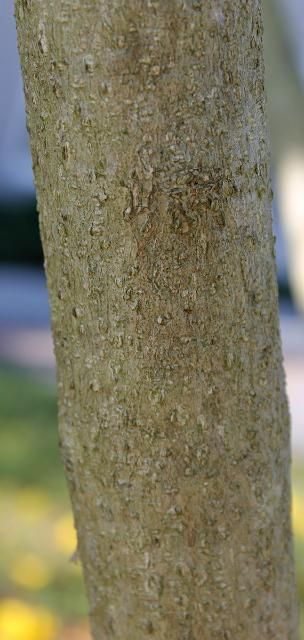
Bark: light gray to brown, with white lenticels when young, then becomes fissured with age
Pest resistance: free of serious pests and diseases
Use and Management
While sometimes trained to a single trunk, yellow elder is most often used as a specimen or mixed into a shrub border. The somewhat weedy growth requires pruning to control shape, but it is worth the effort due to the brilliant flowers. Its small stature allows it to be used beneath power lines as a street tree.
Growing in full sun on any well-drained soil, yellow elder survives on rain alone making it well-suited to naturalized and low-maintenance gardens. It would also make a nice patio tree and is suited for planting in parking lot islands and medians. The dropping fruit can cause a slight litter problem.
Plants grow easily from seed and can also be propagated from cuttings. Seedlings are easily transplanted and will bloom within two years.
Pests
Yellow elder is relatively pest-free with chewing insects and scale being only minor problems.
Diseases
No diseases are of major concern.
Reference
Koeser, A.K., Friedman, M.H., Hasing, G., Finley, H., Schelb, J. 2017. Trees: South Florida and the Keys. Gainesville: University of Florida Institute of Food and Agricultural Sciences.
IFAS Assessment
Central, North, South
High Invasion Risk
Predicted to be invasive and not recommended by IFAS. Will be reassessed every 10 years. In particular cases, this species may be considered for use under specific management practices that have been approved by the IFAS Invasive Plant Working Group.