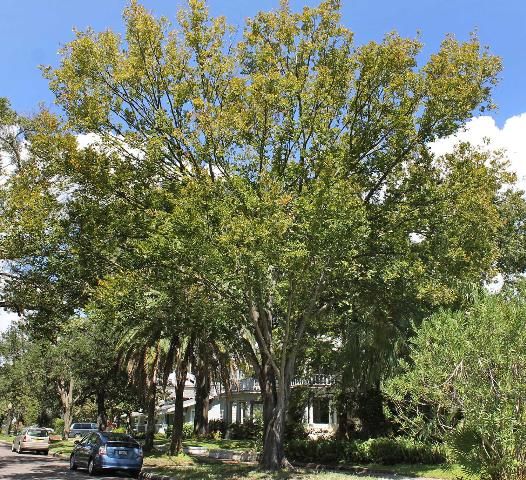
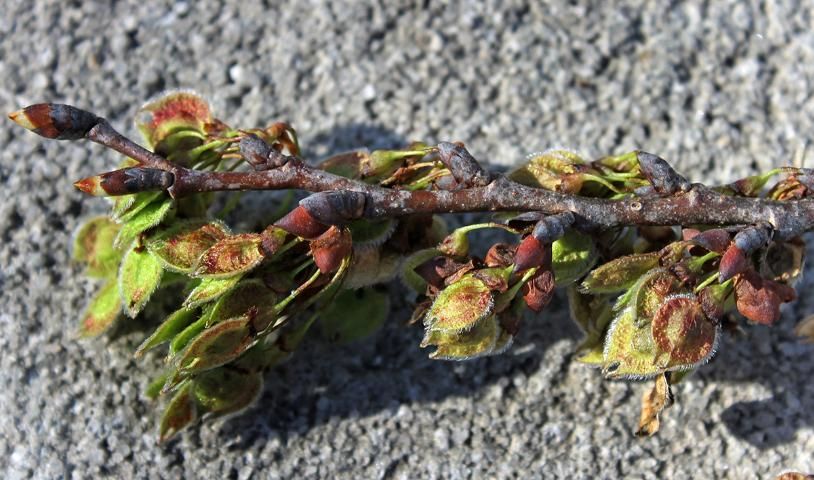
This native North American tree grows quickly when young, forming a broad or upright, vase-shaped silhouette, 70 to 90 feet high and 50 to 70 feet wide. Trunks on older trees could reach to seven feet across. The five-inch-long, deciduous leaves are dark green throughout the year, fading to yellow before dropping in fall. In early spring, before the new leaves unfold, the rather inconspicuous, small, green flowers appear on pendulous stalks. These blooms are followed by green, wafer-like seedpods which mature soon after flowering is finished and the seeds are quite popular with both birds and wildlife. American elm must be at least 15-years-old before it will bear seed. The copious amount of seeds can create a mess on hard surfaces for a period of time. Trees have an extensive but shallow root system.
Figure 1. Full Form—Ulmus americana: American elm
General Information
Scientific name: Ulmus americana
Pronunciation: UL-mus uh-mair-ih-KAY-nuh
Common name(s): American elm
Family: Ulmaceae
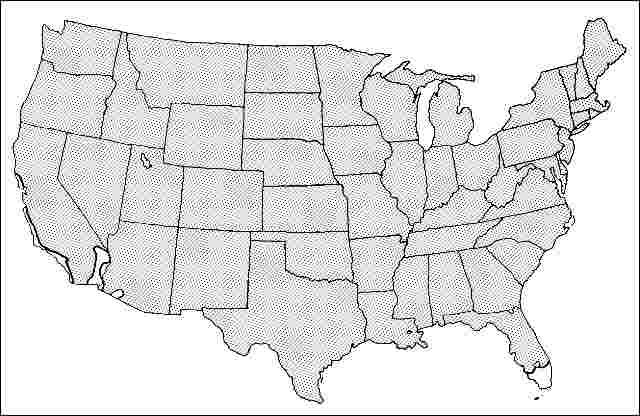
USDA hardiness zones: 2A through 9B (Figure 2)
Origin: native to the eastern half of the United States, in addition to adjacent Canadian provinces
UF/IFAS Invasive Assessment Status: native
Uses: reclamation; urban tolerant; specimen
Figure 2. Range
Description
Height: 70 to 90 feet
Spread: 50 to 70 feet
Crown uniformity: symmetrical
Crown shape: vase
Crown density: moderate
Growth rate: fast
Texture: medium
Foliage
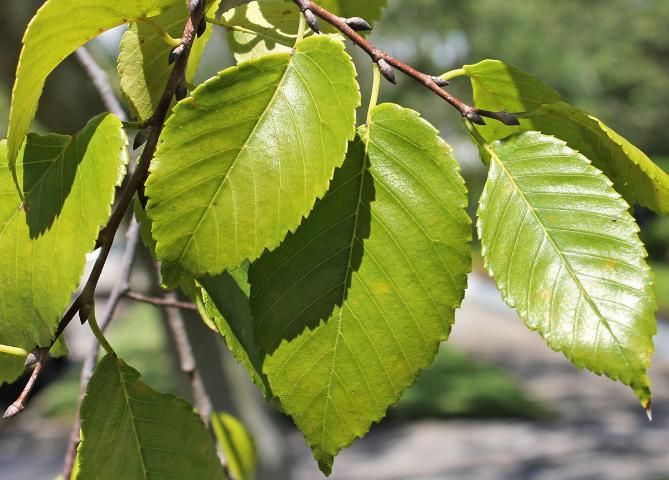
Leaf arrangement: alternate
Leaf type: simple
Leaf margin: double serrate
Leaf shape: oblong, ovate
Leaf venation: pinnate
Leaf type and persistence: deciduous
Leaf blade length: 1 to 5 inches
Leaf color: green and smooth to slightly scabrous on top, lighter green and pubescence underneath
Fall color: yellow
Fall characteristic: showy
Figure 3. Leaf—Ulmus americana: American elm
Flower
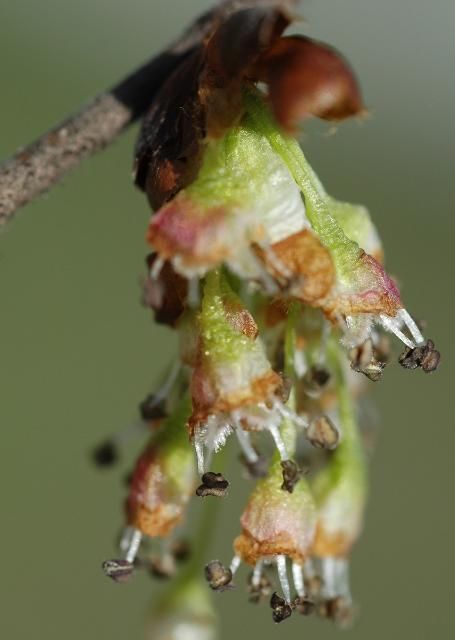
Flower color: green
Flower characteristics: not showy; bell-shaped; emerge in clusters at leaf axils
Flowering: early spring, but before leaves appear
Figure 4. Flower—Ulmus americana: American elm
Fruit
Fruit shape: broadly elliptic, thin, flattened samara
Fruit length: 3/8 to 1/2 inch
Fruit covering: dry or hard; soft hair around the margin
Fruit color: green
Fruit characteristics: attracts birds; not showy; fruit/leaves a litter problem
Figure 5. Fruit—Ulmus americana: American elm
Trunk and Branches
Trunk/branches: branches don't droop; not showy; typically one trunk; no thorns
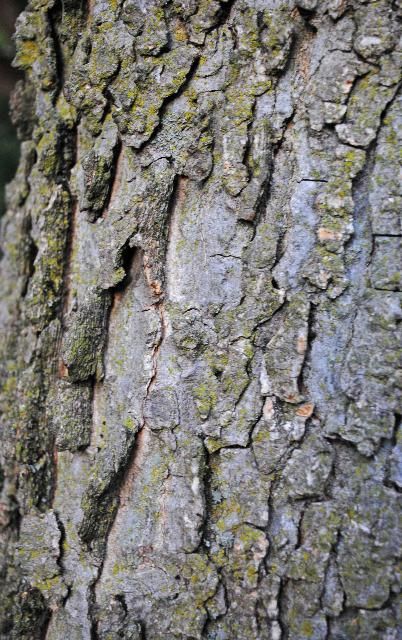
Bark: ashy gray, narrowly fissured, and flaking or peeling into small, scaly plates
Pruning requirement: needed for strong structure
Breakage: susceptible to breakage
Current year twig color: brown
Current year twig thickness: thin
Wood specific gravity: 0.50
Figure 6. Bark—Ulmus americana: American elm Credit: Gitta Hasing
Culture
Light requirement: full sun to partial shade
Soil tolerances: clay; sand; loam; alkaline; acidic; wet to well-drained
Drought tolerance: high
Aerosol salt tolerance: moderate
Other
Roots: can form large surface roots
Winter interest: no
Outstanding tree: no
Ozone sensitivity: tolerant
Verticillium wilt susceptibility: susceptible
Pest resistance: sensitive to pests/diseases
Use and Management
Once a very popular and long-lived (300+ years) shade and street tree, American elm suffered a dramatic decline with the introduction of Dutch elm disease, a fungus spread by a bark beetle. The wood of American elm is very hard and was a valuable timber tree used for lumber, furniture and veneer. The Indians once made canoes out of American elm trunks, and early settlers would steam the wood so it could be bent to make barrels and wheel hoops. It was also used for the rockers on rocking chairs. Today, the wood that can be found is used mainly for making furniture.
American elm should be grown in full sun on well-drained, rich soil. If you plant American elm, plan on implementing a monitoring program to watch for symptoms of Dutch elm disease. It is vital to the health of existing trees that a program be in place to administer special care to these disease-sensitive trees.
Propagation is by seed or cuttings. Young plants transplant easily.
Pests
Many pests may infest American elm, including bark beetles, elm borer, gypsy moth, mites, and scales. Leaf beetles often consume large quantities of foliage.
Diseases
Many diseases may infect American elm, including Dutch elm disease, phloem necrosis, leaf spot diseases, and cankers. American elm is a host for ganoderma butt rot.
Reference
Koeser, A. K., Hasing, G., Friedman, M. H., and Irving, R. B. 2015. Trees: North & Central Florida. Gainesville: University of Florida Institute of Food and Agricultural Sciences.