
Introduction
Credit: iStock
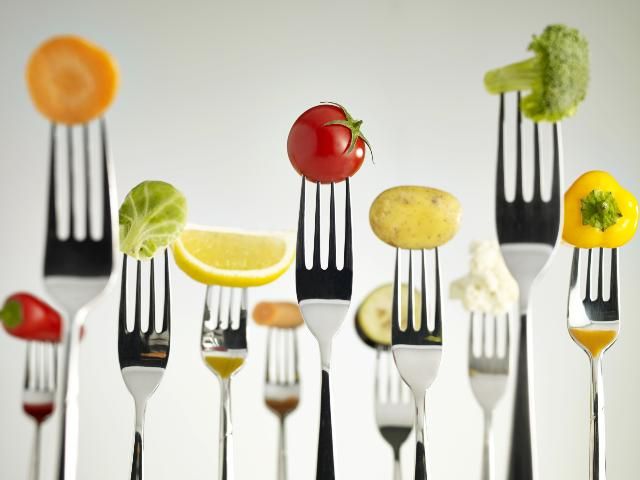
Edible landscaping, simply put, replaces plants that are strictly ornamental with plants that produce food. Edible landscaping will allow you to create a multi-functional landscape that repays your investment of water, fertilizer, and time with food. An edible landscape can be just as attractive as a traditional one; in fact, the colorful fruits and foliage of many edibles are quite beautiful. Here are some additional benefits:
- Improved Taste and Nutrition of Food: Nutrient content and flavor in most plants is highest immediately after harvest. The edible landscape provides fresh foods that can be eaten minutes, rather than days or weeks, after harvest. Also, many exceptional and flavorful varieties not readily available at food markets are available to gardeners.
- Increased Food Security: An edible landscape reduces your dependence on foreign food sources that have unknown production systems.
- Reduced Food Costs: Certain edibles are highly productive and are more economical to grow at home than to purchase.
- Convenience: Having fruits and vegetables right outside your home may help you add fresher, healthier foods to your diet and make meal preparation easier.
- Fun and Exercise: Growing food can be rewarding and fun; the exercise you get in the process can help you stay fit.
- Sustainability: Consuming locally grown produce can be an important part of reducing energy inputs and protecting our environment.
Designing and Managing the Edible Landscape
Design
Most food-producing plants need sunny locations and well-drained soils. Certain fruit trees easily integrate into a landscape and function in multiple ways—as shade and/or flowering trees as well as edibles. Smaller fruiting plants can substitute as shrubs and some perennial herbs make nice ground covers. Both can be inter-planted with existing landscape plants. However, edibles like seasonal vegetables or herbs that are planted and harvested frequently should probably be planted in a garden solely devoted to them. This allows you to amend and cultivate the soil without disturbing the permanent plantings. For more tips on designing with edibles see, Landscape Design with Edibles (https://edis.ifas.ufl.edu/ep475).
Inputs
Edible plants, like ornamental plants, require maintenance. Reduce maintenance requirements by planting the "right plant in the right place." In other words, be sure to match a plant's growing requirements with your yard's conditions. When growing vegetables, consider the season as well, since they only grow at specific times of the year. All plants require some pruning, fertilizer, and water, as well as monitoring for pest problems. Take special care to select pesticides and fertilizers that are appropriate and safe on plants to be consumed. Your local UF/IFAS Extension office can provide recommendations on pest management: https://sfyl.ifas.ufl.edu/find-your-local-office/.
Harvesting
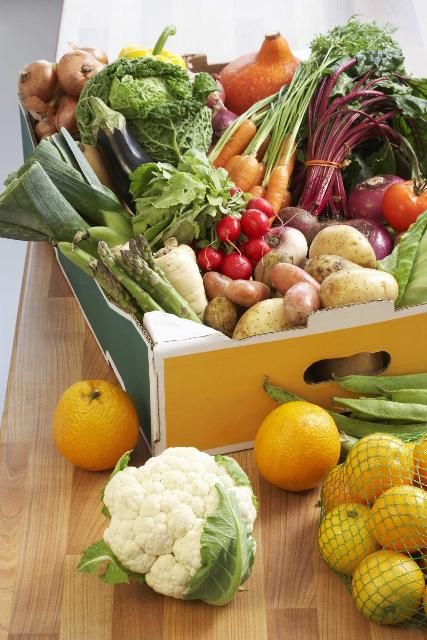
Harvesting the "fruits of your labor" is rewarding, but sometimes challenging. Keeping up with ripening fruits and vegetables may require weekly, or even daily, monitoring during the harvest period. If they are not harvested, fruits dropping from trees may be hazardous and/or unsightly. Rotting fruits will also attract vermin. Highly perishable crops will require either quick processing, such as canning, freezing, or drying, or friends and neighbors to accept the abundance.
Credit: Martin Poole / Digital Vision
Edible Can Be Environmentally Friendly
The UF/IFAS Extension Service has developed a program called Florida-Friendly Landscaping™ (FFL) which focuses on environmental landscape design and management. Edible landscapes are sustainable landscape systems consistent with the philosophy of the FFL program. Information on this program can be obtained through your local UF/IFAS Extension office, and on the Internet at https://ffl.ifas.ufl.edu.
The Edible Plant Palette
Edible landscapes can include fruits, vegetables, herbs, and even flowers. In Florida, the edible plant palette is vast. Detailed information on selecting, growing, and preserving food can be found in the numerous UF/IFAS Extension publications available online (https://edis.ifas.ufl.edu/ or from your local UF/IFAS Extension office (https://sfyl.ifas.ufl.edu/find-your-local-office/). A few are listed below along with some reference books specific to Florida.
Vegetables and Herbs
- Florida Vegetable Gardening Guide (SP103) https://edis.ifas.ufl.edu/vh021
- Organic Gardening in Florida (HS1215) https://edis.ifas.ufl.edu/hs1215
- Vegetables and Herbs https://gardeningsolutions.ifas.ufl.edu/plants/edibles/vegetables/
Fruits
- Fruitscapes website https://trec.ifas.ufl.edu/fruitscapes/
- Dooryard Fruit Varieties (FC23) https://edis.ifas.ufl.edu/mg248
- Citrus Culture in the Home Landscape (HS867) https://edis.ifas.ufl.edu/hs132
- Fruits https://gardeningsolutions.ifas.ufl.edu/plants/edibles/fruits/
For Sale Reference Books
In addition to the free, online publications listed above, the UF/IFAS Extension Bookstore sells numerous garden, lawn, and landscape books at http://www.ifasbooks.ufl.edu/.
Acknowledgment
Original author of this publication: Eva C. Worden, former assistant professor, UF/IFAS Environmental Horticulture Department, Gainesville, FL 32611.