
Introduction
The Alocasia genus contains a variety of showy, large-leaved, tropical plants, some with colorful leaves. There is a wide variety of leaf sizes, color, and variegation among species. Elephant's ear gives a bold tropical effect to the landscape with its unusually large, shield-like, fleshy green leaves. They perform well as accent plants, but some selections grow very large. For this reason, only one or two of these large-leaved types are needed in most residential landscapes. Of course, more can be used if the smaller selections are planted. The smaller-leaf types can be planted in mass as a ground cover for a rich, tropical effect, or they can be used to edge or border a walk or patio. Most are well adapted for container gardening.
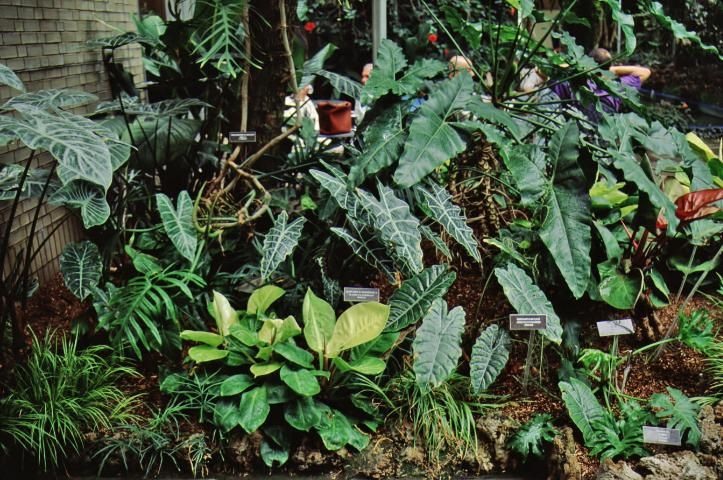
Credit: Edward F. Gilman, UF/IFAS
General Information
Scientific name: Alocasia spp.
Pronunciation: al-lo-KAY-zee-uh species
Common name(s): elephant's ear
Family: Araceae
Plant type: perennial; herbaceous
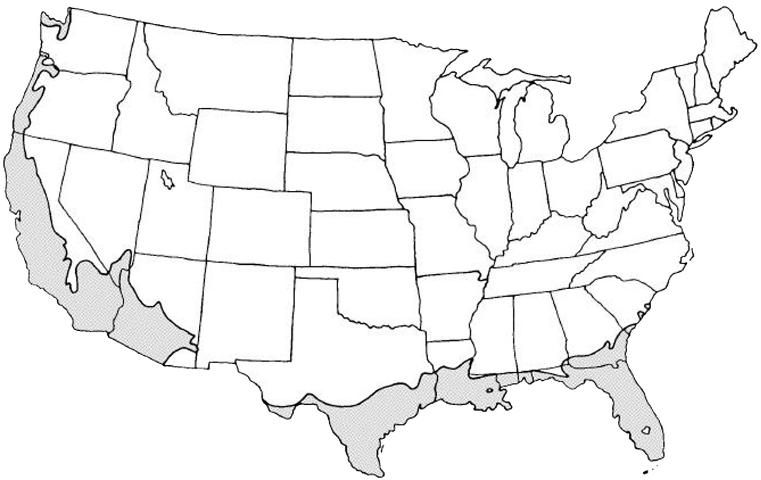
USDA hardiness zones: 8B through 11 (Figure 2)
Planting month for zone 8: year-round
Planting month for zone 9: year-round
Planting month for zone 10 and 11: year-round
Origin: not native to North America
Invasive potential: aggressive, spreading plant
Uses: border; container or above-ground planter; ground cover; naturalizing; accent
Availability: generally available in many areas within its hardiness range
Description
Growth rate: fast
Height: 2 to 10 feet
Spread: 1 to 10 feet
Plant habit: upright
Plant density: open
Texture: coarse
Foliage
Leaf arrangement: most emerge from the soil, usually without a stem
Leaf type: simple
Leaf margin: lobed; undulate
Leaf shape: sagittate, arrow-like (Figure 3)
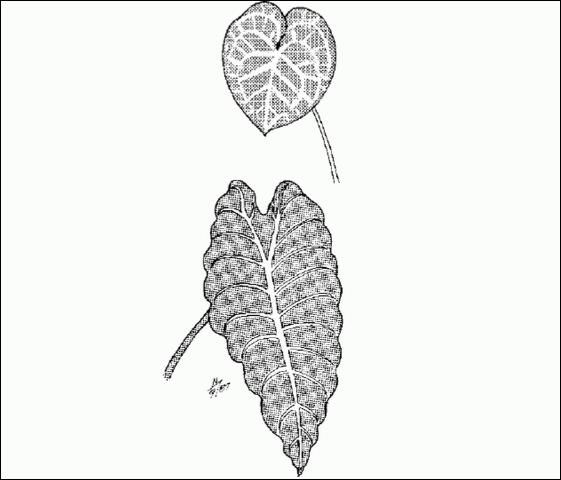
Leaf venation: brachidodrome; pinnate
Leaf type and persistence: evergreen
Leaf blade length: 8 to 12 inches; 12 to 18 inches; 18 to 36 inches
Leaf color: variegated
Fall color: no fall color change
Fall characteristic: not showy
Flower
Flower color: green
Flower characteristic: summer -flowering; spring-flowering
Fruit
Fruit shape: unknown
Fruit length: unknown
Fruit cover: fleshy
Fruit color: unknown
Fruit characteristic: inconspicuous and not showy
Trunk and Branches
Trunk/bark/branches: usually with one stem/trunk
Current year stem/twig color: not applicable
Current year stem/twig thickness: not applicable
Culture
Light requirement: plant grows in part shade/part sun
Soil tolerances: extended flooding; acidic; clay; sand; loam
Soil salt tolerance: poor
Plant spacing: 36 to 60 inches
Other
Roots: sprouts from roots or lower trunk
Winter interest: no special winter interest
Outstanding plant: plant has outstanding ornamental features and could be planted more
Pest resistance: long-term health usually not affected by pests
Use and Management
Performing best in rich, moisture-retentive soil in full sun or shade, elephant's ear will require little attention once established. Many selections grow well in soggy soil and some will invade these areas forming dense thickets. The tender leaves are subject to wind damage but do not have any major pest problems. Freezing temperatures kill the foliage, but in USDA hardiness zone 8b and south the plant grows from the base when warm weather resumes.
Design Considerations
The large, medium-green leaves and lush, leafy, irregular form of the elephant's ear will give the landscape a cool, tropical feel. The mass of leaves with pointed tips and rippled edges creates a coarse texture, and the light and dark shadows within the cluster of leaves emphasize the coarse texture. Pair with plants that are softer with small foliage and mounding or spreading forms, or grasses with thin, strappy blades and wispy flowers. Yellow-green, variegated green, and/or burgundy foliage in the companion plants will highlight the deep green of the leaves. When pairing with other flowering plants use white and/or warm colors such as pinks, light corals, soft yellows, and light orange to contrast the deep green.
Pests and Diseases
There are no major pest problems.