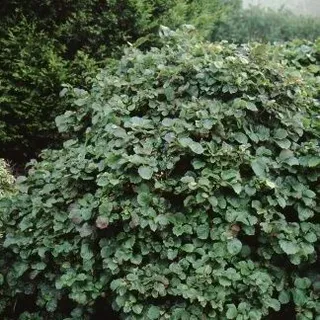


Fothergilla major Large Fothergilla, Mountain Witchalder
Introduction
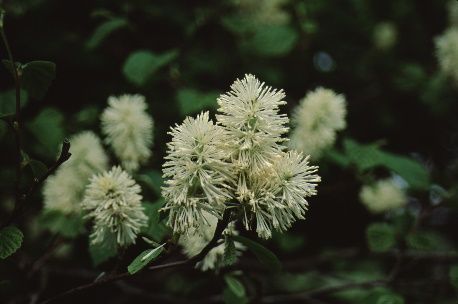
These 6- to 10-feet-tall shrub covers itself with soft, white flowers each spring before leaves emerge. It appears to be covered with snow when in full bloom. Bright red, orange, or yellow fall color bring the shrub back to life before leaves fall to the ground.
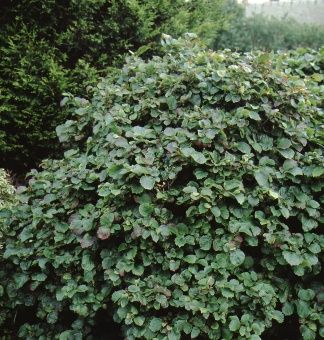
Credit: Edward F. Gilman, UF/IFAS
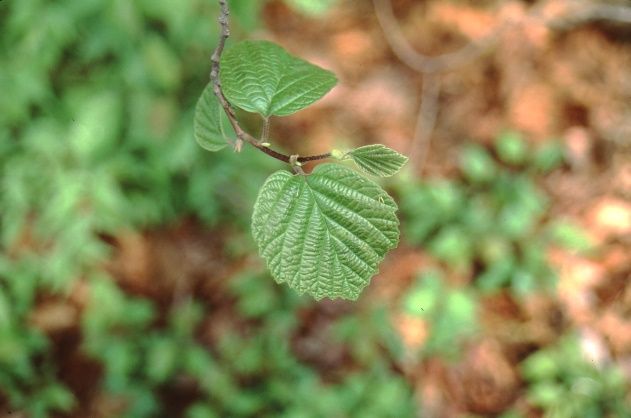
Credit: Edward F. Gilman, UF/IFAS
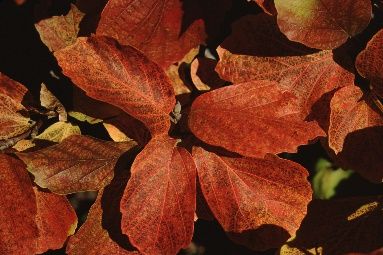
Credit: Edward F. Gilman, UF/IFAS
Credit: Edward F. Gilman, UF/IFAS
General Information
Scientific name: Fothergilla major
Pronunciation: faw-thur-GIL-luh MAY-jur
Common name(s): large fothergilla
Family: Hamamelidaceae
Plant type: shrub
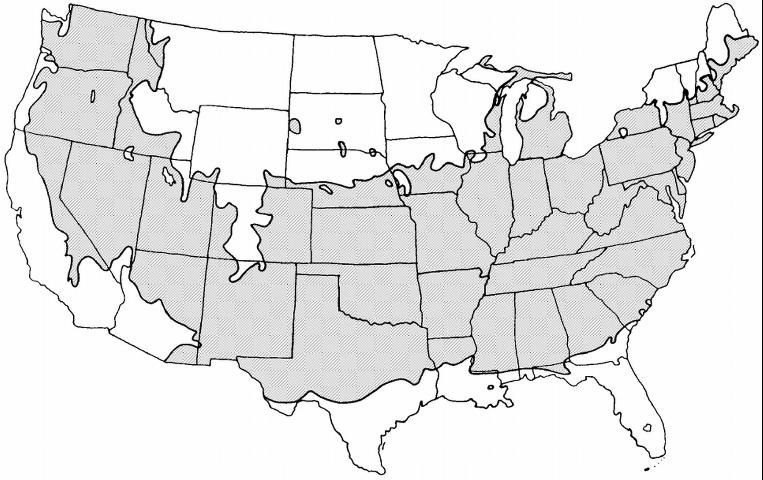
USDA hardiness zones: 5 through 8A (Figure 5)
Planting month for zone 7: year-round
Planting month for zone 8: year-round
Planting month for zone 9: year-round
Planting month for zone 10 and 11: year-round
Origin: native to North America
Invasive potential: native plant that often reproduces into nearby landscapes
Uses: accent; border; mass planting
Availability: somewhat available, may have to go out of the region to find the plant
Credit:
Description
Height: 6 to 10 feet
Spread: 6 to 10 feet
Plant habit: round
Plant density: dense
Growth rate: slow
Texture: medium
Foliage
Leaf arrangement: alternate
Leaf type: simple
Leaf margin: dentate
Leaf shape: elliptic (oval); obovate; orbiculate
Leaf venation: pinnate
Leaf type and persistence: deciduous
Leaf blade length: 2 to 4 inches
Leaf color: green
Fall color: red; yellow
Fall characteristic: showy
Flower
Flower color: white
Flower characteristic: pleasant fragrance; spring flowering
Fruit
Fruit shape: irregular
Fruit length: less than .5 inch
Fruit cover: dry or hard
Fruit color: black
Fruit characteristic: inconspicuous and not showy
Trunk and Branches
Trunk/bark/branches: not particularly showy; typically multi-trunked or clumping stems
Current year stem/twig color: brown
Current year stem/twig thickness: thin
Culture
Light requirement: plant grows in part shade/part sun
Soil tolerances: acidic; loam; clay; sand
Drought tolerance: moderate
Soil salt tolerances: unknown
Plant spacing: 36 to 60 inches
Other
Roots: usually not a problem
Winter interest: no special winter interest
Outstanding plant: plant has outstanding ornamental features and could be planted more
Pest resistance: no serious pests are normally seen on the plant
Use and Management
The rounded form and large size makes this most appropriate for planting in a larger yard, away from the house. Use it in a shrub border to spice up the yard in spring and fall. Plant it near the corner of a large commercial building and leave it unpruned to allow the natural rounded form to emerge. Clipping the plant can reduce flowering so locate it where it can grow to its natural size.
Fothergilla can be grown in any soil except those that are excessively drained. Plants suffer in extended drought, especially in full sun. A clayey soil that holds moisture but drains well is ideal.
Pests and Diseases
No pests or diseases are usually serious enough to be damaging.