
Introduction
This low shrub is native to Florida and attains a height of 4 to 8 feet. It is also known as Garberia fruticosa. Garberia has dull grayish, viscid foliage that is quite distinctive. The obovate leaves are alternately arranged on the stems and are held vertically. The showy, late season flowers appear in terminal corymbs of lavender pink heads and are followed by small inconspicuous fruits; the fruits are achenes. Flowers literally cover the plant. Garberia is an attractive plant useful for planting alone as a specimen or in groups for its colorful show in late summer and fall.
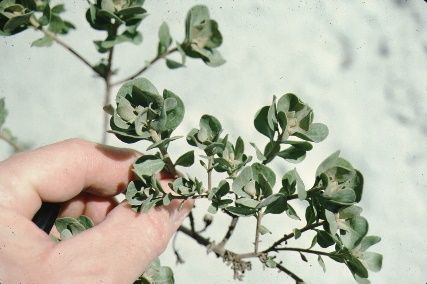
Credit: Edward F. Gilman, UF/IFAS
General Information
Scientific name: Garberia heterophylla
Pronunciation: gar-BEER-ee-uh het-tur-roe-FIL-lu
Common name(s): garberia
Family: Asteraceae
Plant type: shrub
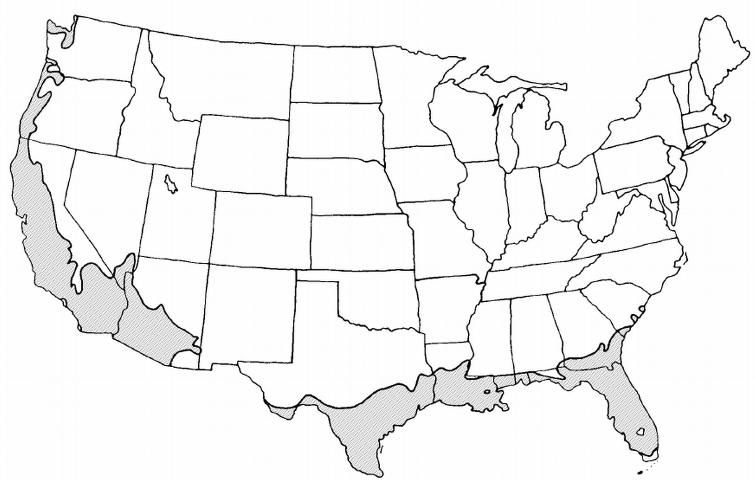
USDA hardiness zones: 9 through 10A (Figure 2)
Planting month for zone 9: year round
Planting month for zone 10 and 11: year round
Origin: native to Florida
Invasive potential: not known to be invasive
Uses: attracts butterflies; reclamation plant; border; mass planting
Availability: grown in small quantities by a small number of nurseries
Credit:
Description
Height: 4 to 8 feet
Spread: 6 to 8 feet
Plant habit: round
Plant density: moderate
Growth rate: slow
Texture: fine
Foliage
Leaf arrangement: alternate
Leaf type: simple
Leaf margin: entire
Leaf shape: obovate
Leaf venation: pinnate
Leaf type and persistence: evergreen
Leaf blade length: less than 2 inches
Leaf color: blue or blue-green
Fall color: no fall color change
Fall characteristic: not showy
Flower
Flower color: lavender pink
Flower characteristic: fall flowering; showy
Fruit
Fruit shape: irregular
Fruit length: less than 0.5 inch
Fruit cover: dry or hard
Fruit color: unknown
Fruit characteristic: inconspicuous and not showy
Trunk and Branches
Trunk/bark/branches: not particularly showy; typically multi trunked or clumping stems
Current year stem/twig color: brown
Current year stem/twig thickness: thin
Culture
Light requirement: plant grows in full sun
Soil tolerances: acidic; sand; loam
Drought tolerance: high
Soil salt tolerances: unknown
Plant spacing: 36 to 60 inches
Other
Roots: usually not a problem
Winter interest: no special winter interest
Outstanding plant: not particularly outstanding
Pest resistance: no serious pests are normally seen on the plant
Use and Management
Garberia is native to the sand ridges and hills of central and northeast peninsular Florida. This plant should be placed in a site which receives full sun. It tolerates drought but prefers acidic soils.
Pest and Diseases
No pests or diseases are of major concern.