
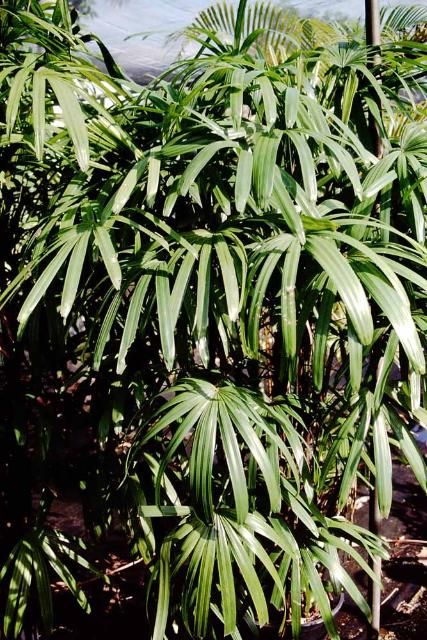
Rhapis excelsa, the lady palm, is an outstanding, small clustering palm for shady landscape or interiorscape use (Figure 1). It is considered cold hardy down to USDA zone 9A (see http://planthardiness.ars.usda.gov/PHZMWeb/). These palms have glossy, dark green palmate leaves with four to ten blunt-tipped leaf segments that grow atop slender (<1 inch) fiber-covered stems. Small, densely branched inflorescences arising from within the canopy eventually produce small white fruits. Lady palms spread by means of underground rhizomes, forming dense clusters and eventually thickets, up to 7 ft in height. They can be used in the landscapes as shrubs or as a screen, although plantings may require periodic removal of the suckers to keep the plants within bounds. They also do well in containers as patio plants, but eventually will become root-bound, requiring larger containers or the removal of some suckers. They are considered to be among the best palms for use under low light interiorscape conditions.
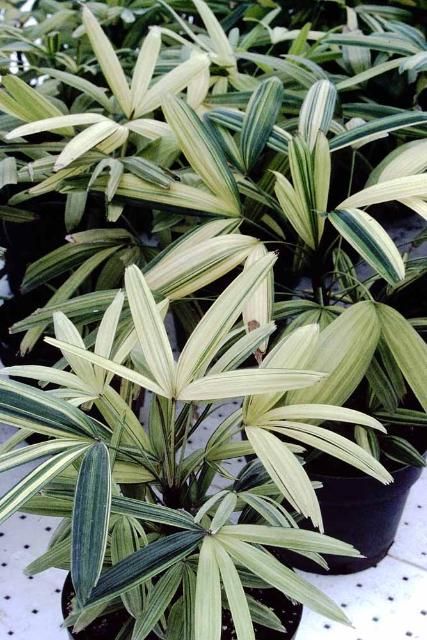
Like most other palms, lady palms are usually propagated by seed (see Seed Palm Seed Germination, https://edis.ifas.ufl.edu/ep238, for information about germinating palm seeds), but they can also be divided. In the case of the variegated form, division is the only way that they can be propagated and still retain their variegation (Figure 2).
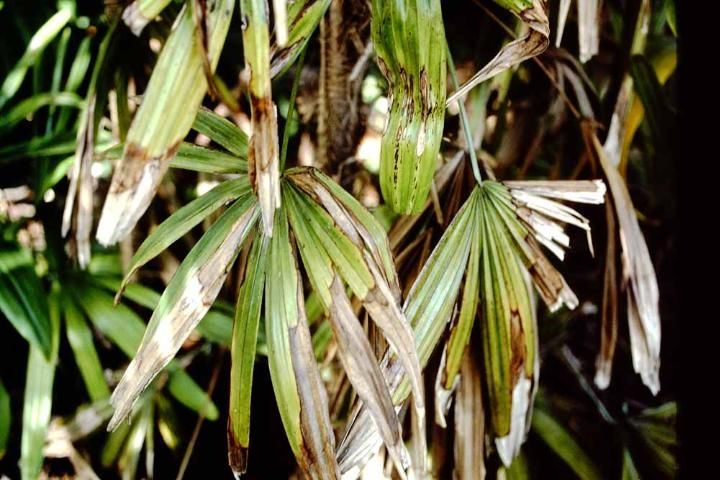
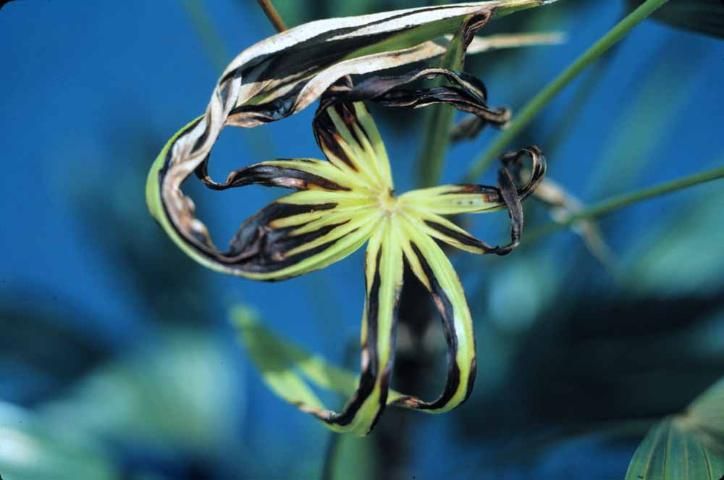
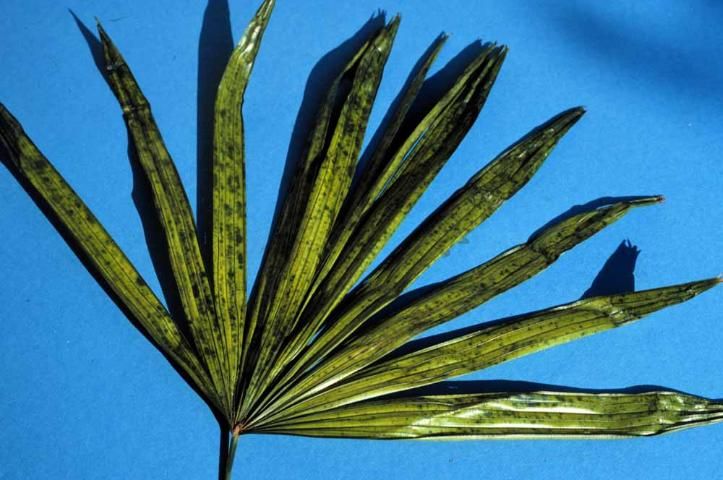
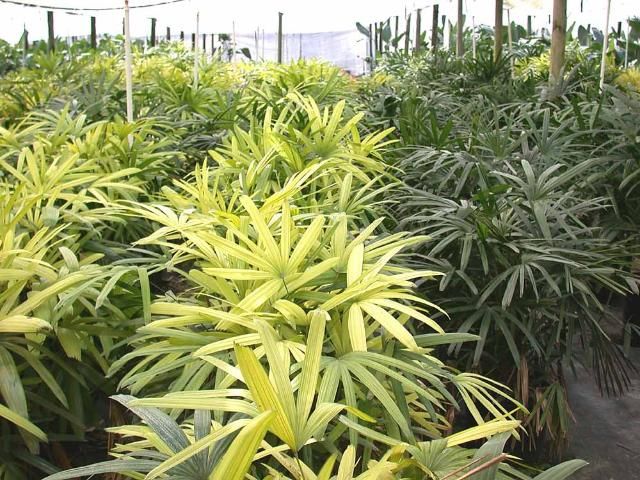
Lady palms are easy to grow in shade or partial shade and do best in moist soils. They rarely exhibit potassium deficiency symptoms unless they are grown in full sun. Symptoms of potassium deficiency include discoloration, necrotic spotting, and leaf segment tip necrosis on the oldest leaves of each stem (Figure 3). If grown in containers without fertilization, they can develop nitrogen deficiency, which results in a uniform light green color of the foliage. If grown on alkaline soils, manganese deficiency can occur. Symptoms include small partially chlorotic new leaves with extensive leaf segment tip necrosis (Figure 4). One of the most common nutritional problems of lady palms is iron deficiency, which arises not because of a lack of iron in the soil, but because of poor soil aeration. This is most often observed in container-grown palms where the potting substrate has decomposed and lost its aeration. Mild iron deficiency in lady palms is manifested as a light greenish yellow color on the youngest leaves, sometimes superimposed with diffuse dark green, pea-sized blotches (Figure 5). In chronic cases, entire plants will become light greenish yellow in color (Figure 6). While treatment with a chelated iron fertilizer may help, the most effective way to eliminate these symptoms in container-grown plants is to knock off as much of the decomposed potting substrate as possible and repot using fresh potting substrate amended with a micronutrient fertilizer blend. Fertilization of lady palms in the nursery is best done with controlled-release fertilizers to supply nitrogen, phosphorus, and potassium and dolomite combined with a micronutrient blend incorporated into the potting substrate to provide calcium, magnesium, and the micronutrients. These same types of fertilizers can be used for containerized lady palms maintained as patio plants and, at greatly reduced rates, for interiorscape palms. See Nutrition and Fertilization of Palms in Containers, https://edis.ifas.ufl.edu/ep262, for more information about fertilizing palms in containers.
Lady palms are relatively disease resistant, but mild leaf spot diseases can sometimes be seen on them. These palms are susceptible to several insect pests, such as mites, mealybugs, and scales, especially under interiorscape conditions.