
Bean, Broad—Vicia faba L.1
Broad bean is also known as horse bean, Windsor bean, English bean, tick bean, fava bean, field bean, and pigeon bean. Broad beans are sometimes classified into subspecies according to varieties and their uses in various countries. Thus, subspecies faba var. minor is the beck, tick, or pigeon bean, greatly used for human consumption in the Middle East, but also used for animal forage, like the horse bean (var. equina) specifically fed to horses. The broad bean proper, also known as Windsor or straight bean, is var. major. Indian varieties, generally dried and eaten as pulses, are classified as subspecies paucyuga.
The origin of broad beans is obscure, but the best information indicates the Mediterranean area. Remains are reported to have been found in Egyptian tombs.
Description
Broad beans get their name from the seeds that are large and flat. Seeds are variable in size and shape but usually are nearly round and white, green, buff, brown, purple, or black. Pods are large and thick but vary from 2 to12 inches in length. The plant is an erect, stiff-stemmed, leafy legume reaching 2 to 5 feet when mature. They are quite different from common beans in appearance because the leaves look more like those of English peas than bean leaves. Small white flowers are borne in spikelets.
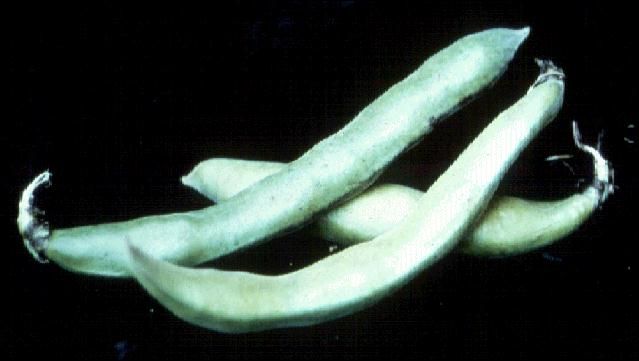
Credit: Blue Goose Inc.
Culture
Broad bean is a cool season crop, requiring 4 to 5 months from planting to harvest. In most of Florida, it is best to plant from September through March. It is grown as a summer annual in northern climates and as a winter annual in warmer climates. In the tropics it is adapted only at higher altitudes. Flowering is adversely affected by dry, hot weather.
The Florida soil and cultural requirements for broad beans are similar to other common garden beans, except for the climatic conditions. Seed are planted 2 inches deep in rows 3 feet apart, with plants spaced 3 to 4 inches apart in the row. The hill system may be used by planting six seeds per hill and spacing hills 4 by 4 feet apart. Some tall varieties may require staking or trellising. Very few broad beans are grown in Florida gardens.
Use
The seeds of the plants are used as a cooked vegetable. Pick the beans when they are full-sized but before the pods dry since they are a green-shell bean. They may also be used as a dry bean for food and livestock feed. Broad beans are very nutritious, containing 23% protein.
A word of caution is necessary because where these beans are eaten regularly as the main diet, as in certain tropical countries, a paralytic condition known as favaism has occurred.
Seeds are not as widely available as those of other types of beans. Most local garden supply stores in Florida do not carry them. The varieties 'Long Pod' and 'Giant Three-seeded' are often advertised.
Other Varieties of Fava Beans
See Table 1 for other varieties of fava beans.