


Citron—Citrullus lanatus (Thunb.) Mansf. var. citroides (Bailey) Mansf.1
Citron is often referred to as stock melon and preserving melon. It should not be confused with the citron of the citrus fruit family (Citrus medica) whose peel is candied and frequently used in fruitcakes. The citron melon belongs to the same species as watermelon, but the fruit is inedible in the raw state.
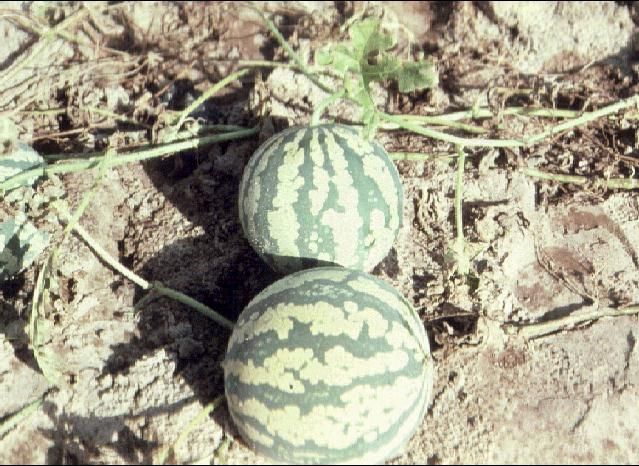
Credit: James M. Stephens
Description
These fruits, which resemble icebox watermelons, are round to oval, up to 6 inches long, light green with darker green stripes, and have a smooth surface. The flesh is white and so tough that the fruits can be bounced on the floor with only a small chance of bursting. The seeds are not marbled as often as those of watermelons. The low vining plants, like the watermelon, have both male and female flowers and require bees for pollination. Because of the close relationship to watermelon, cross-pollination between the two occurs often. Gardeners should not be concerned with the effects of such crossing unless seeds of the melons are saved for planting.
Culture and Use
Volunteer citron plants are commonly found scattered around old fields, orange groves, and roadsides throughout Florida. Where desired, they should be grown in a manner similar to watermelons and cantaloupes. The flesh and rind are sometimes used for making preserves and pickles. Other reports indicate occasional use as hogfeed.