
Sarsaparilla (Smilax spp.) and Sassafras (Sassafras spp.)1
While they are not considered vegetables according to the usual classification, sarsaparilla and sassafras are mentioned here because of their minor importance as aromatic herbs.
Sarsparilla
Sarsaparilla, the "good guy" drink of the early American western movies, is made from the dried roots of several various species of Smilax. Three of these are S. officinalis, S. papyracea, and S. medica. It does not come from the sassafras tree as some have been led to believe. Smilax plants, which are woody, thorny vines arising from swollen underground tubers, are abundant in Florida woodlands.
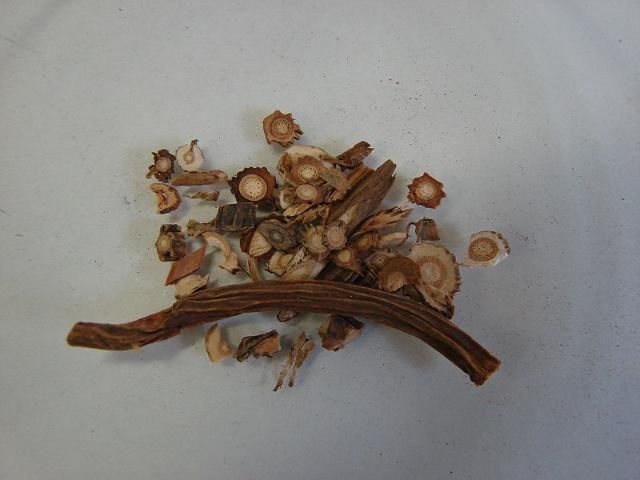
Credit: Masa Sinreih in Valentina Vivod, CC BY-SA 3.0
Sassafras
Sassafras is a tree of the laurel family, Sassafras variifolium and S. albidum. The leaves, stem bark, and root bark contain volatile oils and odors. In Florida, sassafras spreads rapidly over abandoned fields by means of suckers from the roots. The bark is sometimes used in water as a tea. Also, the oil is sometimes distilled from the roots.
In recent times, considerable health concerns have been raised for the consumption of sassafras tea.
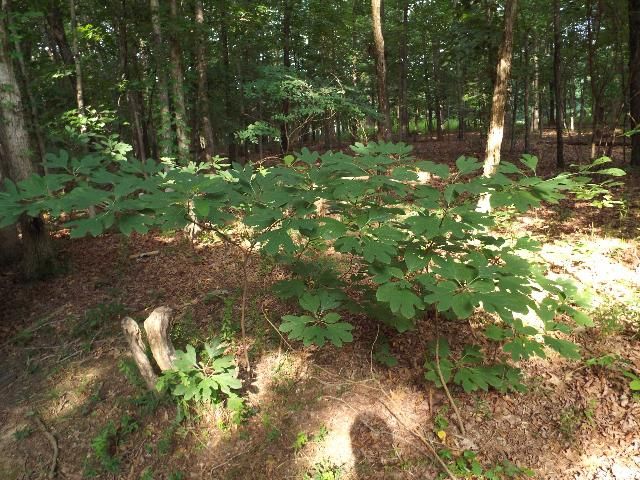
Credit: Sesamehoneytart, CC BY-SA 3.0