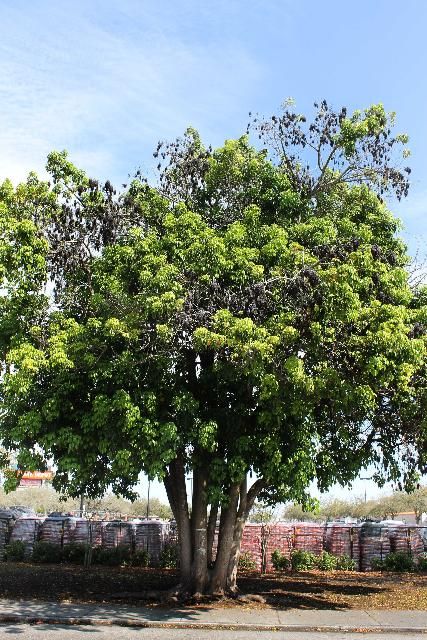
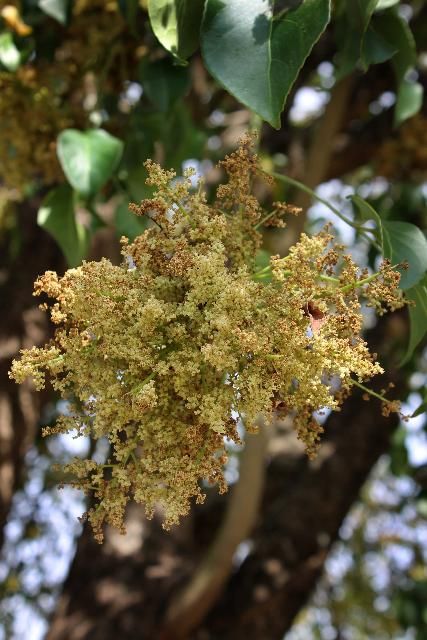
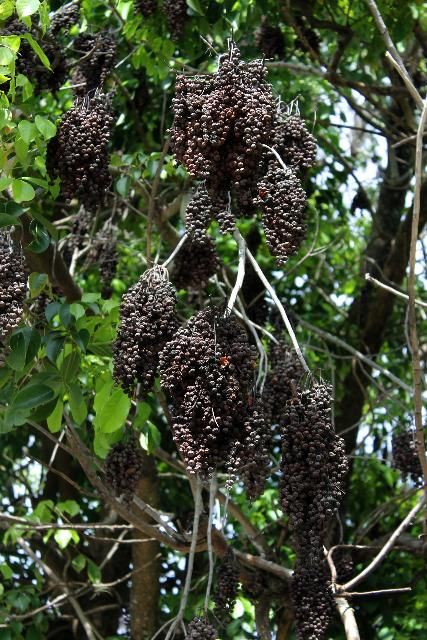
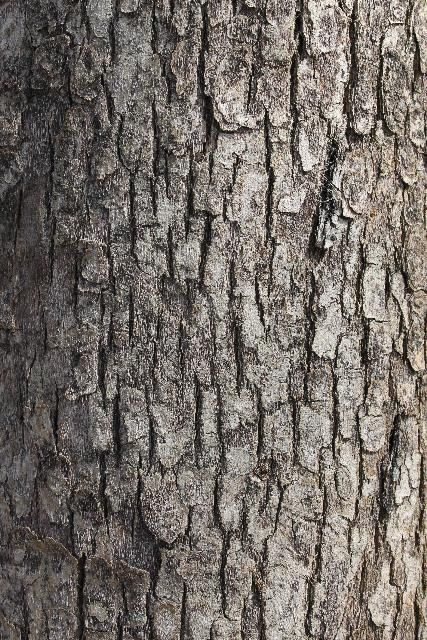
This rapidly growing evergreen or semi-evergreen tree can reach a height of 75 feet but usually is seen 30 to 50 feet tall in Florida, Puerto Rico and the Virgin Islands. The dense rounded crown and thick trunk makes bishopwood a popular shade tree. However, enough light will not penetrate for a lawn to grow underneath bishopwood trees but a groundcover will serve nicely, helping to cover the exposed tree roots. Branching is typically coarse with several large-diameter laterals originating fairly close to the ground. The shiny, bronze-toned, green trifoliate leaves are especially attractive when young and reach two to five inches in length. The stem will exude a milky sap when wounded. Small blue-black or reddish berries are produced in copious drooping clusters and drop to the ground creating a mess following the inconspicuous flowers on female trees. Unfortunately, the sex of the tree cannot be determined on young plants.
Figure 1. Full Form - Bischofia javanica: Bishopwood Credit: UF/IFAS
General Information
Scientific name: Bischofia javanica
Pronunciation: biss-CHOFF-ee-uh juh-VAN-ih-kuh
Common name(s): bishopwood,yoog tree, bischofia
Family: Phyllanthaceae
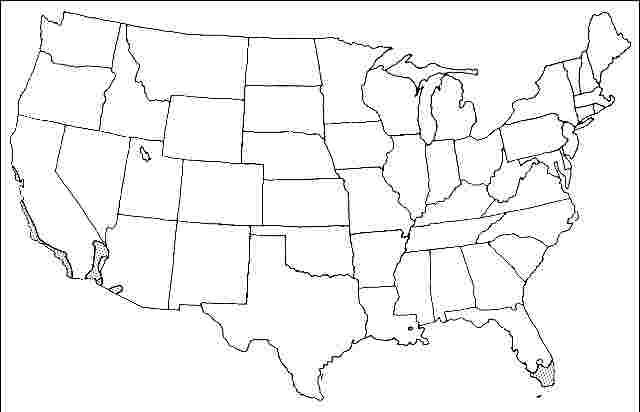
USDA hardiness zones: 10A through 11 (Figure 2)
Origin: native to tropical Asia and the Pacific Island
UF/IFAS Invasive Assessment Status: caution, may be recommended but manage to prevent escape (North, Central, South)
Uses: not recommended for planting
Figure 2. Range
Description
Height: 30 to 50 feet
Spread: 25 to 35 feet
Crown uniformity: symmetrical
Crown shape: round
Crown density: dense
Growth rate: fast
Texture: medium
Foliage
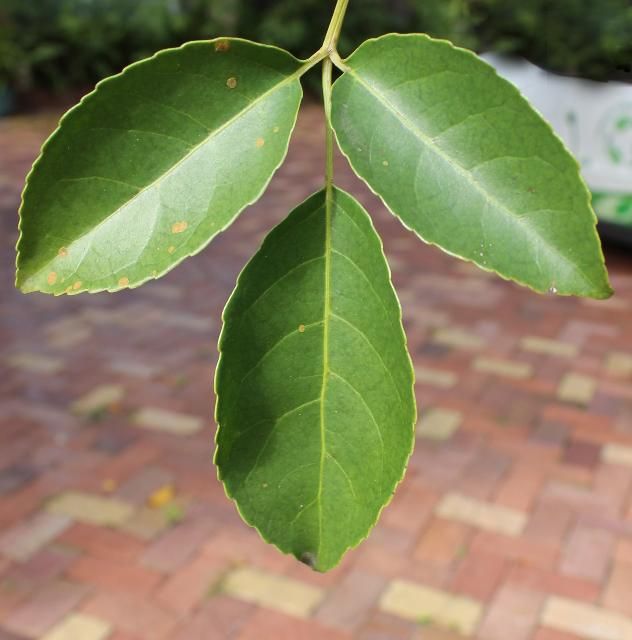
Leaf arrangement: alternate (Figure 3)
Leaf type: trifoliate, odd-pinnately compound; made up of 3 leaflets
Leaf margin: serrulate
Leaf shape: ovate, elliptic (oval)
Leaf venation: pinnate
Leaf type and persistence: evergreen
Leaf blade length: leaflets are 2 to 5 inches
Leaf color: green or bronze green on top, lighter green underneath
Soil tolerances: clay; sand; loam; alkaline; acidic; wet to well-drained
Drought tolerance: moderate
Aerosol salt tolerance: moderate
Other
Roots: can form large surface roots
Winter interest: no
Outstanding tree: no
Ozone sensitivity: unknown
Verticillium wilt susceptibility: unknown
Pest resistance: sensitive to pests/diseases
Use and Management
Growing in full sun on various soil types, Bishopwood is very easily grown and grows quickly. It has only moderate salt tolerance. It appears to grow well in confined urban soil spaces, however, the fruit is considered messy and stains walks when it drops to the ground and the seeds often germinate in the landscape and could become a nuisance. Aggressive roots can lift sidewalks if they are planted within five or six feet of the walk. If you plant this tree, locate it in a lawn area where regular mowing will kill the sprouting seedlings, not in a landscape bed. The tree is not generally recommended for street tree planting and can be a nuisance in lawns as surface roots make mowing difficult close to the trunk. Branches reportedly break from the tree on occasion. There are too many other high quality trees available in USDA hardiness zones 10 and 11 to encourage planting this tree.
Propagation is by seeds or cuttings.
Pests
Bishopwood suffers from severe scale infestations, especially false Oleander scale which is followed by sooty mold.
Diseases
No diseases are of major concern, except root rot.
References
Koeser, A. K., Hasing, G., Friedman, M. H., and Irving, R. B. 2015. Trees: North & Central Florida. University of Florida Institute of Food and Agricultural Sciences.
Koeser, A.K., Friedman, M.H., Hasing, G., Finley, H., Schelb, J. 2017. Trees: South Florida and the Keys. University of Florida Institute of Food and Agricultural Sciences.