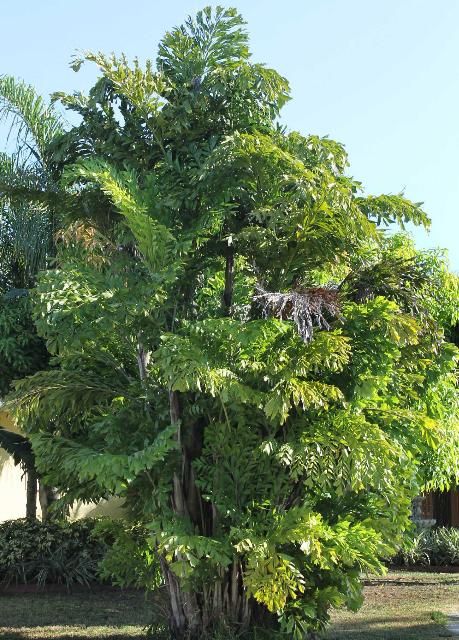
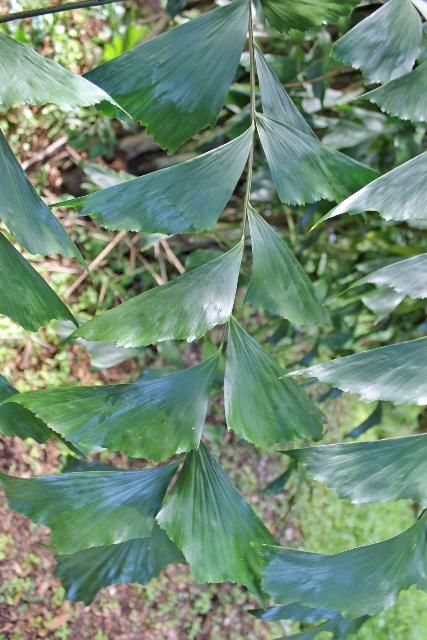
This clump-growing group of palms has medium green leaf blades which are divided into many segments, each of which resembles the tail of a fancy goldfish. Rarely exceeding 25 feet in height, a number of species of fishtail palms produce suckers from the base creating a very attractive specimen palm. Its neat habit makes it ideal for use at poolside, in urns or other containers, and it is often seen in well-lit interiorscapes where its distinct form lends a tropical effect. It can be used as a house plant in large homes with plenty of light.
Figure 1. Full Form—Caryota mitis: Fishtail Palm
General Information
Scientific name: Caryota mitis
Pronunciation: kair-ee-OH-tuh MIT-iss
Common name(s): Fishtail palm
Family: Arecaceae
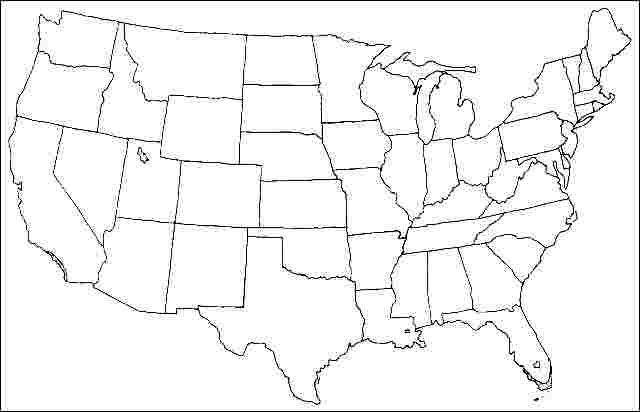
USDA hardiness zones: 10B through 11 (Figure 2)
Origin: native to southeast Asia
UF/IFAS Invasive Assessment Status: caution, may be recommended but manage to prevent escape (South); not considered a problem species at this time, may be recommended (North, Central)
Uses: indoors; specimen; deck or patio; container or planter; screen
Figure 2. Range
Description
Height: 15 to 25 feet
Spread: 10 to 15 feet
Crown uniformity: irregular
Crown shape: palm, upright/erect
Crown density: moderate
Growth rate: moderate
Texture: coarse
Foliage
Leaf arrangement: spiral
Leaf type: odd-pinnately compound
Leaf margin: incised
Leaf shape: obovate; narrowly triangular
Leaf venation: reticulate
Leaf type and persistence: evergreen
Leaf blade length: 8 feet; secondary leaflets are 6 inches
Leaf color: medium green
Fall color: no color change
Fall characteristic: not showy
Figure 3. Leaf—Caryota mitis: Fishtail palm
Flower
Flower color: purplish
Flower characteristics: not showy; emerges in clusters on 2' long, branched spikes
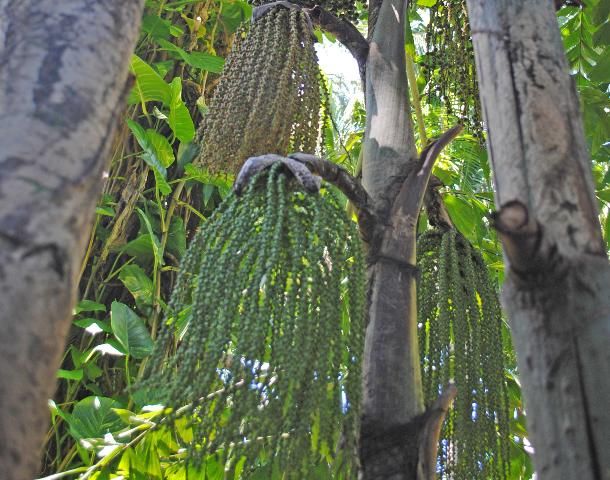
Figure 4. Fruit—Caryota mitis: Fishtail palm
Fruit
Fruit shape: round
Fruit length: ½ inch
Fruit covering: berry
Fruit color: reddish-black
Fruit characteristics: does not attract wildlife; not showy; fruit/leaves not a litter problem
Trunk and Branches
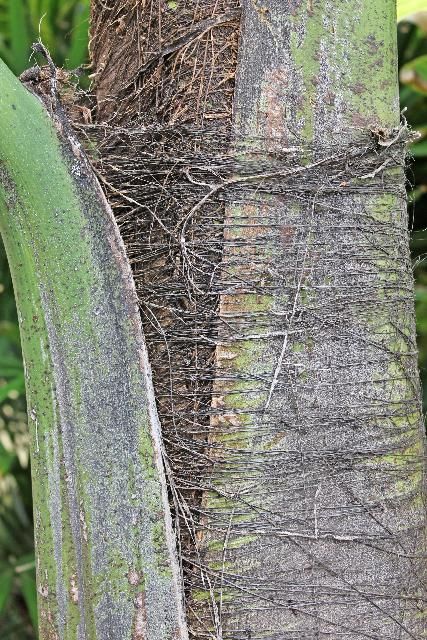
Trunk/branches: branches don't droop; not showy; typically multi-trunked; no thorns
Fishtail palms can thrive in light conditions from full sun to deep shade, requiring only that its soil be well-drained and reasonably fertile. It has a moderate to rapid growth rate and should be located outdoors in a sheltered location protected from cold. Unfortunately, the palm is susceptible to lethal yellowing disease. In addition, it is monocarpic so a stem dies after it flowers. This stem must be removed to maintain a neat appearance. There are a variety of other species grown in south Florida nurseries.
Propagation is by seeds or division.
Pests
Red spider mites and scales are serious problems, especially when fishtail palms are used indoors.
Diseases
Lethal yellowing disease.
Reference
Koeser, A. K., Hasing, G., Friedman, M. H., and Irving, R. B. 2015. Trees: North & Central Florida. Gainesville: University of Florida Institute of Food and Agricultural Sciences.