Catalpa speciosa (Northern Catalpa) grows in a loose oval, 60 feet tall in most urban locations, but occasionally grows to 90 feet. This coarse, large leaved tree spreads 50 feet and tolerates hot, dry weather, but leaves may scorch and some drop from the tree in very dry summers. Catalpa bignonioides (Southern Catalpa) is somewhat smaller reaching about 30 to 40 feet tall, leaves are arranged opposite or in whorls (speciosa leaves are opposite), and it is native and has some salt tolerance. A sunny exposure and a well-drained, moist, rich soil are preferred for best growth of catalpa but they will tolerate a range of soils from acid to calcareous. Both trees have a coarse, very open growth habit forming an irregularly-shaped crown. It is popular in older gardens and has a moderately-long life (60 years or so), but trunks on large trees often contain rot. Catalpas are very adaptable, and they are tough trees, having naturalized in many parts of the South.
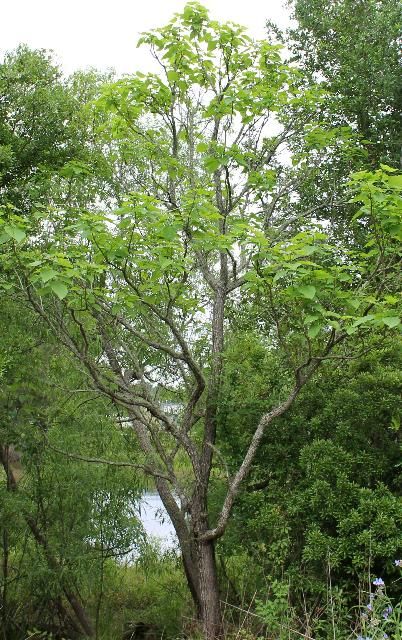
Figure 1. Full Form—Catalpa spp.: Catalpa Credit: Gritta Hasing
General Information
Scientific name: Catalpa spp.
Pronunciation: kuh-TAL-puh species
Common name(s): Catalpa, Cigar tree
Family: Bignoniaceae
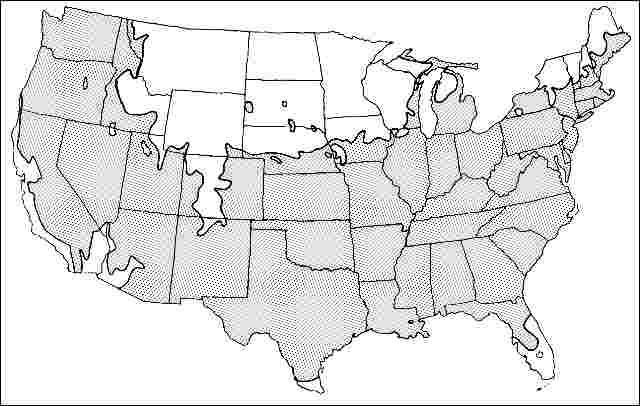
USDA hardiness zones: 5A through 9A (Figure 2)
Origin: there are two Catalpa spp. Native to the United States, with C. bignonioides native to Florida, Georgia, Alabama, and Mississippi, and C. speciose native along the boarders that join Arkansas, Missouri, Illinois, Indiana, Kentucky, and Tennessee
UF/IFAS Invasive Assessment Status: native
Uses: urban tolerant; reclamation; shade
Figure 2. Range
Description
Height: 30 to 60 feet
Spread: 20 to 50 feet
Crown uniformity: irregular
Crown shape: oval
Crown density: moderate
Growth rate: fast
Texture: coarse
Foliage
Leaf arrangement: opposite/subopposite
Leaf type: simple
Leaf margin: entire
Leaf shape: ovate
Leaf venation: pinnate
Leaf type and persistence: deciduous
Leaf blade length: 5 to 12 inches
Leaf color: green on top, paler green and pubescent underneath
Fall color: yellow
Fall characteristic: not showy
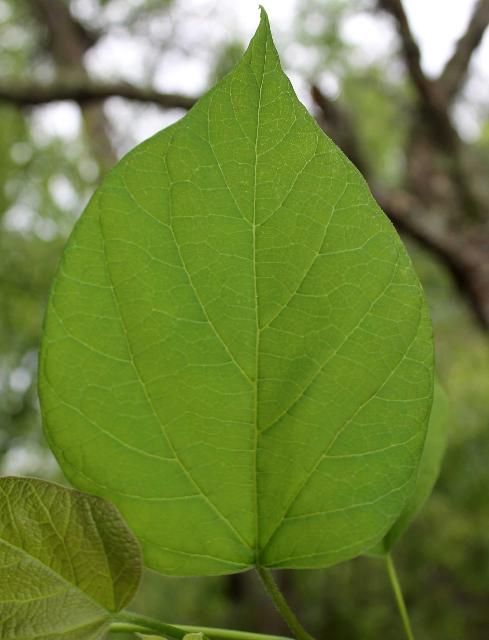
Figure 3. Leaf—Catalpa spp.: Catalpa
Flower
Flower color: white with orange, yellow, and purple markings
Flower characteristics: very showy; bell-shaped; emerges in clusters on 8"–12" long, branched panicles
Flowering: late spring
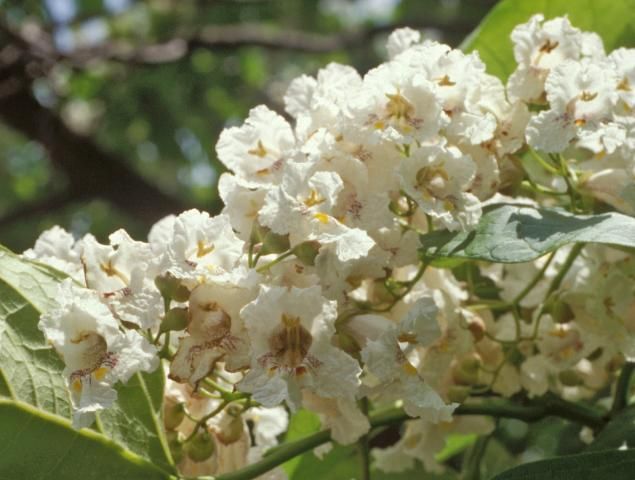
Figure 4. Flower—Catalpa spp.: Catalpa Credit: Gary Kling
Fruit
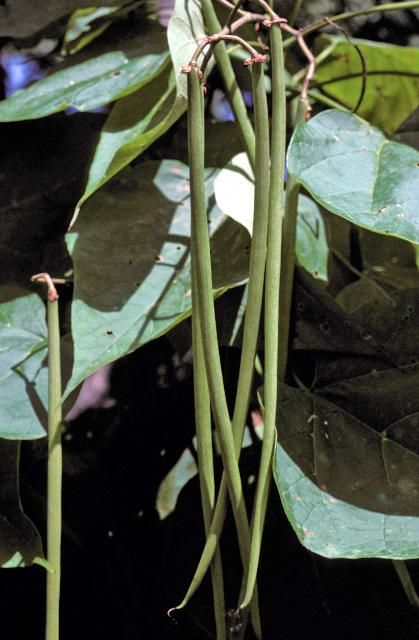
Fruit shape: elongated
Fruit length: 8 to 20 inches
Fruit covering: dry or hard; bean-like capsule
Fruit color: brown
Fruit characteristics: attracts squirrels/mammals; showy; fruit/leaves a litter problem
Figure 5. Fruit—Catalpa spp.: Catalpa Credit: Gary Kling
Trunk and Branches
Trunk/branches: branches droop; not showy; typically one trunk; no thorns
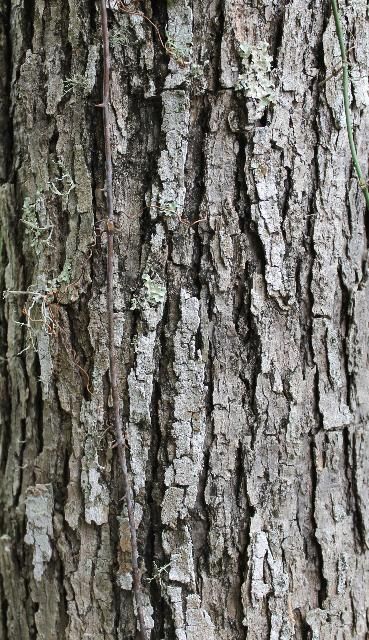
Bark: gray to reddish brown, shallowly furrowed, with scaly ridges
Growth is rapid at first but slows down with age as the crown begins to round out and the tree increases in spread. The main ornamental features are panicles of white with yellow and purple markings produced in spring and early summer, depending on the particular tree. Leaves fall throughout the summer in USDA hardiness zone 8 making a mess and the tree looks ragged with yellow leaves in late summer. Flowers make somewhat of a slimy mess for a short period when they drop on a sidewalk but are no problem falling into shrubs, groundcovers, or turf. The fruit is a long pod (up to 2-feet-long) resembling a string bean that can be a slight litter problem to some, but it is quite interesting. The tree is useful in areas where quick growth is desired, but there are better, more durable trees available for street and parking lot plantings. 60-year-old trees in Williamsburg, Virginia have three to 4-foot-diameter trunks and are 40 feet tall. Catalpa often escapes cultivation and invades surrounding woodlands.
Catalpas are planted to attract Catalpa worms, a large caterpillar prized for fish bait because the skin is very tough and the caterpillar is juicy. The caterpillar can be frozen for use as a fish bait at a later time. The caterpillar can defoliate the tree once or twice a year but there appear to be no adverse consequences to the tree.
Catalpa tolerates a wide range of soils, including pH in the 7's, and is moderately drought-tolerant. It is a tough tree suited for planting in large-scale landscapes.
Pests
The larva of the Catalpa sphinx moth can eat large quantities of leaves. The caterpillar is yellow with black markings. The tree is regularly defoliated and often looks terrible by the end of the summer.
Diseases
Anthracnose will cause dead areas on the leaves.
Brown leaf spots caused by several fungi can attack Catalpa. They are rarely serious so no chemical control is suggested.
Powdery mildew causes a white powdery coating on the leaves. When severe, the leaves yellow and fall off.
Catalpa is susceptible to verticillium wilt. Branches die and eventually the entire tree may die. A symptom of verticillium wilt is discoloration of the sapwood but the symptom is hard to find.
During hot, dry seasons the leaves may turn yellow and brown due to scorch, but the tree lives. Little can be done other than watering.
Catalpa may turn chlorotic due to a high soil pH, but the tree does not appear to otherwise suffer from alkaline soil.
Reference
Koeser, A. K., Hasing, G., Friedman, M. H., and Irving, R. B. 2015. Trees: North & Central Florida. Gainesville: University of Florida Institute of Food and Agricultural Sciences.