
Introduction
This is a large stately evergreen, with a massive trunk when mature, and wide-sweeping, sometimes upright branches (more often horizontal) which originate on the lower trunk. Allow plenty of space for proper development. Dark green needles and cones, which are held upright above the foliage, add to the impressive appearance. Young specimens retain a pyramidal shape but the tree takes on a more open form with age. Like most true cedars, it does not like to be transplanted, and prefers a pollution-free, sunny environment.
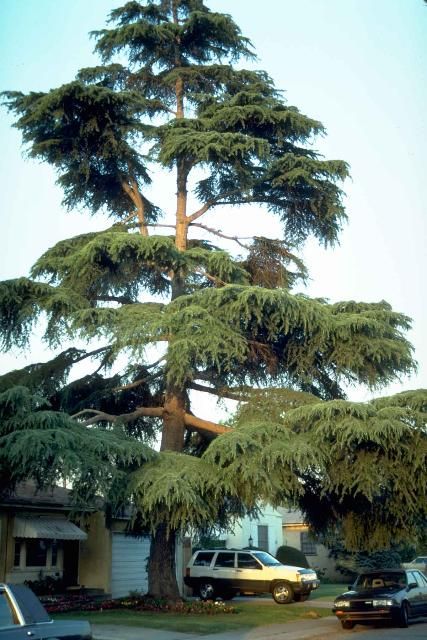
Credit: Ed Gilman
General Information
Scientific name: Cedrus libani
Pronunciation: SEE-drus LIB-an-eye
Common name(s): Cedar of Lebanon
Family: Pinaceae
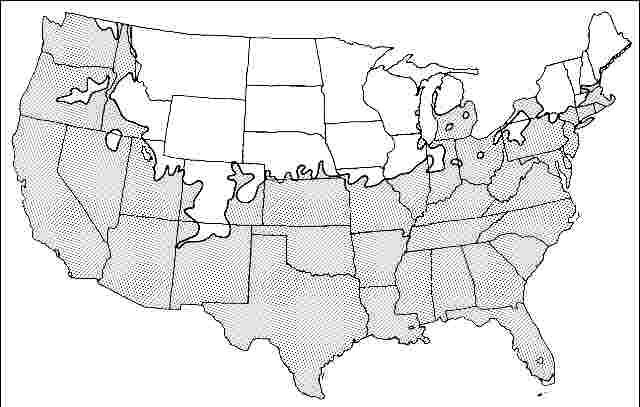
USDA hardiness zones: 5B through 10A (Fig. 2)
Origin: not native to North America
Invasive potential: little invasive potential
Uses: specimen; street without sidewalk; tree lawn > 6 ft wide; highway median
Availability: somewhat available, may have to go out of the region to find the tree
Description
Height: 40 to 50 feet
Spread: 20 to 30 feet
Crown uniformity: irregular
Crown shape: pyramidal
Crown density: open
Growth rate: slow
Texture: medium
Foliage
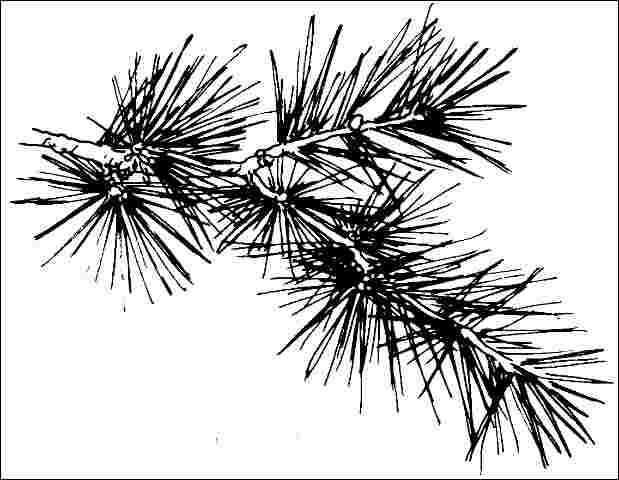
Leaf arrangement: spiral (Fig. 3)
Leaf type: simple
Leaf margin: entire
Leaf shape: needle-like (filiform)
Leaf venation: parallel
Leaf type and persistence: evergreen, needled evergreen
Leaf blade length: less than 2 inches
Leaf color: green
Fall color: no color change
Fall characteristic: not showy
Flower
Flower color: brown, purple
Flower characteristics: not showy
Fruit
Fruit shape: oval, cone
Fruit length: 3 to 6 inches
Fruit covering: dry or hard
Fruit color: green, blue
Fruit characteristics: does not attract wildlife; showy; fruit/leaves not a litter problem
Trunk and Branches
Trunk/bark/branches: branches droop; not showy; typically one trunk; thorns
Pruning requirement: little required
Breakage: resistant
Current year twig color: green, brown
Current year twig thickness: medium
Wood specific gravity: unknown
Culture
Light requirement: full sun
Soil tolerances: clay; sand; loam; alkaline; acidic; well-drained
Drought tolerance: high
Aerosol salt tolerance: unknown
Other
Roots: not a problem
Winter interest: no
Outstanding tree: yes
Ozone sensitivity: unknown
Verticillium wilt susceptibility: resistant
Pest resistance: free of serious pests and diseases
Use and Management
Cedars are not well-suited for street tree planting in downtown situations, but are unrivaled as specimens, even for hot, dry locations. There are examples of residential street tree plantings on 20-foot-centers which look rather striking. Adapted to high pH and dry soil.
Pests and Diseases
No pests or diseases are of major concern.