


Cercis occidentalis: Western Redbud1
Introduction
This small tree or shrub will usually grow several trunks from its base unless properly pruned. It is native to California, Arizona, and Utah, but grows predominantly in California foothills below 4,000 feet. The temperature needs to drop below 28°F in order for flowering to be profuse. The plant is not grown in the eastern United States.
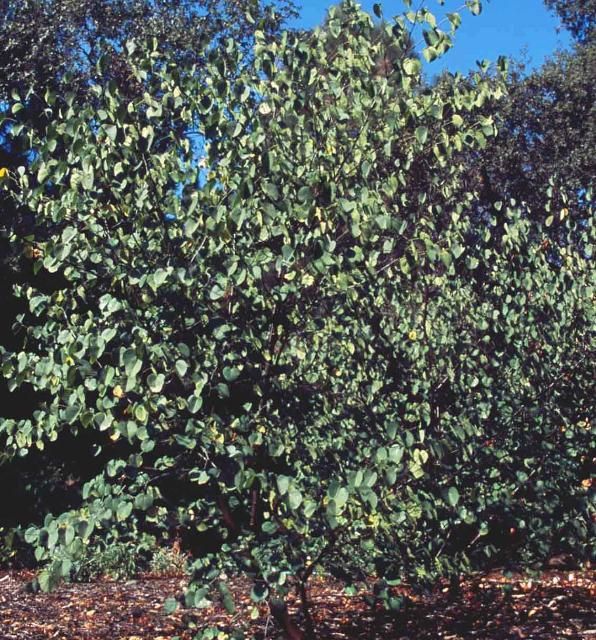
Credit: Ed Gilman, UF/IFAS
General Information
Scientific name: Cercis occidentalis
Pronunciation: SER-sis ock-sih-den-TAY-liss
Common name(s): Western redbud, California redbud
Family: Leguminosae
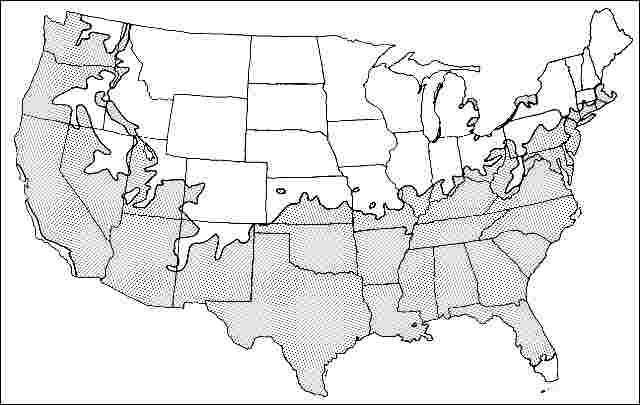
USDA hardiness zones: 6A through 9B (Fig. 2)
Origin: native to North America
Invasive potential: little invasive potential
Uses: sidewalk cutout (tree pit); street without sidewalk; tree lawn 3–4 feet wide; tree lawn 4–6 feet wide; tree lawn > 6 ft wide; parking lot island < 100 sq ft; parking lot island 100–200 sq ft; parking lot island > 200 sq ft; container or planter; specimen
Availability: not native to North America
Description
Height: 15 to 25 feet
Spread: 15 to 25 feet
Crown uniformity: irregular
Crown shape: vase
Crown density: moderate
Growth rate: moderate
Texture: medium
Foliage
Leaf arrangement: alternate
Leaf type: simple
Leaf margin: entire
Leaf shape: cordate, ovate
Leaf venation: pinnate
Leaf type and persistence: deciduous
Leaf blade length: 2 to 4 inches
Leaf color: green
Fall color: yellow
Fall characteristic: not showy
Flower
Flower color: lavender, pink
Flower characteristics: very showy
Fruit
Fruit shape: elongated
Fruit length: 1 to 3 inches
Fruit covering: dry or hard
Fruit color: brown
Fruit characteristics: attracts birds; showy; fruit/leaves not a litter problem
Trunk and Branches
Trunk/bark/branches: branches droop; not showy; typically multi-trunked; thorns
Pruning requirement: needed for strong structure
Breakage: resistant
Current year twig color: brown
Current year twig thickness: medium
Wood specific gravity: unknown
Culture
Light requirement: full sun, partial sun or partial shade
Soil tolerances: clay; sand; loam; acidic; alkaline; well-drained
Drought tolerance: moderate
Aerosol salt tolerance: low
Other
Roots: not a problem
Winter interest: no
Outstanding tree: no
Ozone sensitivity: unknown
Verticillium wilt susceptibility: unknown
Pest resistance: resistant to pests/diseases
Use and Management
Cercis are best propagated by seed. Use ripe seed to plant directly, or, if seed has been stored, stratification is necessary before sowing in a greenhouse. Cultivars can be propagated by grafting onto seedlings, or by summer cuttings under mist or in a greenhouse.
Pests and Diseases
Probably similar to the pests affecting other redbuds.

