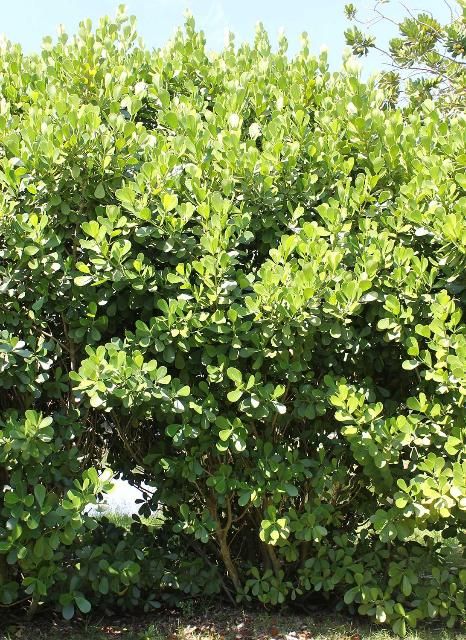
This wide-spreading, densely-foliated, rounded, 25- to 30-foot-tall, evergreen tree has a short trunk and broad, thickened, dark green, leathery leaves, reminiscent of Southern magnolia leaves. It is, in fact, greatly admired in Cuba and the Virgin Islands as an ornamental. Leaves can be written on with a fingernail. In summer, the showy, pink and white, 2- to 3-inch flowers appear at night and sometimes remain open all morning on overcast days. They appear near the branch tips and are followed by a fleshy, light green, poisonous fruit, 3-inches in diameter. These persistent fruits turn black when ripe and split open, revealing bright red seeds surrounded by a black, resinous material. The seeds are very attractive to birds and other wildlife and they germinate readily in the landscape and surrounding areas. The black material surrounding these seeds was once used to caulk the seams of boats, hence its common name, 'Pitch-apple'.
Figure 1. Full Form—Clusia rosea: Pitch-apple Credit: Ed Gilman
General Information
Scientific name: Clusia rosea
Pronunciation: KLOO-see-uh ROE-zee-uh
Common name(s): Pitch apple, Florida clusia
Family: Clusiaceae
USDA hardiness zones: 10B through 11 (Figure 2)
Origin: native to Florida, the West Indies, and from Mexico to northern South America
UF/IFAS Invasive Assessment Status: native
Uses: trained as a standard; reclamation; street without sidewalk; screen; specimen; espalier; deck or patio; parking lot island < 100 sq ft; parking lot island 100–200 sq ft; parking lot island > 200 sq ft; sidewalk cutout (tree pit); tree lawn 3–4 feet wide; tree lawn 4–6 feet wide; tree lawn > 6 ft wide; urban tolerant; shade; highway median; hedge; container or planter
Description
Height: 25 to 30 feet
Spread: 15 to 25 feet
Crown uniformity: symmetrical
Crown shape: round, spreading
Crown density: dense
Growth rate: moderate
Texture: coarse
Foliage
Leaf arrangement: opposite/subopposite
Leaf type: simple
Leaf margin: entire
Leaf shape: obovate
Leaf venation: pinnate
Leaf type and persistence: broadleaf evergreen, evergreen
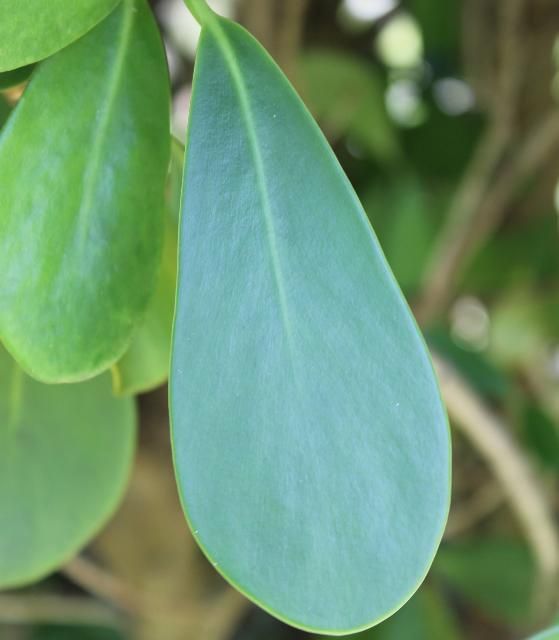
Leaf blade length: 3 to 6 inches
Leaf color: dull green on top, yellow green underneath
Fall color: no color change
Fall characteristic: not showy
Figure 3. Leaf—Clusia rosea: Pitch-apple
Flower
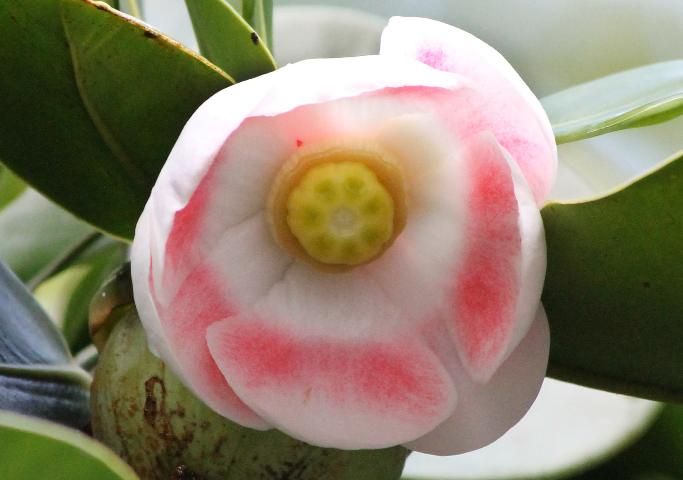
Flower color: pink and white
Flower characteristics: showy; emerges at branch tips
Flowering: primarily summer, but also year-round
Figure 4. Flower—Clusia rosea: Pitch-apple
Fruit
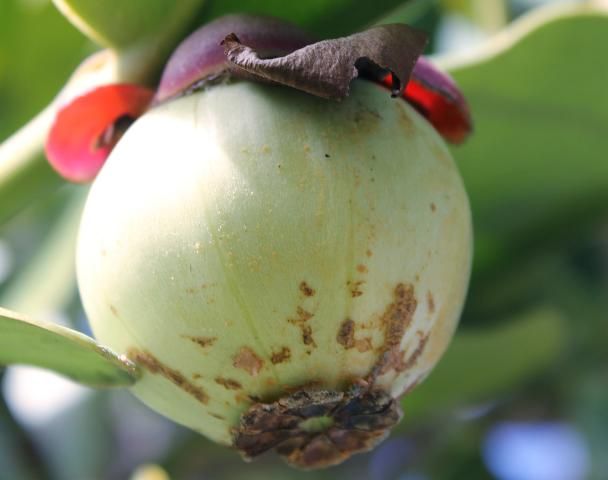
Fruit shape: round, capsule
Fruit length: 3 inches
Fruit covering: fleshy drupe; splits open to reveal red seeds and orange arils
Fruit color: lightgreen, turns black at maturity
Fruit characteristics: attracts birds; not showy; fruit/leaves a litter problem
Figure 5. Fruit—Clusia rosea: Pitch-apple
Trunk and Branches
Trunk/branches: branches droop; not showy; typically multi-trunked; no thorns
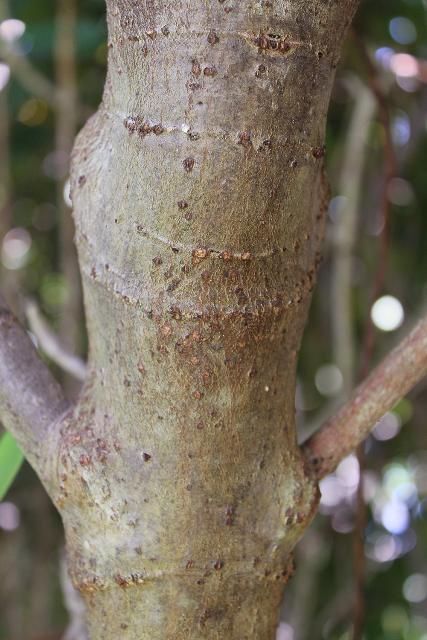
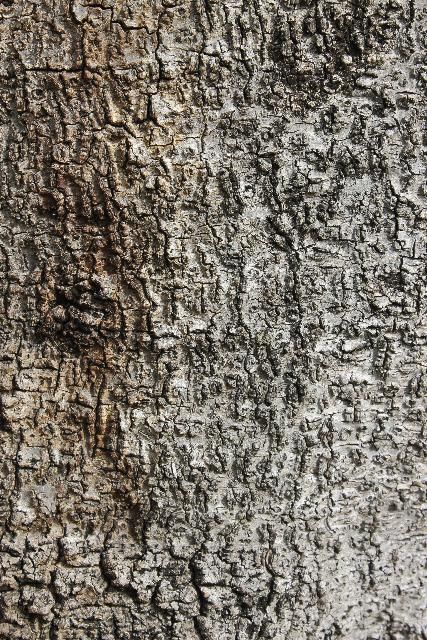
Bark: gray brown and mostly smooth, with a slightly warty texture
Pest resistance: free of serious pests and diseases
Use and Management
Growing well in full sun to dappled shade, pitch apple tolerates many different soil types but grows most rapidly on moist soils. It is quite tolerant of light open sands and salt spray, making it ideal for seaside locations. Pitch apple is often used as a screen due to its low spreading habit and is ideal for espalier to cool building walls in the summer. Some maintenance is required to trim prop roots and aerial roots as they form from the trunk base and lower branches, or the tree could take over an area. Otherwise, it is a low-maintenance tree. With lower branches removed, it can make an attractive, small to moderately-sized street tree, although some people object to the falling fruits and thick slowly decomposing leaves. A patio can be kept cooler with a pitch apple which creates a dense shade. Plants should be watered well until established and then trees develop rapidly.
Purchase trees which have been trained in the nursery to one central leader for street tree use. Those grown for specimen use with several upright trunks are not suited for streets, as vehicle clearance will be difficult to maintain and trees will be less durable.
The cultivar with marbled leaves, Clusia rosea 'Variegata', has unusual and very striking, yellow and green variegated foliage.
Propagation is by seeds or cuttings.
Pests
Scale.
Diseases
No diseases are of major concern.
Reference
Koeser, A.K., Friedman, M.H., Hasing, G., Finley, H., Schelb, J. 2017. Trees: South Florida and the Keys. Gainesville: University of Florida Institute of Food and Agricultural Sciences.